AI-Driven Fraud Escalates: Deepfakes, Biometrics, and Synthetic Identities Threaten 2026 Digital Economy
Corroborated forecasts from Sumsub and peers show AI fraud tools like deepfakes and synthetics accelerating in 2026, demanding adaptive verification amid systemic biometric and data vulnerabilities.
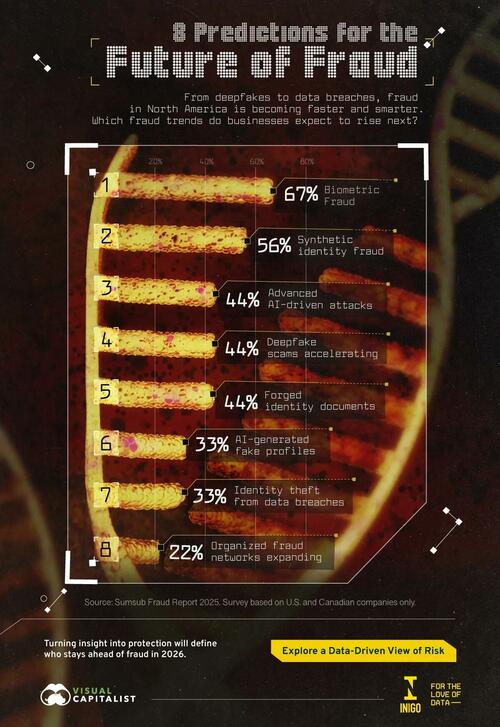
Fraud prevention firms and industry analysts forecast a sharp rise in sophisticated AI-enabled schemes in 2026, driven by deepfakes, synthetic identities, and automated attacks that exploit biometric systems and data breaches. According to Sumsub's Identity Fraud Report 2025-2026, which analyzed over 4 million fraud attempts and surveyed hundreds of risk professionals, advanced attack methods surged 180% year-over-year even as overall fraud rates moderated to 2.2%. Businesses anticipate biometric fraud as the top concern, with deepfake videos and voice cloning undermining facial recognition and remote onboarding.
The ZeroHedge visualization, drawing from the same Sumsub data via Inigo, highlights expectations that 67% of firms see biometric threats rising, alongside 56% predicting synthetic identity growth. These align with broader industry signals: Mitek Systems notes Deloitte warnings of AI fraud losses potentially reaching $40 billion by 2027, while Entrust reports one in five biometric attempts now involve deepfakes. PwC and Persona similarly document AI-generated documents and stitched synthetic profiles bypassing checks in finance and e-commerce.
Data breaches continue fueling these trends, enabling organized networks to industrialize operations globally. Experts emphasize a shift from reactive checks to real-time, machine learning-powered behavioral analysis. Connections to wider vulnerabilities—such as over-reliance on biometrics without robust liveness detection or cross-platform intelligence—remain under-discussed amid focus on immediate scandals, yet could amplify economic risks in fintech, crypto, and digital services if unaddressed.
[LIMINAL]: Widespread biometric dependence without layered AI defenses could trigger cascading trust failures in digital finance and onboarding, amplifying economic losses from industrialized fraud rings.
Sources (5)
- [1]Identity Fraud Report 2025-2026(https://sumsub.com/fraud-report-2025/)
- [2]Sumsub's Annual Report: Fraud Shifts to Complex Multi-Step Schemes(https://www.prnewswire.com/news-releases/sumsubs-annual-report-fraud-shifts-to-complex-multi-step-schemes-in-2025-agentic-ai-scams-poised-to-surge-in-2026-302625287.html)
- [3]Fraud forecast 2026: Experts share predictions(https://www.miteksystems.com/blog/2026-fraud-forecast-what-to-do-now-to-protect-whats-real-in-the-year-ahead)
- [4]THE Fraud Trend to Watch in 2026 and Beyond(https://www.pwc.com/cz/cs/blog/rizeni-rizik/the-fraud-trend-to-watch-in-2026-and-beyond.html)
- [5]Biometric Authentication Future: 2026 Security Shifts(https://e-complish.com/blog/future-of-biometric-authentication/)