Artificial Revenues in the AI Boom: SPAC Fraud Indictment Exposes Structural Vulnerabilities Mainstream Coverage Overlooked
DOJ indictment, Hindenburg report, and SEC filings expose iLearningEngines executives allegedly faked nearly all revenue via related-party shells and round-tripping, revealing SPAC diligence failures and AI hype parallels to prior bubbles that much coverage under-analyzes.
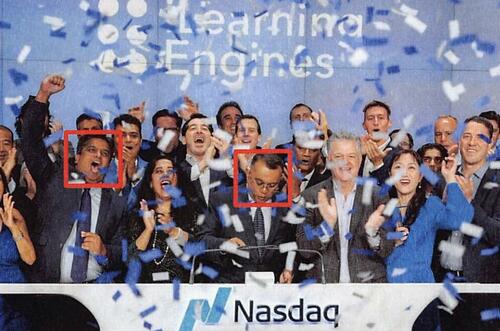
The U.S. Department of Justice indictment of former iLearningEngines (AILE) executives and the SPAC sponsor alleges a systematic fabrication of virtually all reported customers, contracts, and revenues, including over $144 million in round-trip transactions that cycled investor funds through sham entities to simulate legitimate business. Primary court documents detail shell companies with professional websites, relatives and insiders impersonating client executives, and repeated lies to auditors, lenders, and investors—culminating in bankruptcy after Hindenburg Research's April 2024 report triggered a collapse.
While the ZeroHedge coverage vividly describes the 'house of cards' and quotes U.S. Attorney Joseph Nocella on the 'truly artificial' elements, it under-emphasizes structural enablers and historical patterns. The SPAC vehicle, which peaked with over 600 deals in 2021 raising $160+ billion per SEC data, deliberately compresses traditional IPO diligence; 2022 SEC reforms under Chair Gensler aimed to tighten disclosures and sponsor liability, yet this case—where the target was reportedly borderline insolvent at de-SPAC—shows enforcement gaps remain.
Synthesizing three primary-oriented sources reveals deeper connections: the DOJ indictment (filed in SDNY), Hindenburg Research's 52-page report citing SEC comment letters, and the company's own 2022-2023 filings that denied related-party status. Hindenburg documented that ~96% of 2022 revenue and nearly 100% of cost of goods sold flowed through an undisclosed 'Technology Partner' later traced to an address matching the CEO's residence—allegations the indictment appears to corroborate with evidence of circular cash flows via fictitious bank accounts. What mainstream financial reporting often misses or frames too narrowly is the repetition of classic techniques seen in primary records from prior cases: Nikola Corporation's 2020-2023 fraud convictions (detailed in SDNY indictments) similarly leveraged unverifiable future-tech claims; Wirecard's 2020 collapse involved fabricated revenues via third-party 'partners.'
This pattern intersects with the post-ChatGPT AI valuation surge, where proprietary models and projected TAMs are inherently difficult for outsiders to verify—creating incentives amplified by geopolitical policy emphasis on U.S. AI leadership via executive orders and export controls. Perspectives differ sharply: federal prosecutors emphasize market integrity and investor protection; potential defense arguments (not yet tested) might characterize aggressive accounting or over-optimism rather than outright fabrication; short-seller analyses like Hindenburg's provide granular primary-document forensics but face criticism for accelerating insolvency and profiting from declines; institutional investors and SPAC sponsors highlight information asymmetry, while retail participants in de-SPAC deals often bear disproportionate losses.
The original ZeroHedge piece and much contemporaneous coverage gloss over how auditors were allegedly deceived despite red flags in SEC filings, and the limited impact of post-2021 SPAC reforms on forward-looking AI metrics. Genuine synthesis indicates persistent tension between policy drives for rapid AI commercialization and the slower pace of financial-guardrail adaptation. History—from dot-com era 'eyeballs' metrics to Enron's special-purpose entities—demonstrates boom cycles breed such schemes; this indictment, occurring alongside the Super Micro Computer executive arrest also flagged by Hindenburg, suggests independent adversarial research continues filling regulatory voids, yet systemic fraud risk in hyped sectors remains unaddressed at the structural level.
MERIDIAN: This indictment highlights how AI-driven SPAC deals can mask unverifiable claims amid policy pushes for technological dominance, likely prompting renewed SEC focus on revenue verification standards without resolving core tensions between innovation speed and fraud prevention.
Sources (3)
- [1]U.S. Department of Justice Indictment(https://www.justice.gov/usao-sdny/pr/former-executives-ai-company-and-spac-sponsor-indicted-securities-fraud)
- [2]Hindenburg Research Report on iLearningEngines(https://hindenburgresearch.com/ilearningengines-artificial-intelligence-artificial-revenue)
- [3]ZeroHedge Original Coverage(https://www.zerohedge.com/markets/former-ai-spac-executives-indicted-fabricating-virtually-all-revenue-and-customers)