Iran's Enduring Hormuz Leverage: Why America's 2026 'Victory' Masks Deeper Strategic Failure
Despite US claims of victory in the 2026 Iran conflict, Tehran has retained decisive leverage over the Strait of Hormuz, its proxy networks, and nuclear ambiguity. This analysis challenges the dominant narrative by exposing how military strikes failed to alter Iran's core strategic instruments, drawing parallels to historical disruptions and highlighting long-term risks to global energy security and economic stability.
The Defense News report from April 8, 2026, captures a superficial narrative: after nearly six weeks of intense US-Israeli strikes, President Trump and Defense Secretary Pete Hegseth declared a decisive military victory over Iran. Yet this framing fundamentally misses the strategic reality on the ground. Iran has emerged from the conflict bruised but fundamentally intact in the domains that matter most—retaining de facto gatekeeper status over the Strait of Hormuz, its asymmetric proxy networks, and enough nuclear ambiguity to deter future aggression. This outcome doesn't represent a US triumph but rather a profound miscalculation that has entrenched Tehran's leverage over global energy security for the foreseeable future.
Historical patterns reveal what much of the coverage ignored. During the 1980s Tanker War, Iran repeatedly demonstrated its ability to disrupt shipping through mines, anti-ship missiles, and small boat swarms despite facing a US naval armada. The current conflict followed a similar script: while American strikes degraded surface-to-air systems and some above-ground missile production sites, they failed to neutralize Iran's dispersed, hardened underground facilities and its indigenous drone manufacturing base—capabilities honed through years of sanctions evasion and technology transfers from Russia and North Korea. A 2025 International Institute for Strategic Studies (IISS) assessment had already warned that Iran's ballistic missile inventory exceeded 3,000 units with improving precision; post-conflict imagery and open-source intelligence suggest at least 40% of launchers and production lines survived.
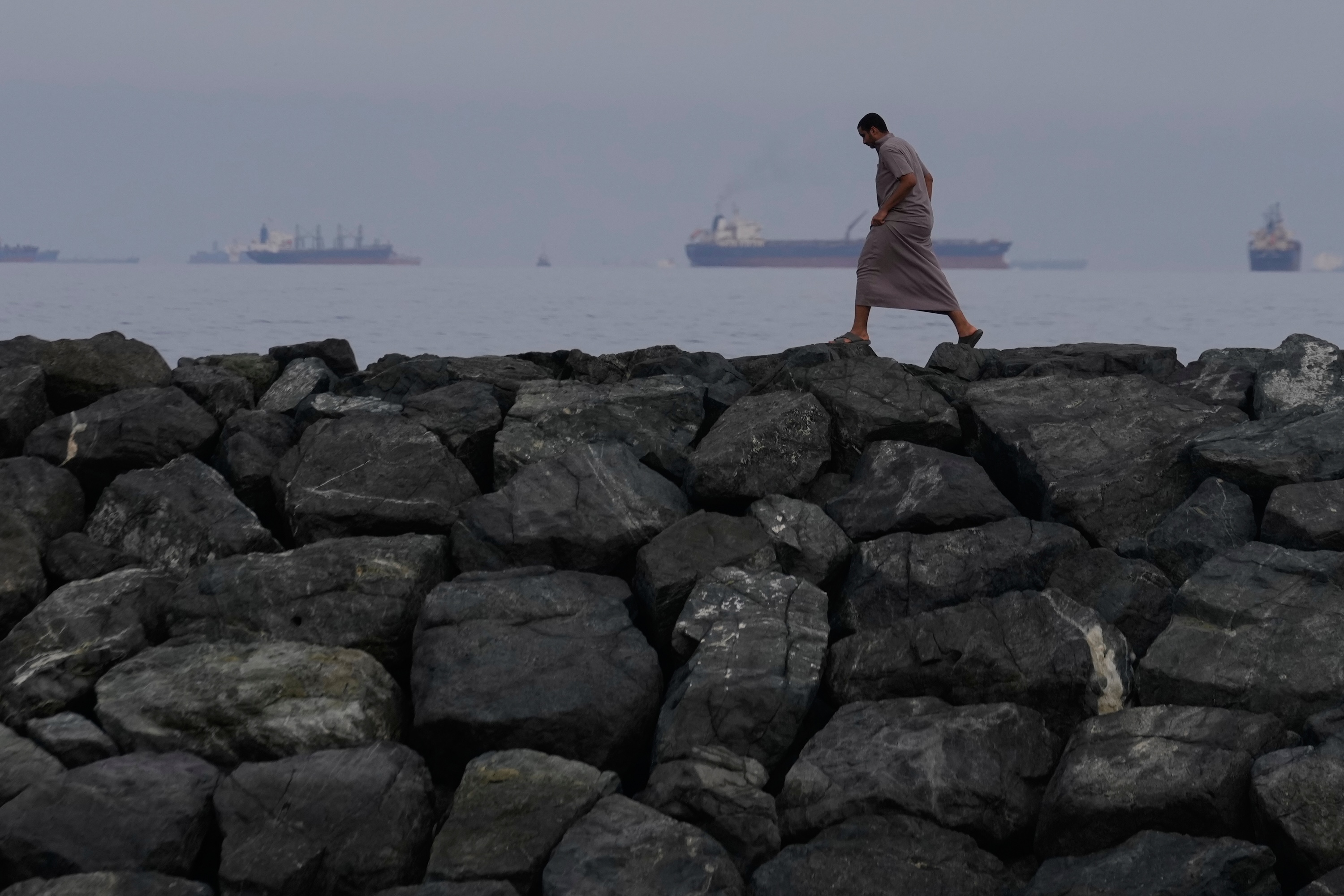
What the original reporting underplayed was the transformation of the Strait of Hormuz from an international waterway subject to occasional harassment into an Iranian-controlled chokepoint where Tehran now selectively dictates terms, including demands for 'safe passage' fees. This evolution mirrors the Houthi campaign in the Bab el-Mandeb Strait, where limited kinetic means achieved outsized economic effects despite Western naval deployments. By synthesizing the Defense News coverage with Reuters reporting featuring Middle East scholar Fawaz Gerges and a concurrent Emirates Policy Center analysis by Ebtesam Al-Ketbi, a clearer picture emerges: Iran's leadership has not only survived but consolidated power. The strikes unified hardliners, eliminated moderate voices calling for restraint, and left the regime with unaccounted enriched uranium stockpiles—precisely the opposite of stated US objectives.
The economic shockwaves further expose long-term vulnerabilities. With roughly 21% of global seaborne oil and LNG transiting Hormuz, Iran's demonstrated resilience has already triggered sustained spikes in energy prices, contributing to inflationary pressures in Europe and Asia. Gulf states, despite public alignment with Washington, privately express alarm at their vulnerability; three senior officials cited in Reuters noted that any future crisis could see insurance rates for tanker traffic become prohibitive. This directly challenges the US victory narrative by highlighting an uncomfortable truth: modern interdependent economies remain hostage to the weakest link in the energy supply chain.
China's muted response during the conflict offers another missed dimension. Beijing, Iran's top oil customer, has quietly expanded its own overland energy corridors and Strategic Petroleum Reserve while benefiting from discounted Iranian crude. The net effect is a relative weakening of Western energy leverage and a corresponding boost to authoritarian supply networks.
Analysts like Gerges correctly identify this as 'Trump’s grave strategic miscalculation.' The campaign achieved tactical degradation but no strategic transformation—no regime change, no nuclear rollback, no severed proxy links to Hezbollah, the Houthis, or Iraqi militias. Instead, it has validated Iran's theory of victory through endurance and asymmetric disruption. As Al-Ketbi warned, the fragile two-week ceasefire risks becoming merely an intermission unless it addresses the full spectrum of Iranian capabilities: missiles, drones, nuclear thresholds, and Hormuz governance.
The deeper pattern here aligns with other 21st-century conflicts—from Afghanistan to Red Sea shipping—where superior conventional firepower struggles against ideologically driven actors embedded in complex terrain and societies. US strategy overestimated the coercive power of airstrikes while underestimating Iran's societal resilience and its willingness to absorb punishment to preserve its 'Axis of Resistance.' This leaves global energy security on a precipice: a single Iranian decision to mine the strait or launch coordinated drone swarms could trigger a 30-50% oil price shock with cascading effects on food security and inflation worldwide.
True victory would have required neutralizing Iran's choke-point dominance through credible diplomatic guarantees, alternative shipping architectures, and regional security pacts—none of which materialized. Instead, the conflict has reset the board in Tehran's favor, exposing the hollowness of kinetic-only approaches to complex geopolitical problems. The coming negotiations will test whether Washington recognizes this new reality or doubles down on a narrative that history is likely to judge as dangerously detached from strategic facts.
SENTINEL: Iran's retained control over the Hormuz chokepoint and surviving asymmetric arsenal means the US 'victory' is largely illusory, leaving 20% of global oil supply perpetually vulnerable and likely forcing higher baseline energy prices and insurance costs for years ahead.
Sources (3)
- [1]As US claims victory, Iran emerges bruised but with leverage over Hormuz(https://www.defensenews.com/news/your-military/2026/04/08/as-us-claims-victory-iran-emerges-bruised-but-with-leverage-over-hormuz/)
- [2]The Strategic Aftermath of the Iran War(https://www.reuters.com/world/middle-east/strategic-aftermath-iran-war-2026-04-10/)
- [3]Chokepoints and Conflict: Energy Security After Hormuz(https://www.iiss.org/publications/strategic-comments/2026/04/chokepoints-and-conflict/)