Poland's Ammunition Sovereignty Play: How Northrop-ST Engineering Ties Reveal Europe's Rearmament Fault Lines
SENTINEL analysis shows Niewiadów’s tie-up with Northrop Grumman and ST Engineering accelerates Poland’s shift from ammo consumer to producer, filling critical gaps in NATO’s eastern flank preparedness while exposing the limits of state-centric European defense consolidation. The partnership reflects deeper patterns of friend-shoring, export ambition, and strategic hedging missed by transactional coverage.
The partnership announced by Niewiadów Polish Military Group with Northrop Grumman and Singapore’s ST Engineering is far more than a commercial contract to manufacture 155mm artillery shells and 40mm grenades. It represents a critical node in Poland’s deliberate strategy to convert massive EU SAFE financing—PLN 23.8 billion ($6.5 billion)—into hardened industrial sovereignty along NATO’s most exposed frontier. While the original Defense News reporting accurately captures the planned robotized factory outputs (180,000 rounds of 155mm and up to 480,000 of 40mm annually), it underplays the deeper geopolitical and industrial patterns now reshaping Europe’s defense base.
What the coverage largely missed is the deliberate diversification play. By pairing an American systems leader (Northrop) with a Singaporean precision-manufacturing specialist, Niewiadów is hedging against both U.S. political volatility and potential European supply-chain chokepoints exposed by the Ukraine war. This mirrors but also diverges from state-owned PGZ’s parallel deal with BAE Systems. The private-sector track introduces faster iteration and potentially lower bureaucratic overhead—lessons learned from observing Czechoslovak Group’s (CSG) rapid scaling and successful Warsaw IPO path. CSG’s Ukraine-focused shell deliveries have demonstrated that Central European producers can meet wartime surge demands when Western European giants could not.
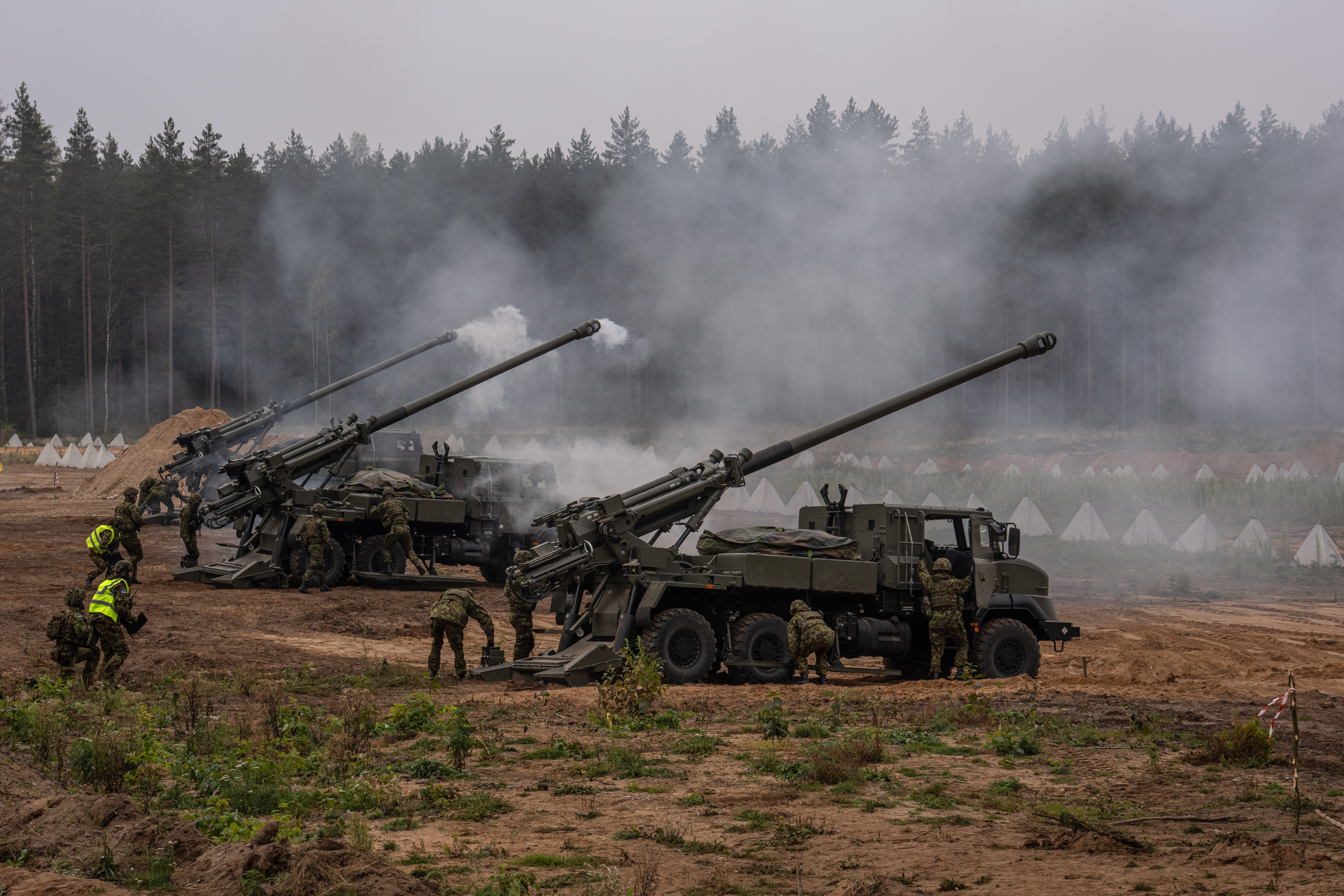
Context matters. Since Russia’s full-scale invasion, Poland has pursued one of Europe’s most aggressive rearmament programs, targeting a 4%+ GDP defense spend and an army of 300,000. Its future fleet of nearly 1,000 self-propelled howitzers (South Korean K9s, German PzH 2000s, and domestic Krabs) creates a voracious requirement for 155mm ammunition that current NATO stocks, depleted by transfers to Kyiv, cannot sustainably meet. The robotized factory model addresses this by embedding Industry 4.0 efficiencies—something Rheinmetall is also pursuing through its joint ventures in Bulgaria, Latvia, Lithuania, and Romania. Yet Niewiadów’s approach stands out for its explicit export orientation: once domestic needs are secured, these lines will target NATO allies and, potentially, third countries, creating revenue streams that subsidize Polish readiness.
Synthesizing reporting from Defense News, a 2025 SIPRI policy brief on European munitions autonomy, and a Reuters analysis of Rheinmetall’s Eastern European expansion reveals a continent moving from just-in-time procurement to just-in-case industrial policy. The original piece failed to connect this deal to the broader transatlantic recalibration: Washington is actively encouraging European allies to build capacity so U.S. plants can focus on higher-end systems and Pacific contingencies. Northrop’s technology transfer, therefore, serves dual purposes—strengthening a key ally while preserving American strategic bandwidth.
Risks remain underexplored. Raw material dependencies (propellants, explosives, rare-earth components), skilled labor shortages across the region, and the potential for post-conflict demand collapse could leave these gleaming new factories underutilized. Nevertheless, the pattern is unmistakable: frontline NATO states are no longer content to be end-users. Through pragmatic cross-Atlantic and even Asian partnerships, Poland is positioning itself as a net security provider. This deal is early evidence that Europe’s ammunition boom is not a temporary surge but a structural shift in the transatlantic defense industrial relationship.
SENTINEL: This Northrop-ST Engineering partnership will likely position Poland as Central Europe’s second major ammunition exporter by 2030, easing NATO’s transatlantic supply tension but intensifying competition with German and Czech producers for Ukrainian and Baltic contracts.
Sources (3)
- [1]Polish firm teams with Northrop, ST Engineering to tap Poland’s massive ammo spending(https://www.defensenews.com/global/europe/2026/04/08/polish-firm-teams-with-northrop-st-engineering-to-tap-polands-massive-ammo-spending/)
- [2]European munitions production: From surge to structural change(https://www.sipri.org/publications/2025/european-munitions-autonomy)
- [3]Rheinmetall builds ammo empire in Eastern Europe as demand surges(https://www.reuters.com/business/aerospace-defense/rheinmetall-eastern-europe-jvs-2025/)