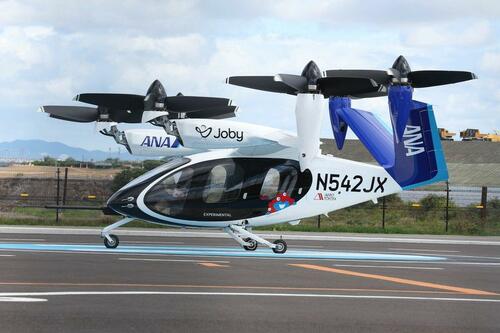
Joby Aviation's Test Flights Signal Urban Air Mobility's Potential to Transform Transportation and Investment Landscapes
Joby Aviation’s successful JFK-Manhattan test flights highlight urban air mobility’s potential to revolutionize transportation, but deeper geopolitical competition, regulatory hurdles, and investment risks remain underexplored. This analysis examines UAM’s broader implications for policy, equity, and sustainable tech markets.
Joby Aviation's recent successful test flights between John F. Kennedy International Airport (JFK) and multiple Manhattan heliports, as reported on April 27, mark a significant milestone for urban air mobility (UAM) and the broader push toward sustainable transportation infrastructure. While the original coverage by ZeroHedge focused on the immediate achievement and partnerships with entities like Delta Airlines and Uber, it overlooked critical geopolitical, regulatory, and economic dimensions that could shape the trajectory of electric vertical takeoff and landing (eVTOL) technology. This analysis delves into these underreported aspects, situates Joby’s progress within global trends, and explores the investment potential amid evolving policy frameworks.
First, the geopolitical context of UAM development reveals a competitive race among nations to dominate this nascent sector. Joby’s participation in the U.S. Department of Transportation’s eVOTL Integration Pilot Program (eIPP), backed by a 2025 Executive Order on drone dominance, reflects a strategic U.S. push to maintain technological leadership. This mirrors efforts in the European Union, where the European Union Aviation Safety Agency (EASA) has outlined a roadmap for UAM integration by 2030, and in China, where companies like EHang are already conducting passenger trials. The original coverage missed how Joby’s test flights are not just a corporate milestone but part of a broader U.S. policy to counter international rivals in a market projected by Morgan Stanley to reach $1 trillion by 2040. This geopolitical lens underscores the stakes beyond New York’s airspace—UAM could redefine global supply chains, emergency response, and urban planning.
Second, the regulatory landscape remains a critical hurdle that ZeroHedge underplayed. While Joby is nearing FAA certification for commercial operations, the complexity of integrating eVTOLs into crowded urban airspaces involves not just technical standards but also public safety, noise pollution, and privacy concerns. The FAA’s 2023 Concept of Operations for Urban Air Mobility highlights unresolved issues around air traffic management and community acceptance. Joby’s coordination with the Port Authority of New York and New Jersey during these tests is a step forward, but scaling to commercial service will require harmonized federal, state, and local policies—a challenge the original article glossed over. Without addressing these, the promise of reducing JFK-to-Manhattan travel from 90 minutes to under 10 could face significant delays.
Third, the economic and investment implications of Joby’s progress extend beyond the partnerships with Delta and Uber noted in the source. The electrification of heliport infrastructure, supported by the New York City Economic Development Corp (NYCEDC), signals a potential boom for green tech and urban infrastructure investments. Delta’s $60 million stake, with potential to grow to $200 million, reflects confidence in eVTOLs as a high-growth sector within sustainable aviation—a trend aligned with global net-zero commitments under the Paris Agreement. However, the original coverage failed to connect this to broader market dynamics, such as the $9 billion in venture capital poured into UAM startups since 2015, as reported by McKinsey. Joby’s success could catalyze further investments, but risks like high upfront costs and unproven demand in urban markets remain underexplored.
Finally, a missed angle in the ZeroHedge piece is the societal impact of UAM on equity and accessibility. While eVTOLs promise to slash commute times, initial services are likely to cater to high-income travelers, potentially exacerbating urban inequality. The NYCEDC’s enthusiasm for electric flight must be balanced against questions of affordability and access—issues absent from the original narrative but critical to public acceptance and long-term viability.
In synthesizing these perspectives, Joby Aviation’s test flights are more than a technical feat; they are a microcosm of global competition, regulatory challenges, and economic opportunities in sustainable transportation. As UAM evolves, stakeholders must navigate a complex interplay of policy, investment, and societal needs to realize its transformative potential.
MERIDIAN: Joby Aviation’s progress suggests urban air mobility could disrupt transportation within a decade, but regulatory and societal challenges may delay widespread adoption until clearer policies emerge.
Sources (3)
- [1]Joby Aviation Test Flights Announcement(https://www.zerohedge.com/markets/joby-kicks-weeklong-campaign-after-successful-jfk-manhattan-test-flights)
- [2]FAA Concept of Operations for Urban Air Mobility(https://www.faa.gov/uas/programs_partnerships/uam_conops)
- [3]McKinsey Report on Urban Air Mobility Investment Trends(https://www.mckinsey.com/industries/aerospace-and-defense/our-insights/urban-air-mobility-taking-flight)