AI Bubble Burst Looms: How Overhyped Tech Spending Masks a Fragile Real Economy Set for 2026 Reckoning
Ed Dowd and corroborating analysts warn that peaking AI spending and private credit strains will trigger a 2026 recession, exposing how record tech valuations have masked weakness in housing, jobs, and global demand amid overlooked credit cycle risks.
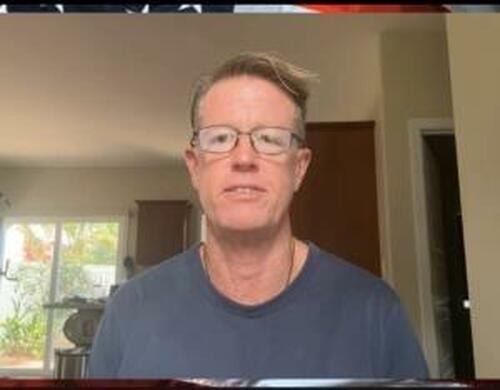
While major indices hover near record highs driven by artificial intelligence enthusiasm, former BlackRock portfolio manager Ed Dowd warns that the 'real' economy—housing, employment, and broad-based growth—is already rolling over. Mainstream coverage has largely overlooked deepening cracks, focusing instead on trillion-dollar AI infrastructure bets. Dowd, who forecasted a 2026 downturn months in advance, argues the AI investment boom has peaked, with its second derivative turning negative as early as Q1 2025 when data center spending artificially propped up otherwise negative GDP prints. Once this artificial support fades, the unwind could expose valuations reminiscent of the dot-com era and accelerate a credit cycle reversal already visible in private markets.
Private credit, which fueled much of the post-pandemic expansion, is showing stress. In March 2026, BlackRock limited withdrawals from its flagship HPS Corporate Lending Fund after redemption requests hit 9.3% of NAV, joining similar moves by Blackstone, Blue Owl, and others. A Congressional Research Service report highlighted how these restrictions, while structural, risk contagion if write-downs accelerate amid illiquid asset revaluations. This 'illusion of liquidity' in private credit, as analyzed by CEPS, coincides with housing market weakness Dowd has flagged for over a year: rising inventory, falling demand, and a situation where renting is now cheaper than owning in many markets.
Geopolitical tensions, including conflict involving Iran, threaten to push oil toward $125–$200 per barrel, per Dowd's models, potentially driving inflation to 5–11% before triggering demand destruction, layoffs, and deflation. This would compound China's ongoing property and growth woes, which Dowd correctly anticipated. The Federal Reserve, caught between sticky inflation and slowing growth, is unlikely to cut rates until recessionary signals intensify, potentially not until early 2027.
Broader AI bubble concerns are gaining traction in mainstream outlets. Alphabet CEO Sundar Pichai told the BBC that 'no company is immune' if the AI boom collapses, citing elements of 'irrationality' in current investment levels. Bloomberg has explored whether the boom is a bonanza or bubble, noting blurred lines between hype and productivity gains, while The Wall Street Journal questioned if AI is 'starting to get soapy' amid frothy valuations for unprofitable ventures. Harvard researchers and other analysts echo that promised productivity revolutions have yet to materialize at scale, with infrastructure costs soaring and returns uncertain.
Dowd views the current cycle as an aging credit expansion hitting its limits. The AI-fueled 'K-shaped' recovery has masked middle-class job losses and consumption weakness. When the bubble fully bursts—potentially delivering 40-50% drawdowns in tech-heavy indices—the spillover to the real economy could be severe: collapsing commodity prices after initial spikes, deeper recession than baseline forecasts, and forced policy pivots. Gold and silver may face short-term pressure from liquidity crunches but remain long-term hedges. As Dowd noted in multiple 2025-2026 interviews, this is the normal credit cycle playing out, but amplified by unprecedented tech concentration. Investors and policymakers ignoring the divergence between Silicon Valley capex and Main Street realities do so at their peril.
LIMINAL: AI-driven market highs are a fragile facade over a weakening real economy; the bubble's burst will accelerate a 2026 recession, forcing sharp Fed cuts and exposing how tech hype diverted attention from credit, housing, and productivity gaps.
Sources (6)
- [1]No firm is immune if AI bubble bursts, Google CEO tells BBC(https://www.reuters.com/sustainability/climate-energy/no-firm-is-immune-if-ai-bubble-bursts-google-ceo-tells-bbc-2025-11-18/)
- [2]Bonanza or Bubble? Where AI Goes From Here(https://www.bloomberg.com/news/articles/2026-03-18/is-an-ai-bubble-set-to-burst-navigating-the-artificial-intelligence-boom)
- [3]BlackRock Fund Limits Withdrawals As Redemptions Surge(https://finance.yahoo.com/news/blackrock-fund-limits-withdrawals-redemptions-200405824.html)
- [4]Ed Dowd: 'Kooky' Valuations & Weak Economy To Lead To Big Downturn By Midterm Elections(https://adamtaggart.substack.com/p/ed-dowd-kooky-valuations-and-weak)
- [5]Is AI a Bubble? It's Starting to Get Soapy(https://www.wsj.com/finance/investing/is-ai-a-bubble-its-starting-to-get-soapy-cfd01706)
- [6]Private Credit Funds Redemption Restrictions: Market Developments and Policy Issues(https://www.congress.gov/crs-product/IN12674)