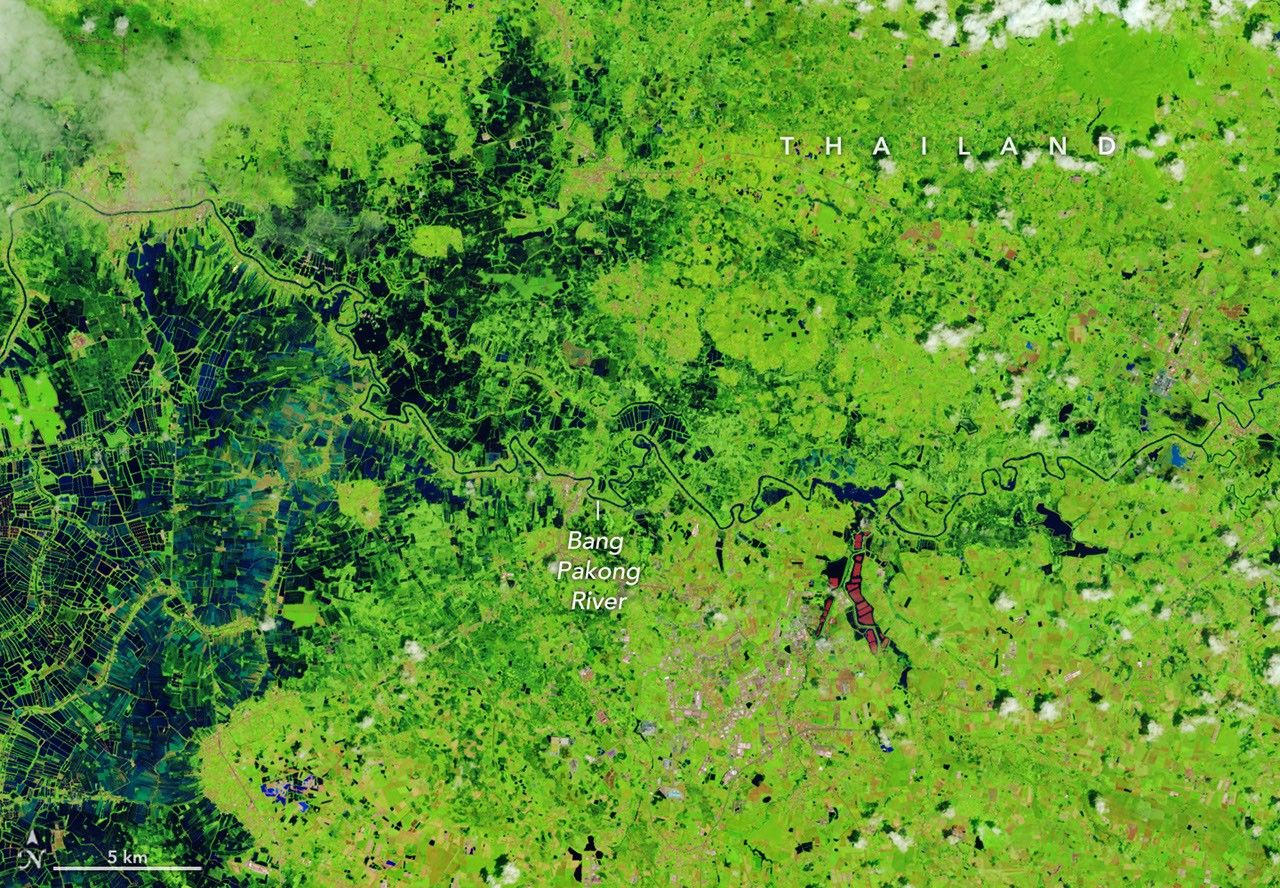
Heavy September-October 2026 rains flooded 50 Thai provinces, damaging 270,000 hectares of farmland and affecting 4 million people
Satellite comparison and ground reports document a major but meteorologically plausible flood event driven by a stalled low-pressure system. Agricultural losses and urban exposure highlight gaps in drainage and early-recovery systems. Continued Gulf warming is expected to increase the frequency of comparable events within the next decade.
Persistent monsoon rains beginning mid-September 2026 produced widespread flooding across Thailand, with the worst impacts concentrated in low-lying agricultural zones and urban fringes of Bangkok. Government and Red Cross assessments record 50 affected provinces, more than 4 million people impacted, dozens of fatalities, and roughly 270,000 hectares of rice and orchard land damaged. The event aligns with seasonal norms yet exceeds typical intensity because a slow-moving low-pressure system drew extra moisture from the unusually warm Gulf of Thailand.
Bangkok’s geography amplifies risk: the city sits on a subsiding delta with inadequate drainage and rapid upstream runoff. The Conversation analysis notes that even modest increases in rainfall intensity, now observed more frequently, push the metropolis past its design thresholds. Historical records show similar September deluges in 2011 and 2017 produced comparable agricultural losses, yet recovery timelines have lengthened as insurance penetration remains low and smallholder farmers lack access to rapid drainage infrastructure.
Climate attribution studies indicate that the probability of multi-day rainfall totals exceeding 250 mm in the Chao Phraya basin has risen roughly 1.5-fold since the late twentieth century. Continued warming of the Gulf will likely shorten return periods for events of this magnitude. Thai authorities have begun expanding retention basins north of Bangkok, but completion dates stretch into the 2030s, leaving millions exposed during the next two monsoon seasons.
Next steps include post-event damage verification using Sentinel-1 SAR imagery and deployment of mobile pumping stations in the hardest-hit districts before the November rice harvest window closes.
NASA Earth Observatory: Flood extent in Prachin Buri province will contract by at least 40 percent by 15 November 2026 as measured by Landsat-9 revisit imagery.
Sources (3)
- [1]Primary Source(https://science.nasa.gov/earth/earth-observatory/floodwaters-overwhelm-thailand/)
- [2]Supporting Source(https://theconversation.com/as-the-planet-warms-cities-like-bangkok-could-be-increasingly-inundated-by-deadly-floods-248123)
- [3]Supporting Source(https://reliefweb.int/report/thailand/tha-flood-09-2026-heavy-rainfall-caused-flooding-3)