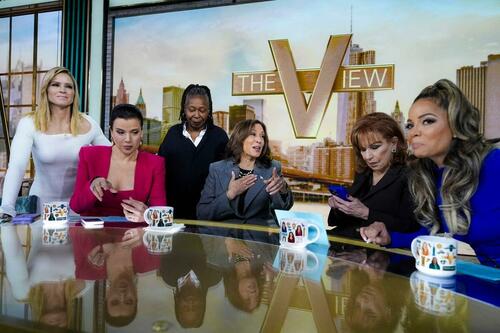
Disney's FCC Petition for 'The View' Exemption Lays Bare Media's Exploitation of Regulatory Loopholes for Partisan Advantage
Disney is seeking FCC affirmation that "The View" qualifies as bona fide news to evade equal time obligations for political candidates, a request now open for public comment. This highlights how media outlets exploit regulatory exemptions for partisan programming, exposing institutional capture that allows one-sided advocacy under journalistic cover—a pattern broader than the current partisan debate over FCC Chair Brendan Carr's scrutiny.
In a move that underscores long-standing patterns of institutional capture in U.S. media regulation, Disney has petitioned the Federal Communications Commission to formally declare ABC's daytime talk show "The View" a "bona fide news interview program." This would exempt it from the longstanding equal opportunities rule, which requires broadcasters to provide comparable airtime to opposing political candidates. FCC Chairman Brendan Carr publicized the request on May 22, 2026, opening it for public comment through June 22 and directly questioning whether the heavily opinion-driven program—known for its progressive-leaning hosts and guests—truly qualifies alongside established news formats like "Meet the Press."[1][1]
The petition, filed by Disney-owned stations including KTRK-TV and ABC, leans on a 2002 FCC staff letter and argues that reclassifying or scrutinizing "The View" raises serious First Amendment concerns. ABC's filing warns that the FCC's ongoing investigation into potential equal time violations—sparked by appearances from political candidates without equivalent opportunities for others—threatens to "upend decades of settled law and practice and chill critical protected speech." They contend the equal time statute itself may not survive modern constitutional scrutiny, particularly when applied to programming like "The View."[2]
Yet this defense glosses over the original congressional intent behind the 1934 Communications Act and its 1959 amendments: preventing media gatekeepers from wielding broadcast licenses to sway election outcomes by selectively platforming candidates. Congress carved out narrow exemptions for genuine journalistic question-and-answer formats precisely to balance information flow to voters, not to shield partisan panel shows. "The View," with co-hosts like Whoopi Goldberg and Joy Behar frequently delivering commentary that advances specific ideological viewpoints, stretches "news" far beyond its 1959 parameters. Mainstream coverage has largely framed the FCC's review as political retaliation tied to broader probes of Disney's DEI policies, accelerated license renewals, and content from shows like "Jimmy Kimmel Live!" critical of the current administration. This downplays a deeper pattern: how legacy media conglomerates have captured regulatory interpretations to operate as de facto advocacy arms while claiming journalistic protections.[2]
Connections emerge when viewed against FCC history. The repealed Fairness Doctrine once mandated balanced coverage of controversial issues; its 1987 demise was justified as promoting free speech. Yet the narrower equal time rule persisted—until creative lawyering turned entertainment-adjacent programming into "bona fide news." Disney's maneuver exemplifies institutional capture: a powerful corporation leveraging decades-old precedents and First Amendment arguments to preserve one-sided political influence on public airwaves. Carr's public notice highlights that under FCC precedent, programming motivated by partisan purposes (advancing or harming candidacies) does not qualify. If approved, this could normalize echo-chamber daytime political talk as "news," further eroding voter access to balanced information. If rejected, it may force media outlets to either diversify guest rosters or abandon claims of news immunity—potentially reshaping broadcast political discourse.
This episode reveals what mainstream narratives obscure: rules meant to democratize the public square have been gamed by concentrated interests. Whether under Democratic or Republican FCC leadership, selective enforcement and expansive interpretations favor incumbents. Disney's filing, amid parallel DEI and licensing scrutiny, illustrates how media-political entanglements persist, with regulatory petitions serving as both shield and strategic counter in an era of heightened polarization. The public comments will test whether the FCC prioritizes the rule's voter-empowerment goal or defers to industry precedent.
LIMINAL: Approving this exemption would cement partisan daytime programming as protected 'news,' reducing electoral balance on broadcast TV and demonstrating how regulatory capture lets dominant media shape narratives without reciprocity.
Sources (4)
- [1]Disney seeks FCC 'equal time' exemption for 'The View'(https://thehill.com/homenews/media/5891668-disney-fcc-the-view-equal-time/)
- [2]ABC Says FCC's Equal Time Crackdown On 'The View' Threatens Speech(https://variety.com/2026/tv/news/abc-trump-fcc-the-view-chill-first-amendment-speech-equal-time-rule-1236741645/)
- [3]FCC Seeks Comment on Whether Disney's 'The View' Is Bona Fide News(https://communicationsdaily.com/news/2026/05/26/fcc-seeks-comment-on-whether-disneys-the-view-is-bona-fide-news-2605220052)
- [4]Disney ABC Filing on The View (DOC-421580A1)(https://docs.fcc.gov/public/attachments/DOC-421580A1.pdf)