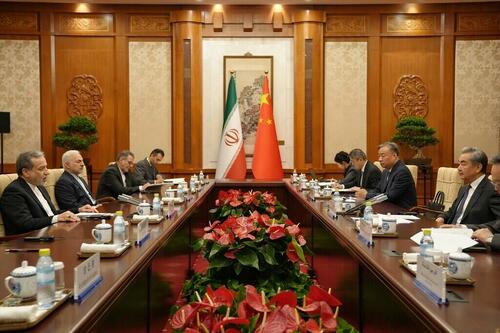
China's Calculated Intervention: Broker of De-Escalation in Iran Conflict Ahead of Trump-Xi Summit
China is actively mediating to end the Iran war and reopen the Strait of Hormuz during Araghchi's Beijing visit, leveraging its influence to stabilize oil markets and strengthen its position ahead of the Trump-Xi summit, revealing underreported strategic depth in multipolar diplomacy.
In a significant display of diplomatic leverage, China has positioned itself as a key player urging an end to the ongoing Iran conflict, emphasizing the immediate reopening of the Strait of Hormuz during high-level talks in Beijing. On May 6, 2026, Iranian Foreign Minister Abbas Araghchi met with Chinese Foreign Minister Wang Yi, marking the first such visit since the US-Israel-Iran war began in late February. Wang explicitly called for a 'comprehensive ceasefire,' stating China was 'deeply distressed' by the war and that 'a resumption of hostilities is inadvisable.' He further stressed the international community's shared concern for restoring safe passage through the Strait of Hormuz, a chokepoint carrying roughly one-fifth of global oil and gas supplies. Araghchi echoed these sentiments, noting it was 'possible to resolve the issue of reopening the Strait of Hormuz as soon as possible,' while expressing appreciation for China's earlier four-point peace proposal.[1][2]
This timing is no coincidence. The meeting occurs just days before a pivotal Trump-Xi summit scheduled for May 14-15, where Iran, nuclear concerns, and regional stability are expected to feature prominently. By initiating these talks and pressing Tehran, Beijing is signaling its stake in preventing broader escalation that could spike global energy prices and derail economic recovery. As the largest buyer of Iranian oil—often in defiance of US sanctions—China has both economic incentives and diplomatic leverage. Analysts note this move underscores Beijing's behind-the-scenes efforts to defuse tensions, building on earlier interventions where China urged flexibility from Iran to avoid prolonged disruption to Persian Gulf energy flows.[3]
Mainstream coverage has often centered on US threats—such as President Trump's warnings of renewed bombing if the strait remains blocked—and American diplomatic overtures. Yet this narrative underplays China's proactive role in coordinating messaging with Tehran, including appreciation for Iran's pledges regarding its nuclear program. Deeper connections reveal Beijing's strategy: protecting its energy security and trade routes while emerging as a counterweight to unilateral Western actions. By hosting Araghchi at its initiative and aligning on calls for post-war regional frameworks, China is not only safeguarding its imports but also shaping a multipolar Middle East where its brokering enhances its global influence. This could yield advantages in Trump-Xi negotiations, from trade imbalances to technology restrictions, by demonstrating Beijing's ability to stabilize crises Washington cannot fully control alone. Earlier Chinese diplomacy, including dozens of calls by Wang Yi to regional actors and joint initiatives, laid the groundwork for fragile ceasefires, highlighting a consistent pattern of favoring political settlement over military force.[4][5]
The Hormuz crisis has already rattled markets, with Iran's restrictions in response to perceived blockades threatening global supply chains. China's push for swift reopening aligns with its 'four-point proposal' and broader vision for a stable post-conflict order, potentially averting a wider war that could draw in additional Gulf states or escalate nuclear rhetoric. While US officials like Secretary of State Marco Rubio have publicly urged China to pressure Iran on isolation, the optics of Araghchi's warm reception in Beijing underscore the opposite: Tehran's enduring partnerships. This heterodox angle suggests mainstream U.S.-centric reporting misses how China's intervention serves dual purposes—humanitarian and strategic—reinforcing its image as a responsible global power less inclined toward kinetic solutions.
LIMINAL: China's timely mediation will likely stabilize global oil flows and extract concessions in Trump-Xi talks, exposing the shift toward Beijing-led de-escalation in crises where US leverage has limits.
Sources (4)
- [1]China Urges Opening of Hormuz in Iran Talks Before Xi Meeting(https://www.bloomberg.com/news/articles/2026-05-06/iran-s-top-diplomat-meets-wang-yi-in-first-china-trip-since-war)
- [2]Iran foreign minister meets Chinese counterpart a week before Trump's Beijing trip(https://www.reuters.com/world/asia-pacific/chinese-foreign-minister-kicks-off-meeting-with-iranian-counterpart-2026-05-06/)
- [3]Trump threatens Iran with bombing if it doesn't reopen Strait of Hormuz(https://apnews.com/article/iran-us-israel-war-china-may-6-2026-3d061a90ccde095178d9b988d94d08f3)
- [4]China Pressed Iran Toward Cease-Fire, Iranian Officials Say(https://www.nytimes.com/2026/04/08/world/asia/china-iran-cease-fire.html)