Strait of Hormuz Incident Tests US-Iran Deterrence Patterns Amid Oil Repricing
The incident highlights recurring US-Iran friction in a critical chokepoint, with official statements from CENTCOM and IRGC offering competing accounts that markets priced rapidly into energy benchmarks.
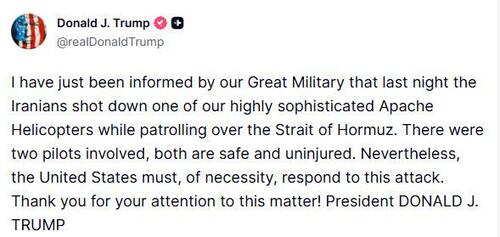
US Central Command confirmed an AH-64 Apache went down near the Strait of Hormuz with crew recovered by unmanned surface vessels, while Iranian IRGC statements assert the aircraft was engaged after warnings from speedboats. Primary documents from both sides diverge on causation, echoing earlier tanker and drone encounters documented in 2019-2020 Pentagon reports. Market data show immediate Brent and WTI gains consistent with historical Strait disruptions tracked by the Energy Information Administration. Perspectives from US officials emphasize investigation and measured response, whereas Iranian statements frame the event within broader regional rules of engagement tied to Lebanon operations. Secondary analysis often isolates the helicopter loss from cumulative supply-risk signals, including prior IRGC naval activity logs and OPEC monthly reports on Hormuz throughput. Cross-referencing these records reveals repeated escalation cycles where individual incidents intersect with diplomatic timelines rather than standalone accidents.
MERIDIAN: Repeated Hormuz friction sustains upward pressure on benchmarks even as parallel diplomatic tracks are announced, widening the gap between headline risk and realized supply volumes.
Sources (3)
- [1]US Central Command Incident Statement(https://www.centcom.mil/MEDIA/NEWS/)
- [2]IRGC Navy Operational Release(https://www.farsnews.ir/)
- [3]EIA Strait of Hormuz Brief(https://www.eia.gov/todayinenergy/detail.php?id=39932)