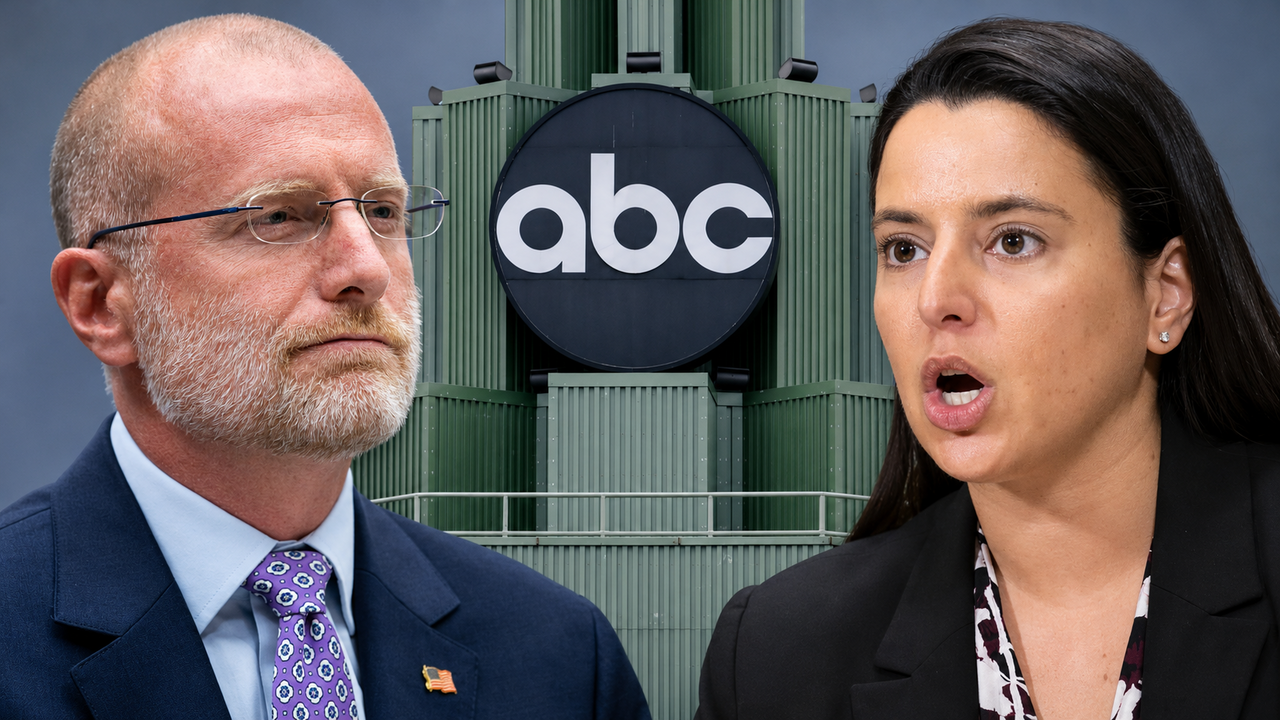
Federal judge blocks FCC early review of eight ABC station licenses, calling retaliation claim 'not a close case'
A federal judge has halted the FCC’s rare early review of eight Disney-owned ABC licenses, finding the move likely First Amendment retaliation tied to presidential criticism of the network. The order is narrow, preliminary, and disputed by the agency.
Documented: On November 25, 2026, U.S. District Judge Loren AliKhan of the District of Columbia granted Walt Disney and ABC a preliminary injunction stopping the Federal Communications Commission from taking further action in early license-renewal proceedings against eight ABC-owned stations, including issuing a Hearing Designation Order. She denied the FCC’s motion to dismiss. In a written opinion she said, “This is not a close case,” and found Disney likely to succeed on a First Amendment retaliation claim. She wrote that FCC Chairman Brendan Carr “has taken President Trump’s rhetoric as his marching orders,” and that it was “no coincidence” the Media Bureau ordered early renewals on April 28, 2026—the day after President Trump criticized a Jimmy Kimmel skit—when the licenses were not due until 2028 at the earliest. Courts and news outlets report the FCC had not used this early-review tool in more than half a century.
Documented, and narrower than many headlines: AliKhan refused Disney’s request to bar “any actions, formal or informal, to coerce or threaten” ABC outside those renewal proceedings, because the company had not specified what those acts would be. The order is a preliminary finding of likely success and irreparable harm, not a final judgment that the licenses are forever beyond review. The FCC’s stated rationale was a probe of Disney employment and DEI practices. The judge treated that explanation as likely pretext, citing timing, public statements, the severity of the tool, and the agency’s own acknowledgment of other ways to compel evidence. An FCC spokesperson said the injunction was “wrong on the facts and wrong on the law” and that the commission would keep using “lawful authority to hold broadcasters accountable to their public interest obligations.”
Claimed, and credited by the court only as evidence of chill, not as independently adjudicated fact: Disney told the court that political bookings had been altered since the probe began, including that no candidate for public office had appeared on The View for a period, and that programming decisions (including how a presidential address was carried) were weighed against license risk. Those are party declarations the judge cited; they are not findings that particular segments were unlawful or that every programming change was caused solely by the FCC.
Speculated, and not established by the ruling: that the decision marks a systemic collapse of the separation of powers, or that mainstream outlets have concealed the case. The record that is public is the opposite of concealment—Reuters, POLITICO, CNN, the Los Angeles Times, The Guardian, Forbes, and Bloomberg all reported the injunction, the “marching orders” language, the April timing, and the FCC’s disagreement. What the opinion actually isolates is a licensing power that is real (broadcast stations operate under renewable public-interest licenses) being used, on this record, in a way a district court found likely retaliatory. The unresolved questions are procedural and still live: whether an appeals court will treat the early-renewal order as unreviewable agency process, whether a DEI or public-interest theory can be pursued by some other lawful means, and whether informal pressure the injunction does not reach continues. Those are the fracture lines in the case. They are not the same thing as a finding that regulatory agencies have been generally disarmed, or that the First Amendment claim has already been won on the merits.
ABC’s owned stations in major markets cannot, for now, be pushed into an early license hearing that could threaten their ability to stay on the air, while the FCC says it will keep enforcing public-interest rules and disputes the court’s reading of the law. Viewers and other licensees are affected only to the extent this preliminary order limits one specific proceeding, not all FCC oversight of broadcasters.
Sources (6)
- [1]US judge blocks FCC from targeting Disney-owned ABC stations(https://www.reuters.com/world/judge-bars-us-fcc-taking-steps-threaten-abcs-broadcast-license-2026-11-26/)
- [2]‘Not a close case:’ Judge blocks review of ABC’s broadcast licenses(https://www.politico.com/news/2026/11/25/judge-blocks-review-abc-broadcast-license-01184266)
- [3]Judge blocks Trump’s FCC from targeting ABC stations: ‘This is not a close case’(https://www.cnn.com/2026/11/25/media/trump-fcc-carr-disney-abc-stations-judge-blocked)
- [4]Trump, FCC illegally sought to punish ABC in free speech case, judge rules(https://www.latimes.com/entertainment-arts/business/story/2026-11-25/trump-fcc-illegally-sought-to-punish-abc-in-free-speech-case-judge-rules)
- [5]Judge blocks Brendan Carr-led FCC from taking any further action against ABC’s licenses(https://www.theguardian.com/us-news/2026/nov/25/brendan-carr-fcc-abc-licenses)
- [6]Court Blocks FCC from Early Review of ABC Broadcast Licenses(https://reason.com/volokh/2026/11/25/court-blocks-fcc-from-early-review-of-abc-broadcast-licenses/)