Hedge Fund Filings Show Druckenmiller Cut TSMC 94% Before AI Selloff
Quarterly 13F filings show several large hedge funds reduced semiconductor holdings by Sept. 30, before a November rout in chip stocks. The record shows Duquesne and Lone Pine cut major positions while moving into different assets, including gold miners and selected chip names. It matters because concentrated investors in AI infrastructure faced a rapid repricing after institutional positioning had already shifted.
Quarterly 13F filings filed with the SEC on Monday showed major hedge funds had already reduced semiconductor exposure by Sept. 30, weeks before the Philadelphia Semiconductor Index fell 12.25% on Nov. 5 and the Nasdaq logged its worst day since the pandemic. Duquesne Family Office cut TSMC by 94%, from $282 million to $15 million, and exited AMD, Arm, Lam Research and other chip names. Lone Pine also cut Applied Materials by 92% and sold Seagate outright.
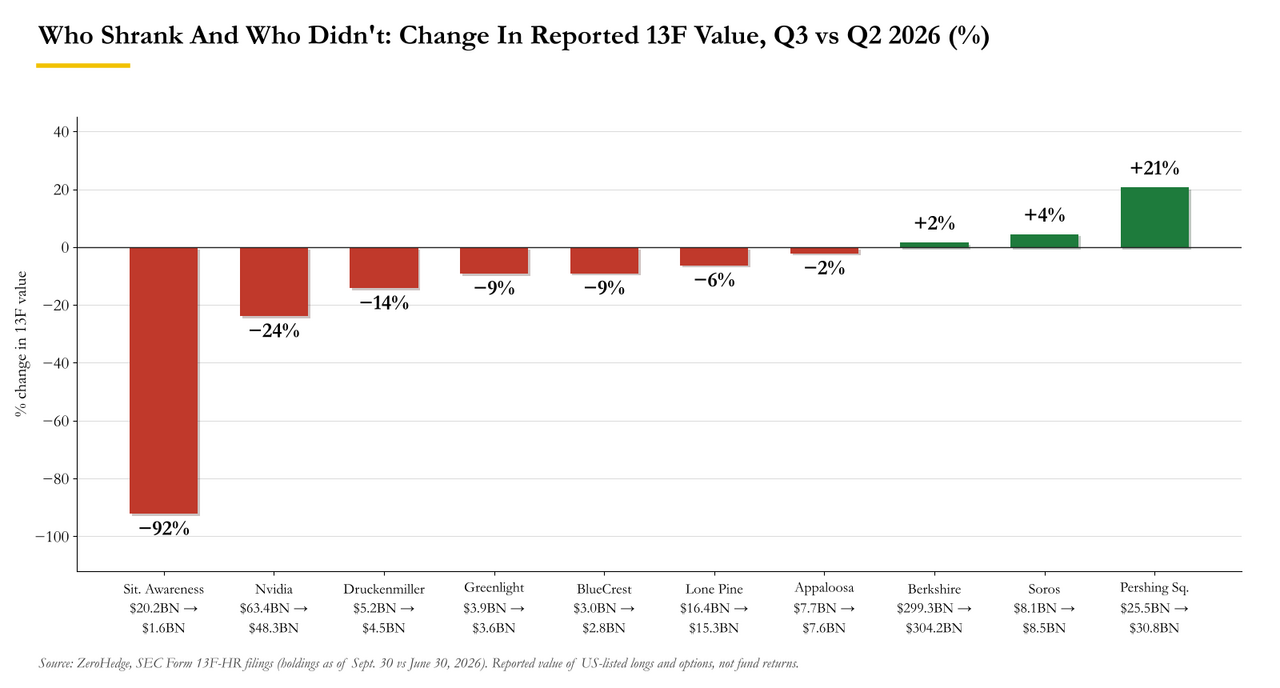
The filings cover only U.S.-listed long positions and options, not shorts, swaps, bonds or foreign-listed memory makers, so they are partial and dated before October. Still, seven of ten closely watched books reported smaller holdings than at June quarter-end. Goldman estimates cited by Reuters said tech-focused long/short funds that were up 24% at their June peak were roughly flat after Nov. 5, with high-beta TMT momentum stocks down 56% since. JPMorgan estimated October cost the hedge fund industry about 3%.
The record shows divergence inside the AI trade rather than a single exit. Duquesne moved toward Seagate and gold miners, adding $315 million in Seagate, $90 million in calls and $129 million across Newmont, Barrick and Agnico Eagle. Lone Pine reduced equipment, memory and AI-power names while adding TSMC and Intel, suggesting some chip money changed seats instead of disappearing. Nvidia also sold about a quarter of its Intel stake, according to the filings reviewed.
The stakes are broader than fund performance. Retail and institutional investors concentrated in semiconductor and AI infrastructure stocks faced a rapid repricing after the November selloff, while funds with the earliest disclosed cuts had already been de-risking. The report frames the episode around Aschenbrenner's reported $18.7 billion loss, though the filings themselves cover only disclosed long positions. Headline price action can lag the positioning record: by the time the market moved, some managers had already trimmed exposure, rotated within the supply chain or sought defensive assets.
The filings show that some large investors had already reduced semiconductor exposure before the November selloff, giving investors a clearer view of positioning behind the AI trade's losses. It matters because concentrated retail and institutional exposure to chip stocks was repriced after the funds' earlier rotations.
Sources (1)
- [1]From Druckenmiller's Chip Dump To Aschenbrenner's $18.7 Billion Vanishing Act: What The "Smart Money" Was Doing Right Before The AI Trade Blew Up(https://www.zerohedge.com/markets/druckenmillers-chip-dump-aschenbrenners-187-billion-vanishing-act-what-smart-money-was)