Hungarian Officials Link Ukraine to Foiled TurkStream Sabotage in Serbia, Revealing Pattern of Proxy Energy Attacks
Explosives found near Serbia's TurkStream link prompt Hungarian accusations of Ukrainian sabotage amid a documented pattern of drone attacks, pipeline closures, and election interference, highlighting proxy tactics against European energy security that receive limited mainstream scrutiny.
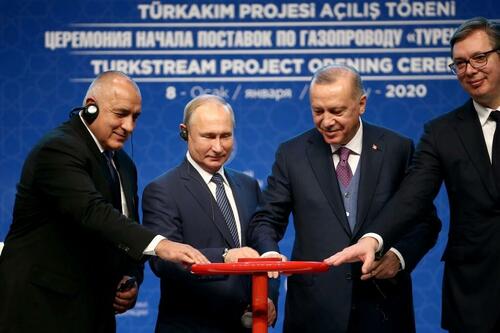
Recent discovery of powerful explosives and detonators near the Balkan Stream section of the TurkStream pipeline in northern Serbia has triggered sharp accusations from Hungarian leadership pointing toward Ukrainian involvement. Hungarian Prime Minister Viktor Orbán visited the site on April 6, 2026, describing the foiled plot as part of Kyiv's years-long effort to sever Europe from Russian energy supplies, calling it a "mortal danger" for Hungary which relies on the pipeline for over half its natural gas. Foreign Minister Péter Szijjártó reinforced this by stating the incident "fits into the pattern" of Ukrainian strikes on energy infrastructure, citing recent drone attacks on the Russian segment of TurkStream and the prolonged closure of the Druzhba oil pipeline despite repairs.
Magyar Nemzet has reported a series of prior incidents targeting TurkStream, including Ukrainian drone strikes on Russian territory in March 2026 that Hungarian officials labeled direct attacks on Hungarian sovereignty. These connect to older intelligence claims of Ukrainian plans dating back years to simultaneously sabotage both Nord Stream and TurkStream pipelines, aiming to permanently isolate Central Europe from affordable Russian gas. Budapest has accused Zelensky's government of deliberately maintaining an energy blockade on Hungary and Slovakia while interfering in upcoming Hungarian elections by exacerbating the crisis to favor opposition voices.
While Serbian intelligence chief Đuro Jovanić publicly ruled out direct Ukrainian orchestration—suggesting instead a migrant-linked radical group—officials have not entirely dismissed the possibility of Ukraine as a contractor. Ukraine has issued categorical denials, and mainstream Western coverage has often framed energy infrastructure incidents as solely Russian provocations or downplayed patterns implicating Kyiv. Russia, meanwhile, has highlighted presumed "traces" of Ukrainian interference.
This episode exposes underreported dynamics of the proxy conflict: energy infrastructure as a hybrid battlefield where attacks on Russian pipelines simultaneously punish European nations pursuing energy diversification or neutrality. Hungary's dependence on the southern route, Orbán's warnings of economic standstill if severed, and the timing ahead of elections suggest calculated pressure tactics. Connections to the 2022 Nord Stream incident—where similar Ukrainian planning was alleged in regional reports—indicate a consistent strategy that mainstream outlets systematically underreport when it implicates Western proxies rather than Moscow. Official statements from Budapest, corroborated across multiple outlets, paint a clearer picture of escalated hybrid warfare against dissenting EU members.
LIMINAL: Ukraine-linked energy sabotage against pipelines serving independent EU states like Hungary risks fracturing European unity further while exposing how proxy tactics now target critical civilian infrastructure to enforce energy isolation from Russia.
Sources (4)
- [1]Hungary's Orban Visits Pipeline As Serbia Pushes Back On Claims Blaming Ukraine For Sabotage(https://www.rferl.org/a/hungary-serbia-turkstream-gas-pipeline-ukraine-explosives/33725865.html)
- [2]Serbia, Hungary say explosives found at Russian gas pipeline(https://www.dw.com/en/serbia-russian-gas-pipeline-explosives-sabotage-hungary-orban/a-76674841)
- [3]A Series of Attacks Targeting TurkStream: This Was Not the First(https://magyarnemzet.hu/english/2026/04/masolat-tamadasok-sora-a-torok-aramlat-ellen-nem-ez-volt-az-elso-eset)
- [4]Russia claims Ukraine may be behind TurkStream attacks as Serbia finds explosives near pipeline(https://www.aa.com.tr/en/eurasia/russia-claims-ukraine-may-be-behind-turkstream-attacks-as-serbia-finds-explosives-near-pipeline/3894792)