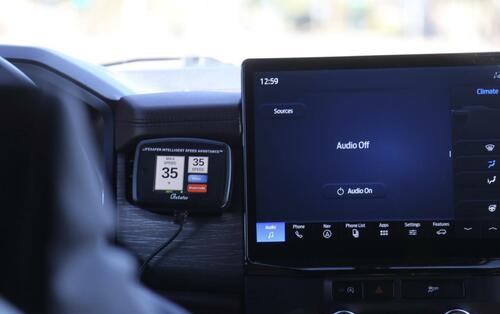
Washington's Speed-Limiter Mandate Tests Boundaries of Tech-Enforced Compliance and Personal Mobility
Washington HB 1596 imposes GPS speed limiters on repeat speeders from 2029, balancing safety gains against privacy, cost, and freedom tradeoffs while aligning with emerging global tech-enforcement trends.
House Bill 1596, enacted in Washington, requires repeat offenders convicted of excessive speeding—defined as 10 mph over limits in zones 40 mph or below, or 20 mph over on higher-speed roads—to install intelligent speed assistance devices using GPS to cap vehicle velocity, with only three monthly overrides permitted, effective January 2029. This follows a 2024 fatal crash cited in legislative findings. Primary legislative text from the Washington State Legislature emphasizes public safety data from the National Highway Traffic Safety Administration showing speeding as a factor in roughly 29% of traffic fatalities annually, yet omits detailed analysis of long-term behavioral outcomes or device error rates documented in European trials of mandatory Intelligent Speed Assistance since 2022. The measure imposes installation, leasing, and $21 monthly fees on drivers unless income-qualified for subsidies, while criminalizing tampering as a gross misdemeanor with penalties up to one year imprisonment and $5,000 fines. Perspectives diverge sharply: safety advocates reference state crash statistics linking reckless driving to preventable deaths, arguing technological caps extend enforcement beyond traditional policing; civil liberties analyses, including those aligned with Fourth Amendment precedents on vehicle surveillance, highlight GPS tracking as an expansion of state monitoring into private travel without individualized warrants. Equity concerns emerge from the financial burden, potentially disproportionately affecting lower-income drivers despite the assistance fund, while federal precedents like NHTSA voluntary guidelines on speed management contrast with this state's coercive approach. The original coverage understates parallels to EU Regulation 2019/1939 mandating ISA in new vehicles and overlooks potential data-sharing implications with insurance or law enforcement databases. Broader patterns indicate accelerating state-level adoption of embedded vehicle controls, shifting from reactive penalties to proactive restriction of daily driver autonomy.
MERIDIAN: State-level speed limiter mandates signal a policy shift toward embedded vehicle controls that prioritize aggregate safety metrics over individualized mobility rights.
Sources (3)
- [1]Primary Source(https://app.leg.wa.gov/billsummary?BillNumber=1596&Year=2025)
- [2]Related Source(https://www.nhtsa.gov/book/countermeasures-that-work/speeding-and-speed-management)
- [3]Related Source(https://eur-lex.europa.eu/legal-content/EN/TXT/?uri=CELEX:32019R1939)
Corrections (1)
EU Regulation 2019/1939 mandating ISA in new vehicles
EU Regulation 2019/1939 amends emissions rules (Regulation 582/2011) for heavy-duty vehicles on auxiliary emission strategies, OBD access, cold-start emissions, and particle measurements. It contains no provisions on ISA or vehicle safety systems. ISA is mandated by Regulation (EU) 2019/2144 (General Safety Regulation), requiring fitment in new M/N category vehicles from 2022 (new types) and 2024 (all new vehicles).