Global Diesel Tightness Persists into Winter as Refinery Capacity Lags Geopolitical Disruptions
Credible reporting from Reuters, Bloomberg, IEA, EIA, and industry conferences validates diesel market tightness from refinery shortfalls and geopolitical hits on Russian and Middle Eastern capacity, with risks extending into winter 2026-27 for global supply chains and prices.
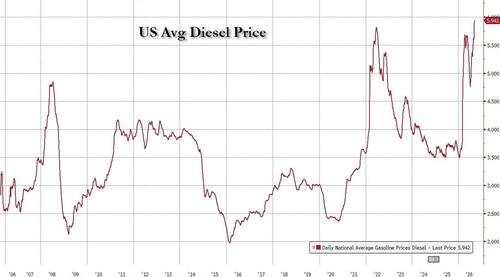
Industry executives and official data confirm that the global diesel market remains under significant strain heading into late 2026, driven by constrained refining capacity and ongoing conflicts disrupting supply from Russia and the Middle East. At the APPEC conference in Singapore, Vitol CEO Russell Hardy highlighted that roughly 2 million barrels per day (bpd) of diesel supply is missing from Russia and nearly another 2 million bpd from the Middle East due to refinery damage and export restrictions. Middle East product exports through the Strait of Hormuz have recovered far more slowly than crude, with refined products at only about 1 million bpd out of 10 million bpd total flows. Russia extended its diesel export ban through September 30, 2026, following repeated Ukrainian drone strikes that reduced its refinery throughput to the lowest levels in over two decades. US refineries have operated at or near 98% utilization rates this summer, with little remaining slack, while domestic atmospheric distillation capacity has declined to approximately 18.2 million bpd as of January 2026 due to closures such as LyondellBasell’s Houston facility and Phillips 66’s Los Angeles plant. The US Energy Information Administration (EIA) projects distillate inventories falling to their lowest levels since 2003, and the International Energy Agency (IEA) notes diesel prices in the US surpassing $200 per barrel—94% above pre-war levels—with similar pressures in Europe and Asia. These dynamics are expected to sustain elevated crack spreads and product prices through the Northern Hemisphere winter, amplifying costs across logistics, agriculture, and manufacturing supply chains while contributing to broader inflationary pressures.
Supply Chain Analyst: Sustained high diesel prices will increase transportation and logistics costs globally through at least Q1 2027, raising consumer goods prices and challenging central bank inflation targets while accelerating demand reduction in heavy transport and farming sectors.
Sources (6)
- [1]Global diesel supply to stay tight through winter, industry execs say(https://www.reuters.com/business/energy/global-diesel-supply-stay-tight-through-winter-industry-execs-say-2026-09-08/)
- [2]Oil markets dominate the headlines, but diesel shortages are the bigger concern(https://www.commbank.com.au/articles/newsroom/2026/09/oil-markets-diesel-shortages.html)
- [3]US refinery capacity declines in 2025 amid plant closures(https://www.ogj.com/refining-processing/refining/capacities/news/55387379/us-refinery-capacity-declines-in-2025-amid-plant-closures)
- [4]Oil Market Report - September 2026(https://www.iea.org/reports/oil-market-report-september-2026)
- [5]Diesel Gets a Small Reprieve, but Refinery Slack Is Nearly Gone(https://www.agbull.com/diesel-gets-a-small-reprieve-but-refinery-slack-is-nearly-gone/)
- [6]Russia extends ban on diesel exports until September 30(https://www.reuters.com/business/energy/russia-extends-ban-diesel-exports-until-september-30-2026-08-29/)