Satellite Data Exposes Iran's Rapid Missile Tunnel Revival, Revealing Limits of US-Israeli Strikes and Shifting Middle East Deterrence
CNN satellite analysis confirms Iran reopened 50 of 69 bombed missile tunnel entrances and repaired key infrastructure during ceasefire, exposing tactical limits of Operation Epic Fury and underreported escalation risks for regional stability and deterrence.
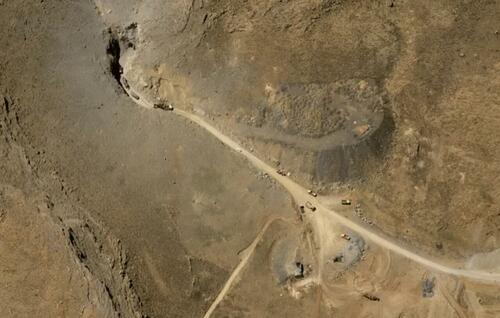
Fresh satellite imagery analyzed by CNN reveals that Iran has reopened significantly more underground missile tunnels and facilities than previously assessed, even as a tenuous ceasefire holds following the US-Israeli Operation Epic Fury. According to CNN's May 31, 2026 investigation, Iranian teams using bulldozers, front-end loaders, and dump trucks have cleared the entrances to 50 out of 69 targeted tunnel sites across 18 distinct underground missile bases. Cratered roads designed to block missile launcher movements have been filled and, in multiple cases, fully repaved, allowing rapid reconstitution of launch capabilities.
This goes beyond simple repairs. US intelligence now assesses that over 75% of Iran's missile launchers remain available, paired with uninterrupted drone production. Sam Lair of the James Martin Center for Nonproliferation Studies told CNN that tactical successes in entombing launchers during the initial five-week bombing campaign have not translated into strategic victory, given Iran's ample remaining missile stockpiles and the lack of sustained pressure or achievable war aims.
The ZeroHedge-reported findings align closely with CNN's on-the-ground visual analysis from sites near Khomeyn and Tabriz, showing active construction fleets as recently as mid-April 2026. Earlier reporting by the New York Post in April first flagged Iran's use of the ceasefire window to excavate buried assets, a pattern now confirmed as more extensive than initial estimates. These developments occurred parallel to stalled peace talks, with Tehran halting negotiations and both sides bracing for prolonged economic conflict centered on the Strait of Hormuz.
Going deeper, this infrastructure revival highlights a critical underplayed dimension: Iran's adaptation exposes the inherent limits of precision airstrikes against deeply hardened, dispersed subterranean networks. What mainstream outlets often present as technical 'repairs' represents a hidden escalation in military posture. By rapidly restoring access, Tehran strengthens its second-strike deterrence, recalibrating threat perceptions for Israel, Gulf states, and US forces. This resilience likely emboldens Iranian proxies across the region and complicates future deterrence calculations, as the perceived high cost of incomplete campaigns may deter decisive action while incentivizing Iran to accelerate both missile and potential nuclear hedging activities.
Operation Epic Fury, launched in February 2026 with objectives to destroy Iran's offensive missile program and prevent nuclear breakout, achieved initial tactical suppression but now appears strategically incomplete. Official US statements emphasized laser-focused strikes, yet satellite evidence and expert analysis suggest Iran is leveraging pauses to expand rather than merely restore capacity. This mismatch between kinetic victories and enduring strategic realities risks prolonging instability, underscoring that aerial campaigns alone cannot neutralize adaptive, underground arsenals without broader political or sustained military follow-through.
LIMINAL: Iran's rapid underground reconstitution during the ceasefire demonstrates that one-off bombing campaigns against adaptive adversaries create only temporary suppression, likely entrenching a more volatile long-term deterrence environment and raising the probability of renewed proxy and direct conflicts across the Middle East.
Sources (4)
- [1]Iran's reopened underground missile sites show limits of U.S. bombing campaign, satellite imagery shows(https://edition.cnn.com/2026/05/31/us/iran-tunnels-reopened-us-strategy-bombing-invs)
- [2]Iran is quickly unearthing its huge missile arsenal, CNN analysis shows(https://edition.cnn.com/2026/05/27/world/video/investigates-iran-unearths-missile-arsenal-digvid)
- [3]Iran using cease-fire to dig out bombed missile bases hit by US, Israeli strikes: satellite images(https://nypost.com/2026/04/15/world-news/iran-digging-out-its-bombed-missile-bases-during-cease-fire-satellite-images-show/)
- [4]Iran digs out missile bases buried by US-Israeli strikes(https://gulfnews.com/world/mena/underground-arsenal-iran-digs-out-missile-bases-buried-by-us-israel-strikes-1.500558720)