Belarus Nuclear Drills Expose Hybrid Escalation: Tactical Nukes Normalize Risks on NATO's Eastern Flank
Belarus-Russian tactical nuclear drills, timed after Ukrainian strikes on Moscow, confirm forward deployment of atomic assets on NATO's border, revealing an underreported hybrid strategy that normalizes lowered nuclear thresholds and challenges non-proliferation norms through integrated Union State operations.
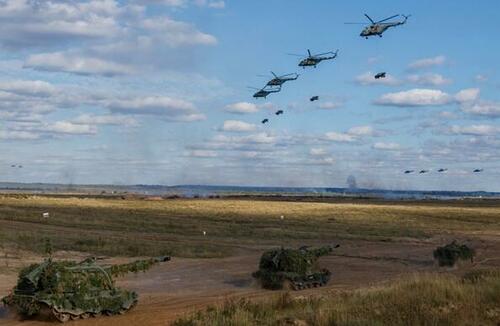
Belarus has initiated surprise combat drills for its specialized units focused on the combat use, delivery, and preparation of Russian tactical nuclear weapons, conducted in close coordination with Moscow. According to the Belarusian Defense Ministry, the exercises emphasize stealth movements across the country, deployment from unplanned or 'surprise' launch sites, and verification of dual-capable missile and aviation platforms—practices that directly involve Russian oversight of the nuclear munitions themselves. These drills, announced on May 18, 2026, follow immediately after Ukraine's largest drone assault on Moscow and surrounding infrastructure, suggesting a calibrated signaling response amid ongoing escalation. While Minsk claims the activities are routine, 'not directed against third countries,' and pose no regional threat, the reality of Russian tactical nuclear weapons stationed on Belarusian soil since 2023—under a mutual defense framework where Moscow retains ultimate control—transforms Belarus into a de facto forward nuclear base directly abutting Poland, Lithuania, and Latvia.
This event reveals connections often missed in mainstream reporting: the drills are not isolated saber-rattling but part of a sustained hybrid escalation ladder. Russia has repeatedly used Belarus for nuclear signaling, including during 2024 readiness checks, the 2025 Zapad exercises featuring simulated tactical strikes and Oreshnik hypersonic missile integration, and now these 2026 drills. By training Belarusian forces on nuclear delivery while keeping warheads under Russian command, Moscow blurs lines between ally and proxy, complicating NATO response thresholds and desensitizing observers to the presence of non-strategic nukes in a non-nuclear NPT signatory state. Ukraine's Foreign Ministry highlighted this danger explicitly, stating that turning Belarus into a 'nuclear staging ground near NATO borders' legitimizes proliferation and creates precedents for other regimes—echoing concerns about eroded nuclear taboos in hybrid conflict. Putin’s updated military doctrine allowing potential first-use to defend territorial integrity, combined with Belarus’s integration into the Union State, indicates a strategy of embedding nuclear ambiguity into gray-zone operations, much like Minsk’s past use of migration and energy coercion. Mainstream analysis frequently downplays these patterns as 'routine exercises,' yet they heighten miscalculation risks on NATO’s eastern flank by normalizing tactical nuclear posturing as an extension of conventional hybrid warfare.
[Liminal Analyst]: These recurring drills normalize Russian tactical nuclear infrastructure inside Belarus as a permanent hybrid tool, steadily eroding escalation barriers on NATO's border while mainstream coverage understates the deliberate fusion of nuclear signaling with gray-zone pressure tactics.
Sources (3)
- [1]Belarus holds drills with Russian nuclear weapons(https://www.reuters.com/world/europe/belarus-holds-nuclear-weapons-drills-defence-ministry-says-2026-05-18/)
- [2]Russia and Belarus hold joint nuclear drills following Ukrainian strikes on Moscow(https://www.politico.eu/article/russia-belarus-nuclear-drills-ukraine-strikes-moscow/)
- [3]Belarus launches joint drills with Russia to practice nuclear weapons use(https://abcnews.com/International/wireStory/belarus-launches-joint-drills-russia-practice-nuclear-weapons-133071824)