Hybrid Warfare Unmasked: Russian Proxies' Swedish Power Plant Probe Exposes Pre-Positioning Strategy Across NATO's Critical Infrastructure
Deep analysis reveals the Swedish thermal plant breach attempt as part of Russia's systematic OT pre-positioning across NATO states, marking a tactical shift from DDoS to destructive access amid hybrid conflict. Coverage missed strategic links to NATO expansion, Sandworm patterns, and broader sabotage campaign; synthesized with CISA, Dragos, and Mandiant reporting to highlight preparation for potential escalation.
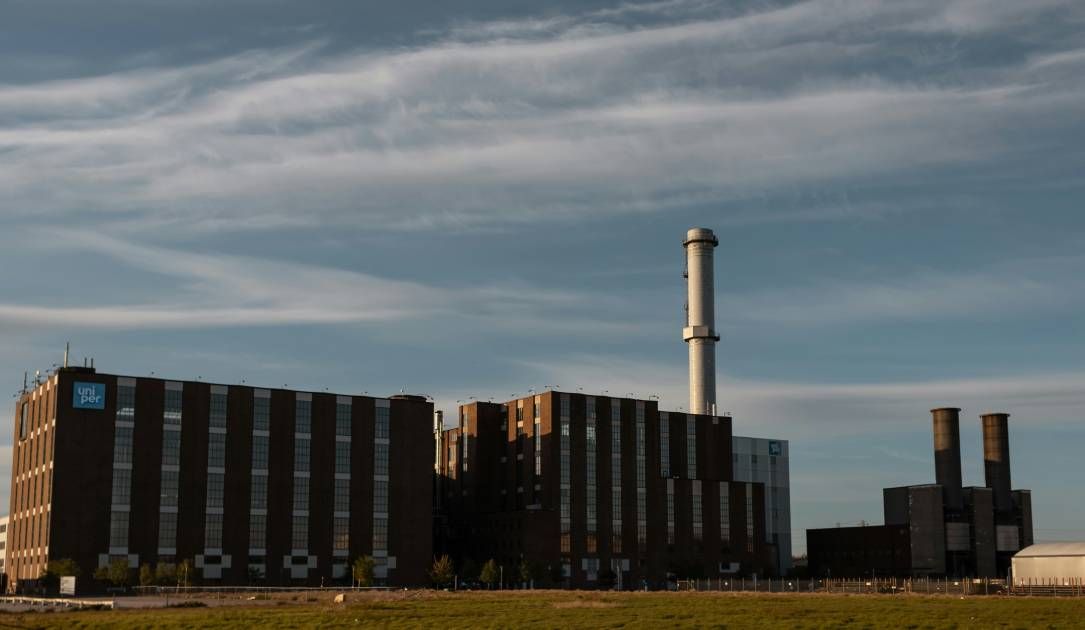
The Swedish government's disclosure of a thwarted pro-Russian hacking attempt against a thermal power plant in western Sweden in spring 2025 marks not merely a cybersecurity footnote but a critical data point in the Kremlin's sustained hybrid campaign against Western nations supporting Ukraine. While the Recorded Future article accurately reports Minister Carl-Oskar Bohlin's comments on the incident's failure due to built-in protections and the perpetrators' links to Russian intelligence, it stops short of connecting this event to a larger pattern of operational technology (OT) pre-positioning that has accelerated dramatically since Sweden's NATO accession in March 2024.
This incident reflects a documented tactical maturation. Groups previously associated with noisy DDoS campaigns, such as NoName057(16) and CyberArmyofRussia_Reborn flagged in the 2024 CISA-NSA-FBI joint advisory, are now pursuing persistent access to industrial control systems. This mirrors the evolution seen with Sandworm (APT44/GRU Unit 74455), responsible for both the 2015-2016 Ukrainian power grid blackouts and the 2024 wiper malware deployment against Polish energy infrastructure that the original reporting references but does not deeply analyze. What the coverage misses is that these operations are less about immediate disruption and more about mapping kill switches for activation during crisis escalation.
Synthesizing the Swedish Säpo investigation details with Dragos' 2024 OT Cybersecurity Year in Review—which documented a 40%+ increase in Russian-linked ICS access attempts across Europe—and Mandiant's tracking of Electrum/Sandworm activity reveals a cohesive doctrine. These actors are replicating in Scandinavia the same reconnaissance observed in Norway and Denmark: initial IT network breaches followed by lateral movement toward OT environments managing turbines, substations, and fuel controls. Thermal plants represent particularly attractive targets given Europe's post-2022 energy recalibration after severing Russian gas dependencies.
The original piece understates the geopolitical trigger. Sweden's enhanced role in Baltic Sea security and its logistical support for Ukraine have elevated it within Russian targeting matrices, alongside hybrid actions including suspected sabotage of undersea cables, GPS interference affecting civilian aviation, and physical disruptions to rail networks in Germany and France. Estonian Foreign Intelligence Service assessments from early 2025 explicitly link cyber intrusions with GRU sabotage units, framing them as integrated 'preparation of the battlefield' activities below Article 5 thresholds.
This represents a dangerous normalization of gray-zone aggression. Each 'failed' attempt still yields network topology intelligence, vendor-specific vulnerability data, and timing insights that lower the cost of future disruptive operations. Unlike China's Volt Typhoon campaign focused on long-term persistence, Russian efforts display higher urgency—likely contingency planning should Western conventional support for Ukraine intensify. The emphasis on OT systems, which if compromised could cascade into physical consequences like generator overloads or unsafe shutdowns, exposes the West's lingering segmentation weaknesses despite years of warnings post-NotPetya and Colonial Pipeline.
European critical infrastructure remains a soft underbelly precisely because legacy systems were never designed for nation-state adversaries. While Sweden's protections held, reliance on 'built-in security' is insufficient against actors with state resources and years of Ukrainian battlefield testing. The relentless focus on energy infrastructure illustrates Moscow's hybrid doctrine: degrade adversary resilience, sow domestic doubt, and maintain plausible deniability while avoiding direct kinetic confrontation. Policymakers must move beyond episodic reporting to treat these incidents as interconnected campaign phases demanding accelerated OT segmentation, deception technologies, and allied intelligence fusion. The shadow war on critical infrastructure is not approaching—it is already operational.
SENTINEL: Russian actors are methodically building access to Scandinavian and Baltic energy OT systems not for immediate blackouts but as contingency tools for hybrid escalation. Expect more probes across NATO's newest members as Moscow maps infrastructure dependencies to undermine collective defense without crossing into open conflict.
Sources (3)
- [1]Sweden says pro-Russian hackers attempted to breach thermal power plant(https://therecord.media/sweden-hackers-russia-power-plant)
- [2]AA24-061A Russian State-Sponsored Actors Compromise and Maintain Access to Critical Infrastructure(https://www.cisa.gov/news-events/cybersecurity-advisories/aa24-061a)
- [3]Dragos 2024 OT Cybersecurity Year in Review(https://www.dragos.com/resource/2024-year-in-review/)