Iran's Crypto Tolls on Hormuz Reveal SWIFT Bypass Blueprint, Poised to Accelerate Nation-State DeFi Shift
First post-ceasefire transits through the Strait of Hormuz coincide with Iran's requirement for Bitcoin and stablecoin toll payments, showcasing a sophisticated SWIFT sanctions bypass built on years of state-backed crypto integration. This could catalyze wider nation-state experimentation with decentralized finance for trade settlement, de-dollarization, and resilient economic infrastructure amid escalating financial warfare.
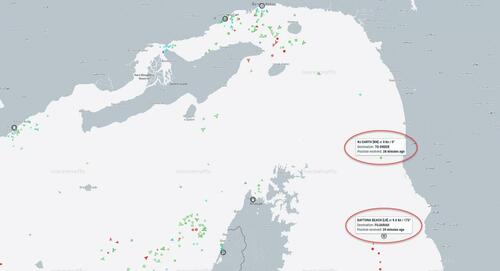
In the fragile aftermath of a US-Iran two-week ceasefire, the first commercial vessels have transited the Strait of Hormuz, marking a tentative reopening of the critical chokepoint responsible for roughly 20% of global oil trade. Tracking data confirms the Liberia-flagged Daytona Beach and Greek-owned NJ Earth as the initial large ships to cross since the agreement, with hundreds more tankers potentially following carrying over 175 million barrels of cargo. Yet Iran's conditions for passage signal something far more consequential than resumed shipping: a formalized demand for toll payments exclusively in cryptocurrency—specifically Bitcoin or stablecoins settled in seconds via email assessment—to evade sanctions and traceability. According to reports, Iran is levying approximately $1 per barrel (or up to $2 million for a VLCC), while also accepting Chinese yuan, with vessels required to hug the Iranian coastline under military oversight to prevent weapons transfers. This mechanism, coordinated by Iran's Supreme National Security Council, institutionalizes what was previously informal sanctions evasion. Hamid Hosseini of Iran’s Oil, Gas and Petrochemical Products Exporters’ Union emphasized the need for monitoring during the ceasefire window, noting that "once the email arrives and Iran completes its assessment, vessels are given a few seconds to pay in bitcoin, ensuring they can’t be traced or confiscated due to sanctions." Beyond immediate revenue, this development exposes a maturing bypass of the SWIFT system that Iran has cultivated for years. Having legalized Bitcoin mining in 2019, Tehran routes domestically mined BTC and stablecoin settlements through regional intermediaries to import goods and sustain its economy despite exclusion from traditional finance rails, with on-chain volumes reaching billions annually per blockchain analytics. The Hormuz toll system elevates this from tactical workaround to strategic infrastructure: a sovereign chokepoint now enforces decentralized payment rails, demonstrating how nation-states can tokenize control over physical trade routes. Connections emerge to broader de-dollarization trends among BRICS-aligned actors, where crypto and alternative settlement layers reduce reliance on USD clearing. Russia and Venezuela have similarly experimented with digital assets for sanctions resilience; Iran's model—combining real-time crypto settlement with physical maritime enforcement—offers a replicable template that could accelerate adoption of decentralized finance protocols at the state level. Smart contract-enabled tolling, on-chain cargo verification, and unconfiscatable digital reserves may transition from fringe experiments to core tools in contested trade corridors. While Western shippers like Maersk remain cautious pending clarity, and analysts note traffic remains throttled, the precedent is set: in an era of weaponized finance, decentralized rails provide both sovereignty and speed. This may hasten the fragmentation of global payments, as more states explore blockchain to insulate energy trade from geopolitical leverage.
LIMINAL: Iran's institutionalized crypto tolls at Hormuz prove nation-states can operationalize decentralized rails for high-stakes energy trade, likely triggering accelerated adoption of similar systems by sanctioned and BRICS economies and hastening SWIFT's fragmentation.
Sources (6)
- [1]Iran demands fees for ships passing Hormuz during ceasefire(https://www.ft.com/content/02aefac4-ea62-48db-9326-c0da373b11b8)
- [2]Iran taking payments for Strait of Hormuz passage in crypto and Chinese yuan(https://www.tradewindsnews.com/tankers/iran-taking-payments-for-strait-of-hormuz-passage-in-crypto-and-chinese-yuan/2-1-1969290)
- [3]Iran Reportedly Accepts Crypto and Yuan for Strait of Hormuz Shipping Tolls(https://finance.yahoo.com/markets/crypto/articles/iran-reportedly-accepts-crypto-yuan-115038546.html)
- [4]After Cease-Fire, Ship Traffic in Strait of Hormuz Remains Throttled(https://www.nytimes.com/2026/04/08/business/strait-hormuz-ships-traffic-iran-ceasefire.html)
- [5]Shippers seek clarity on Hormuz reopening after US-Iran ceasefire(https://www.reuters.com/business/energy/shippers-seek-clarity-hormuz-reopening-after-us-iran-ceasefire-deal-2026-04-08/)
- [6]How Nation-states Leverage Cryptocurrency(https://www.trmlabs.com/resources/blog/how-nation-states-leverage-cryptocurrency)