Drone Imports in Russia-Ukraine Conflict Reshape Global Energy Markets and Household Fuel Costs
SIPRI-backed data confirms Ukraine and Russia dominate military drone imports amid their conflict, with ripple effects amplifying global fuel price volatility and impacting consumer finances through energy market shocks.
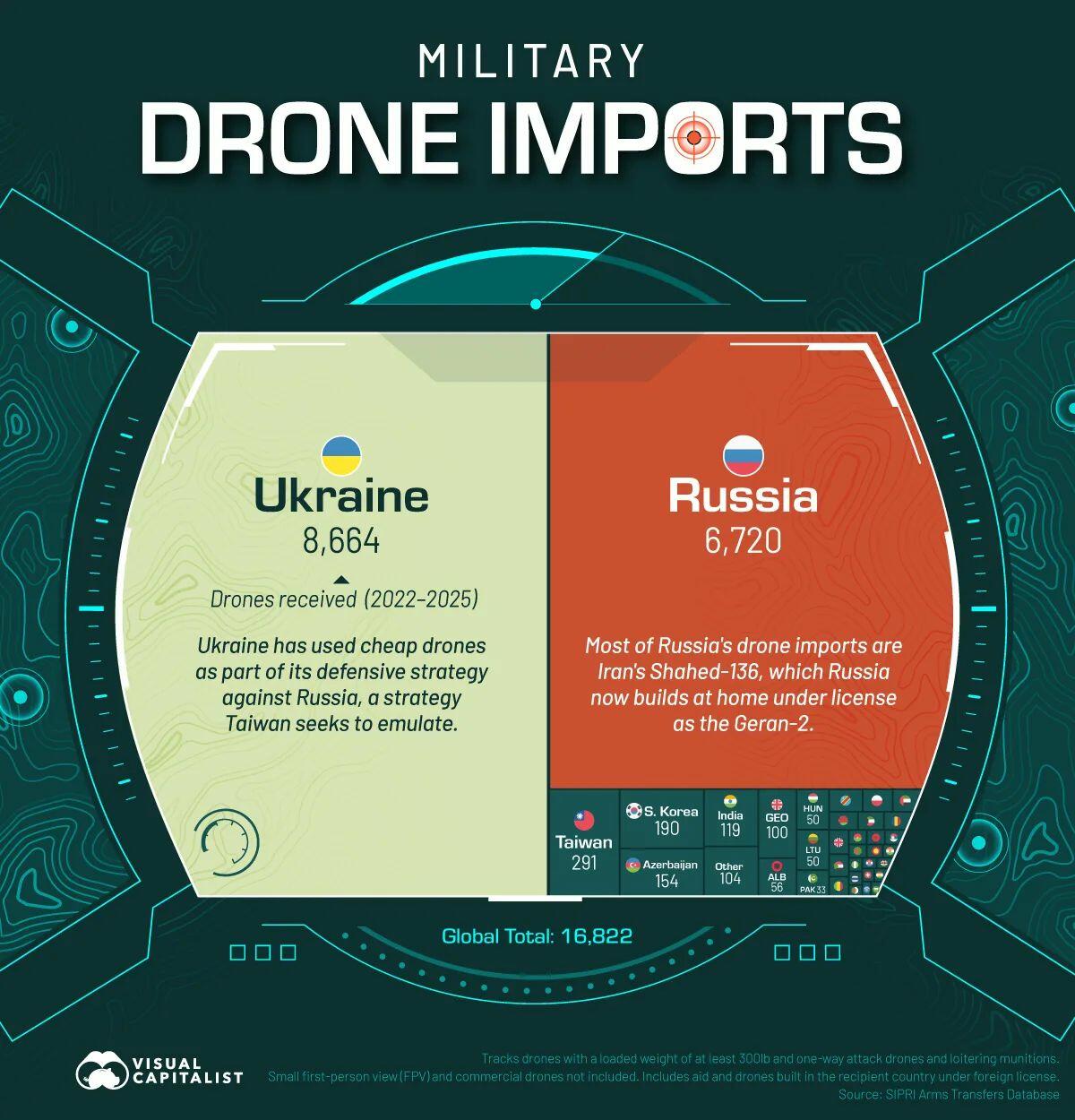
SIPRI Arms Transfers Database data, compiled and visualized by Visual Capitalist, shows Ukraine receiving 8,664 major military drones (primarily U.S.-supplied) and Russia 6,720 (mostly Iranian Shahed-136s) from 2022-2025, accounting for over 91% of global recorded transfers of large drones and loitering munitions. This dominance reflects the war's central role in driving international arms flows, with SIPRI's 2025 trends report confirming Ukraine as the world's top recipient of major arms overall, largely via U.S. aid. SIPRI notes that its scope excludes small FPV drones and domestic production, understating the true scale—evidenced by separate UK deliveries exceeding 85,000 smaller units to Ukraine in just six months of 2025. Beyond battlefield tactics, Ukrainian drone strikes on Russian refineries have idled significant refining capacity (hundreds of thousands of barrels per day), contributing to global diesel and gasoline shortages. Reports from Axios, Reuters, and the Financial Times link these attacks to elevated Brent crude prices (spiking above $100/barrel at times), U.S. diesel exceeding $5/gallon, and European pump prices hitting records. This volatility directly pressures household budgets through higher transportation, heating, and agricultural costs, forcing families to adjust spending on essentials, delay vehicle purchases, or seek efficiency measures amid persistent geopolitical risk premiums in energy pricing. Taiwan's smaller imports (291 units) highlight secondary tensions, but the Russia-Ukraine nexus remains the primary driver of both arms trade concentration and energy market disruption.
Energy Analyst: Sustained drone-enabled strikes on energy infrastructure will embed a persistent geopolitical premium into oil and refined product prices, leading households to face 10-20% higher average fuel and heating costs through 2027 unless diplomatic de-escalation occurs.
Sources (5)
- [1]Trends in International Arms Transfers, 2025 | SIPRI(https://www.sipri.org/publications/2026/sipri-fact-sheets/trends-international-arms-transfers-2025)
- [2]Ranked: Countries Importing the Most Military Drones - Visual Capitalist(https://www.visualcapitalist.com/ranked-countries-importing-most-military-drones/)
- [3]Russia roils global market for diesel after Ukraine attacks - Axios(https://www.axios.com/2026/07/17/russia-diesel-oil-drones)
- [4]Iran, Ukraine wars deliver worst hit in years to oil refining output - Reuters(https://www.reuters.com/business/energy/iran-ukraine-wars-deliver-worst-hit-years-oil-refining-output-2026-05-13/)
- [5]Ukraine’s drones dent Russia’s war-fuelled oil windfall - Financial Times(https://www.ft.com/content/d49e288f-b74e-44a8-a2f3-ec87f7cb5c27)