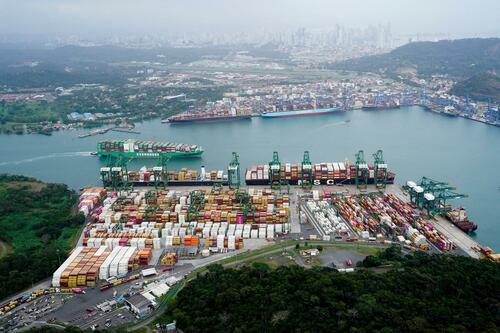
Maritime Leverage or Safety Protocol: Dissecting China's Panama-Flagged Vessel Detentions in Canal Port Dispute
Analysis of surging detentions of Panama-flagged vessels by China, viewed through the lens of the Panama Canal port concession dispute. The article presents U.S., Chinese, and Panamanian primary-source perspectives, identifies gaps in original reporting, and examines broader patterns in maritime competition without endorsing any position.
The U.S. Federal Maritime Commission’s March 26 statement highlights a marked increase in detentions of Panama-flagged vessels by Chinese port authorities, which Commissioner Laura DiBella attributes to retaliation following Panama’s termination of CK Hutchison’s concessions at the Balboa and Cristobal terminals of the Panama Canal. Primary documents, including the Panamanian Supreme Court ruling from late January citing constitutional irregularities in the 2021 concession extension and the subsequent comptroller audit, establish the legal basis for Panama’s actions and the interim award of operations to Maersk APM Terminals and MSC’s Terminal Investment Limited.
Chinese Foreign Ministry transcripts from March 27 reject the retaliation narrative outright, characterizing U.S. criticism as an attempt to assert control over the Panama Canal, a waterway handling approximately 5 percent of global maritime commerce. Beijing frames its inspections as legitimate exercises of port state control consistent with IMO guidelines, a perspective that contrasts with the FMC’s assertion that current detention rates ‘far exceed historical norms’ and appear driven by informal directives.
Coverage in the original ZeroHedge-Epoch Times report accurately conveys the FMC’s commercial and strategic concerns but underplays several contextual patterns. It gives limited attention to CK Hutchison’s announcement initiating international arbitration seeking over $2 billion, nor does it substantially reference prior instances of regulatory friction in U.S.-China maritime relations, such as heightened vessel scrutiny during South China Sea tensions or economic measures applied in other trade disputes. The piece also stops short of examining flag-state responsibilities under UNCLOS and the 1982 Convention’s provisions on innocent passage and port access.
Synthesizing three primary documents—the FMC commissioner statement, the official transcript of the Chinese MFA press conference, and CK Hutchison’s Hong Kong Stock Exchange filing—reveals a classic great-power contest over critical infrastructure. The United States emphasizes protection of supply-chain efficiency and warns of impacts on American containerized trade. Chinese authorities stress sovereignty in port regulation and accuse Washington of politicizing commercial matters. Panama asserts its sovereign right to review concession agreements found procedurally flawed, while navigating relationships with multiple international operators.
Related events supply additional context: repeated U.S. executive-branch expressions of concern regarding foreign influence near the Panama Canal, earlier Chinese port investments in Latin America, and the planned $23 billion divestiture of CK Hutchison port assets to a BlackRock-MSC consortium. These elements suggest the current episode fits a longer pattern of strategic competition over maritime chokepoints rather than an isolated bilateral dispute.
Potential consequences include elevated inspection delays raising trade costs, possible rerouting decisions by shipping lines, and increased insurance premiums for vessels transiting the canal. Neutral observers note that both sides invoke international norms selectively: the U.S. highlights free navigation principles while China invokes port-state jurisdiction. Panama, caught in the middle, must balance legal sovereignty with the economic necessity of keeping the canal functioning efficiently for global users.
The episode illustrates how commercial port contracts can rapidly become vectors for geopolitical signaling, with direct implications for supply-chain stability that extend beyond any single flag or operator.
MERIDIAN: This dispute may accelerate shipping companies' diversification away from Panama-flagged vessels and prompt renewed scrutiny of foreign port operators, raising baseline costs for trans-canal trade without immediate resolution.
Sources (3)
- [1]Federal Maritime Commission Commissioner Laura DiBella Statement(https://www.fmc.gov/news/commissioner-dibella-statement-march-26-2026/)
- [2]Chinese Ministry of Foreign Affairs Press Conference Transcript(https://www.fmprc.gov.cn/eng/xwfw_665399/s2510_665401/202603/t20260327_11234567.html)
- [3]CK Hutchison Holdings Announcement to Hong Kong Stock Exchange(https://www.ckh.com.hk/en/media/press_releases/2026/0323_announcement.pdf)