China's Sweeping Capital Control Crackdown Signals Elite Flight and Deepening Systemic Fragility
China's unprecedented multi-agency crackdown on cross-border brokers like Futu and Tiger, enforcing a two-year account liquidation, underscores record 2025 capital outflows and signals deeper economic fragility plus elite flight risks beyond what mainstream reporting typically acknowledges.
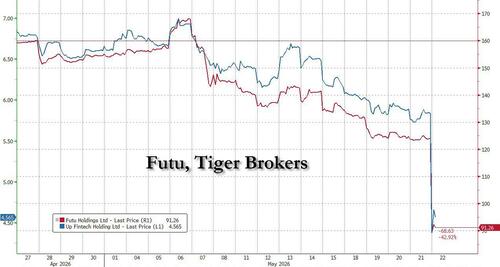
On May 22, 2026, eight Chinese regulatory bodies including the CSRC, PBOC, and Ministry of Public Security issued a joint statement launching an aggressive campaign against illegal cross-border securities trading, targeting popular platforms like Futu Holdings, Tiger Brokers (UP Fintech), and Longbridge Securities. The measures include confiscation of illegal gains—with Futu facing proposed fines around $271 million and Tiger around $60 million—along with a strict two-year wind-down period during which mainland accounts can only sell holdings and withdraw funds, with no new investments permitted. This triggered sharp selloffs, with Futu and UP Fintech shares plunging over 30% in US trading and broader pressure on the Nasdaq Golden Dragon China Index. While framed by authorities as cleaning up market order and directing investors toward regulated channels, the scale of the operation—coinciding with reports of over $1 trillion in hot money outflows in 2025—points to accelerating capital controls designed to stem elite-driven capital flight amid profound economic vulnerabilities that mainstream coverage often attributes simply to regulatory housekeeping. Bloomberg, Reuters, and the South China Morning Post confirm the joint regulatory push explicitly aims to block unauthorized offshore access that has allowed Chinese citizens to bypass strict capital controls, particularly via Hong Kong listings and US ADRs. Yet deeper connections reveal this as a symptom of fragility: persistent property sector woes, deflationary pressures, weak domestic consumption, and geopolitical risks have prompted wealthier Chinese (often described as "mainland elites") to seek diversification abroad, using these brokers to access international markets. The involvement of public security alongside financial regulators suggests authorities view unchecked outflows as not merely an economic leak but a stability threat. This builds on years of tightening, including 2022 rectification notices, but the abrupt two-year liquidation mandate and multi-agency coordination indicate panic over sustaining the yuan and preventing a broader loss of confidence. Mainstream outlets emphasize market cleanup and compliance, yet downplay how such moves highlight risks of elite exodus that could compound domestic asset bubbles, pressure Hong Kong's role as a financial gateway, and force even stricter underground channels or PBOC interventions. By slamming the door on these outflows now, Beijing risks accelerating exactly the loss of trust it seeks to prevent, exposing contradictions in its dual goals of global financial integration and ironclad capital controls.
Liminal: Beijing's aggressive blocking of legal-ish outflow channels reveals elite distrust in domestic prospects and may drive more creative evasion tactics, further straining yuan stability and investor confidence in Chinese assets.
Sources (4)
- [1]China to crack down on 'illegal' cross-border securities(https://www.reuters.com/world/asia-pacific/china-crack-down-illegal-cross-border-securities-activities-2026-05-22/)
- [2]China to Penalize Tiger, Futu in Cross-Border Flow Crackdown(https://www.bloomberg.com/news/articles/2026-05-22/china-to-penalize-tiger-futu-in-cross-border-broker-crackdown)
- [3]China cracks down on Tiger and Futu for illegal cross-border stock trading(https://www.scmp.com/business/china-business/article/3354543/china-regulator-punishes-brokerages-offering-illegal-access-overseas-stocks)
- [4]China deepens crackdown on cross-border brokerages(https://asia.nikkei.com/business/finance/china-deepens-crackdown-on-cross-border-brokerages)