When War Comes Home: Trump's Iran Conflict Tests Constitutional War Powers Amid Reports of Strategic Shortfalls
Credible reporting confirms an active U.S.-Iran conflict under Trump since early 2026, marked by strikes, ceasefires, and strategic debates. The campaign highlights longstanding constitutional disputes over war initiation, with sources noting lack of congressional authorization and mixed results on objectives. This raises systemic questions about executive power and potential spillover effects on domestic policy.
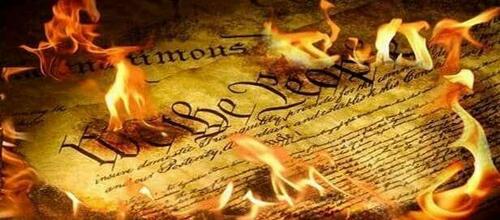
The ongoing U.S. military campaign against Iran, initiated in February 2026 with coordinated strikes alongside Israel, has sparked renewed debate over presidential authority to commit forces without explicit congressional approval. Multiple analyses describe the operation as lacking a formal declaration of war, placing it in the constitutional 'zone of twilight' highlighted by Justice Robert Jackson in Youngstown Sheet & Tube Co. v. Sawyer (1952). Article I, Section 8 of the Constitution vests Congress with the power to declare war, a deliberate check against executive ambition that James Madison explicitly endorsed.
Reporting from The New York Times details phases of the conflict, including initial strikes on nuclear and military sites, subsequent escalations over the Strait of Hormuz, and fragile ceasefires that have frayed into renewed exchanges as recently as September 2026. A Congressional Research Service report confirms the absence of a formal declaration, noting U.S. strikes on over 10,000 targets and the deployment of tens of thousands of servicemembers. Critics, including Judge Andrew P. Napolitano in pieces for the Ron Paul Institute and his own platform, argue the campaign violates separation of powers and has failed to meet stated objectives such as fully neutralizing Iran's nuclear program or missile capabilities, with assessments indicating substantial reconstitution of Iranian forces.
Domestic pushback has emerged, with the House passing a resolution opposing the conflict and concerns raised about resource depletion and political fallout ahead of midterms. This aligns with historical patterns where foreign policy setbacks prompt considerations of expanded domestic measures, though no specific overreach has materialized. The episode underscores enduring tensions in U.S. governance: the erosion of congressional war authority through decades of precedent and the risks of unilateral executive action in prolonged engagements.
[Constitutional Scholar]: Persistent executive-led military actions without congressional buy-in could accelerate calls for War Powers Resolution reforms or judicial intervention, potentially constraining future presidents while exposing gaps in checks and balances during crises.
Sources (5)
- [1]U.S. War Against Iran Enters a New Phase(https://www.nytimes.com/2026/07/14/us/politics/us-war-iran-next-phase.html)
- [2]U.S. Conflict with Iran(https://www.congress.gov/crs-product/R48887)
- [3]Trump’s Unjust and Unconstitutional War – Judge Andrew Napolitano(https://judgenap.com/trumps-unjust-and-unconstitutional-war/)
- [4]U.S. Strikes Iran Again, as Trump Encounters a More Determined Adversary in Widened War(https://www.nytimes.com/2026/07/29/us/trump-iran-war-widens.html)
- [5]Trump’s Impossible Dilemma: Return To War With Iran or Not?(https://agsi.org/analysis/trumps-impossible-dilemma-return-to-war-with-iran-or-not/)