Israel's Reluctance on Russian 'Stolen Grain' Vessel Reveals Fractures in Anti-Moscow Front and Patterns of Food Weaponization
Corroborated reports confirm Israel permitted a Russian shadow fleet vessel carrying allegedly stolen Ukrainian grain to unload in Haifa despite Kyiv's warnings, exposing tensions in Ukraine-Israel ties, selective sanctions enforcement, and the geopolitical weaponization of food supplies amid alliance fractures.
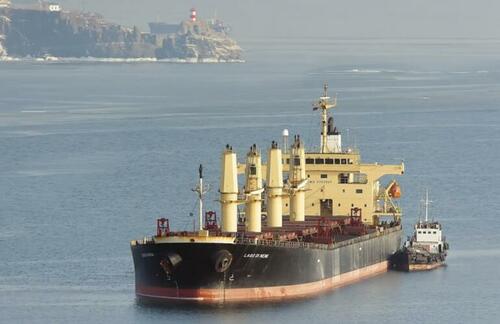
A Russian bulk carrier accused of transporting tens of thousands of tons of Ukrainian wheat harvested from Russian-occupied territories was allowed to dock, unload, and depart from Israel's Haifa port in mid-April 2026, despite repeated Ukrainian requests for intervention. The vessel ABINSK, carrying approximately 43,700 metric tons of grain valued at around €8.5 million, had loaded its cargo at Russia's Kavkaz port on the Kerch Strait after originating from occupied Ukrainian facilities. Ukrainian officials, including Foreign Minister Andrii Sybiha, had warned Israeli counterparts two weeks in advance, secured a court seizure warrant, and directly appealed for the cargo's detention as part of Moscow's shadow fleet operations funding its war effort. Israel ultimately responded that it was "too late" as the ship had already left for Turkey.[1][2]
This episode is not an isolated maritime dispute but a window into the weaponization of global food systems amid the Russia-Ukraine conflict. Since 2022, Russia has been accused of systematically looting grain from occupied regions in Ukraine, rerouting it through Crimean and Russian ports to evade sanctions and generate revenue. Ukraine has pursued aggressive international enforcement, recently securing commitments from Egypt and Syria to reject such shipments. Yet when the campaign reached Israel—a nation sharing intelligence concerns over Iran and receiving quiet Ukrainian praise for limited defense technology transfers—the response exposed clear limits. Israeli officials appear to have deferred to official Russian documentation over Ukrainian tracking data from projects like SeaKrime, prioritizing uninterrupted trade flows at a time of global shipping disruptions.[3][1]
Deeper analysis reveals how third-party states like Israel are being involuntarily conscripted into enforcement roles within a fragmented sanctions regime. Israel has long walked a tightrope: avoiding direct military aid to Ukraine to preserve operational latitude vis-à-vis Russia in the region (a calculus shaped by prior Syrian dynamics), while quietly improving ties through legislative gestures like Ukraine's recent antisemitism law. The Haifa incident highlights alliance fatigue—Kyiv's frustration with perceived inaction despite shared adversaries—and the selective application of international norms. Mainstream coverage often treats these as discrete diplomatic spats, but they form a pattern: food as strategic leverage, shadow fleets exploiting jurisdictional gaps, and eroding coalition cohesion as economic self-interest (grain trade, port revenues, avoiding escalation) overrides unified pressure on Moscow. If even relatively aligned nations demur on enforcement, it signals widening fractures that could sustain Russia's wartime economy longer than anticipated, with ripple effects on global food prices and security in the Black Sea basin.[4]
The saga underscores a heterodox reality of modern hybrid warfare: control over agricultural exports from contested territories has become as critical as battlefield advances. Nations pulled into these disputes must weigh moral, legal, and diplomatic demands against immediate pragmatic needs, often defaulting to inaction. This incident may foreshadow increased shadow fleet boldness as enforcement proves inconsistent.
LIMINAL: Third-party nations like Israel will increasingly prioritize trade continuity and narrow self-interest over rigorous sanctions enforcement on Russian shadow fleet grain, accelerating fractures in the broad anti-Moscow coalition and enabling sustained Kremlin revenue from occupied Ukrainian resources.
Sources (4)
- [1]Ukraine and Israel in dispute over Russian ship carrying Ukrainian grain(https://www.lemonde.fr/en/international/article/2026/04/17/ukraine-and-israel-in-dispute-over-russian-ship-carrying-ukrainian-grain_6752539_4.html)
- [2]Israel tells Ukraine too late to seize Russian grain ship as it left Haifa — report(https://www.timesofisrael.com/israel-tells-ukraine-too-late-to-seize-russian-grain-ship-as-it-left-haifa-report/)
- [3]Ukraine expects Israel to seize grain it says Russia stole(https://kyivindependent.com/ukraine-expects-israel-to-seize-grain/)
- [4]FM monitors ship with stolen grain, stays in contact with Israel(https://www.ukrinform.net/amp/rubric-polytics/4113337-fm-monitors-ship-with-stolen-grain-stays-in-contact-with-israel.html)