Skyrocketing Electric Bills Poised to Reshape 2026 Midterms by Exposing Grid and Policy Failures
Surging AI data center demand is driving sharp rises in U.S. residential electricity bills (13%+ in recent years per EIA, with ICF forecasting up to 40% more by 2030), as confirmed by NERC's revised 224 GW peak demand outlook. This affordability crisis, detailed in Brookings and Bloomberg reporting, is becoming a decisive 2026 midterm issue that highlights regulatory delays, underbuilt transmission, and policy missteps on balancing reliability with rapid growth.
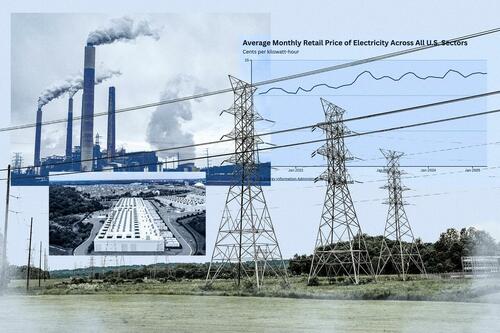
Rising residential electricity prices are emerging as a potent pocketbook issue that could realign voter priorities ahead of the 2026 midterms, revealing deep vulnerabilities in America's energy infrastructure that many mainstream analyses have underemphasized. According to U.S. Energy Information Administration (EIA) data, average retail electricity prices have continued climbing steadily, with residential rates increasing significantly in recent years and outpacing inflation in many regions. Forecasts indicate further pressure, with some analyses projecting nationwide increases of 5-7% or more annually in the near term.[1][2]
The core driver is an unprecedented surge in electricity demand, primarily from power-hungry AI data centers, advanced manufacturing, and broader electrification trends. The North American Electric Reliability Corporation's (NERC) 2025 Long-Term Reliability Assessment dramatically revised upward its projections: summer peak demand growth over the next decade is now expected at 224 GW—nearly 70% higher than the prior year's estimate—with data centers and AI accounting for the majority of the increase. This represents the highest compound annual growth rates since NERC began tracking in 1995, straining an aging grid that has seen decades of underinvestment in transmission and firm generation capacity.[3][4]
Consulting firm ICF echoes these warnings, projecting U.S. electricity demand growth of 25% by 2030 (and 78% by 2050), with residential rates potentially rising 15-40% in the next five years depending on the market as utilities scramble to fund new infrastructure. The collision of explosive new loads with slow permitting, regulatory hurdles on everything from natural gas plants to transmission lines, and past policy emphases on intermittent renewables without adequate backup has left utilities passing capital costs directly to households. Bloomberg reports that AI data centers are literally "sending power bills soaring," with ripple effects turning what was once a stable utility expense into a major affordability flashpoint for millions.[5][6]
Polls and political coverage confirm the shift: affordability now tops voter concerns, with electricity bills ranking alongside groceries and gas. A Brookings Institution analysis details how rising rates are already influencing campaign strategies in key races, with candidates from both parties criticizing data center impacts and proposing measures like higher taxes on tech giants or moratoriums. Democrats have scored points in some states by highlighting rate hikes, while Republicans tie it to broader energy policy critiques. Bloomberg's reporting on "electric fury" notes voter anger could swing competitive districts in states like Virginia, Ohio, and Michigan, where data center concentration amplifies the pain.[7][8]
What others miss is the heterodox implication: the "electrification of everything" mantra, paired with an AI arms race against China, is exposing the limits of recent energy paradigms. For years, grid planning assumed flat or modest demand; the NERC and ICF revisions reveal how badly that bet failed. Transmission additions lag far behind needs, with thousands of miles required annually through 2035. This $1 trillion-plus challenge, entangled in century-old regulations and partisan fights over generation mix, means ratepayers are footing the bill for yesterday's inertia. Mainstream outlets often frame price spikes through a climate lens or as temporary transition costs, yet the lived reality on kitchen tables is raw: higher monthly bills that could eclipse abstract policy goals. As Robert Bryce and others have noted in energy circles, the era of ignoring the grid is ending. The 2026 midterms may test whether voters reward promises of abundance and speed—or punish those associated with scarcity and cost.
LIMINAL: Electric bill shock from AI-driven demand will likely elevate energy abundance and grid pragmatism as top voter issues, forcing both parties to confront how regulatory sclerosis and mismatched decarbonization timelines have amplified costs that mainstream coverage often frames as mere transition pains.
Sources (6)
- [1]U.S. electricity prices continue steady increase(https://www.eia.gov/todayinenergy/detail.php?id=65284)
- [2]2025 Long-Term Reliability Assessment(https://www.nerc.com/globalassets/our-work/assessments/nerc_ltra_2025.pdf)
- [3]ICF sees 25% load growth by 2030, up to 40% price increase(https://www.utilitydive.com/news/icf-sees-25-load-growth-by-2030-up-to-40-price-increase/748711/)
- [4]AI Data Centers Are Sending Power Bills Soaring(https://www.bloomberg.com/graphics/2025-ai-data-centers-electricity-prices/)
- [5]How rising electric rates could affect the 2026 midterms(https://www.brookings.edu/articles/how-rising-electric-rates-could-affect-the-2026-midterms/)
- [6]Soaring Electric Bills Stoke Voter Fury Ahead of Midterms(https://www.bloomberg.com/features/2026-power-bills-midterm-election-issue/)