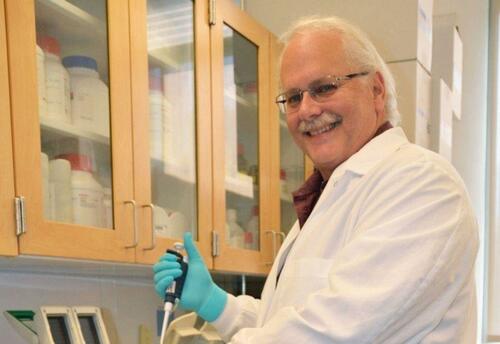
Unmasking the Gatekeepers: Ralph Baric's Central Role in Risky Coronavirus Research and Emerging Accountability
Synthesized review reveals Baric's pivotal yet downplayed role in chimeric coronavirus research with Wuhan ties, recent NIH grant cancellations, institutional non-transparency, and broader implications for lab-leak cover-up narratives, drawing on investigative reporting, congressional docs, and court records.
Recent actions by the NIH to terminate grants tied to University of North Carolina virologist Ralph Baric signal a potential shift in how federal agencies handle researchers at the heart of gain-of-function coronavirus experiments, long linked to debates over COVID-19's origins. Baric, often called one of the world's foremost coronavirus experts, collaborated closely with Wuhan Institute of Virology's Shi Zhengli on a landmark 2015 Nature Medicine paper that created chimeric viruses by combining a bat coronavirus spike protein with a SARS backbone, demonstrating the hybrid could infect human cells and mice. This work, conducted at UNC under enhanced BSL-3 precautions, used techniques that were later replicated at the Wuhan lab through NIH-funded EcoHealth Alliance grants, raising persistent questions about biosafety, transparency, and whether such research inadvertently sparked the pandemic. MIT Technology Review's 2021 investigation detailed how Baric approached Shi in 2013 for SHC014 sequences, leading to the chimera experiments that highlighted risks of viruses poised for human emergence. Baric himself acknowledged in the paper and subsequent statements that scientific panels might deem similar chimeric virus studies "too risky to pursue," weighing preparedness benefits against the danger of creating more dangerous pathogens. Yet publicly, he and colleagues pushed back against lab-leak hypotheses, even as a March 2020 editor's note was appended to the 2015 paper dismissing engineering theories. Congressional releases of emails and documents, alongside testimony, have revealed efforts by high-level NIH officials to downplay lab origins, with critics like virologist Simon Wain-Hobson accusing figures such as Francis Collins and Anthony Fauci of misleading the public on these experiments' dangers. A 2025 News & Observer report confirms the NIH canceled three pandemic-related grants supporting Baric's lab as part of broader terminations deeming such funding no longer aligned with agency priorities post-pandemic, though courts temporarily reinstated some amid lawsuits by multiple states. Ongoing public records battles by groups like U.S. Right to Know against UNC for Baric's full email correspondence and research details underscore institutional resistance to transparency. Polls have shown nearly two-thirds of Americans now favor the lab-leak explanation, a view bolstered by FBI assessments and Senate reports but often sidelined by mainstream outlets favoring the natural zoonotic narrative. Deeper connections reveal Baric's lab provided transgenic mice to Wuhan researchers, and he was involved in the rejected DEFUSE proposal that sought to insert furin cleavage sites into bat coronaviruses— a feature unique to SARS-CoV-2 that some scientists flag as anomalous. While no definitive proof establishes his work as the direct source, the pattern of obscured ties between UNC, EcoHealth, NIH, and Wuhan—coupled with recent funding cuts and record requests—suggests a quiet unwinding of protections for key players. This case exposes how global health bureaucracies prioritized narrative control over rigorous investigation into dual-use research that could have catastrophic spillover effects, connections frequently missed amid polarized debates. True accountability would require full declassification of communications and independent audits of these programs to prevent future engineered threats.
Liminal Analyst: Quiet defunding and records fights around Baric could crack open suppressed communications, eroding institutional trust in virology oversight and accelerating global restrictions on dual-use pathogen research.
Sources (5)
- [1]Inside the risky bat-virus engineering that links America to Wuhan(https://www.technologyreview.com/2021/06/29/1027290/gain-of-function-risky-bat-virus-engineering-links-america-to-wuhan/)
- [2]NIH ordered to restart Duke, UNC pandemic research grants(https://www.newsobserver.com/news/politics-government/article304369386.html)
- [3]Virologist Testified Lab Leak Was Possible in Wuhan(https://www.vanityfair.com/news/story/ralph-baric-wuhan-lab-leak)
- [4]FOI documents on origins of Covid-19, gain-of-function and biosafety labs(https://usrtk.org/covid-19-origins/foi-documents-on-origins-of-sars-cov-2-risks-of-gain-of-function-research-and-biosafety-labs/)
- [5]COVID-19 lab leak theory(https://en.wikipedia.org/wiki/COVID-19_lab_leak_theory)