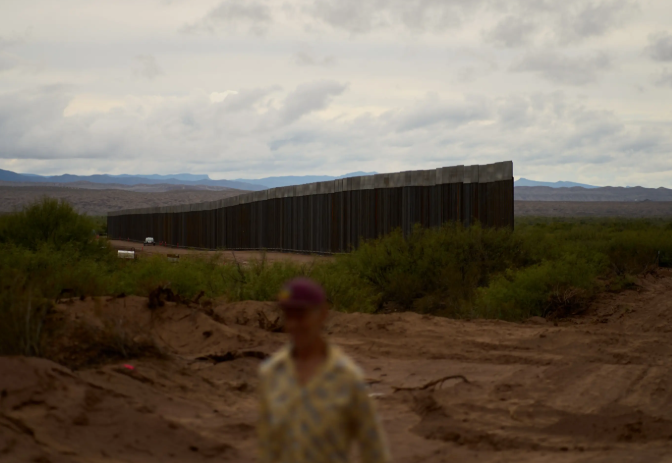
SCOTUS Stays Injunction on Big Bend Border Wall, Rejects 'Constitutional' Major Questions Claim and Bolsters Executive Waiver Authority
SCOTUS stay enables Trump-era Big Bend wall resumption by rejecting major questions doctrine as a constitutional bar, affirming IIRIRA waiver authority and prioritizing border security over environmental claims.
The U.S. Supreme Court on November 9, 2026, granted the Trump administration's emergency application for a stay in Mullin v. Friends of the Ruidosa Church, allowing resumption of border barrier construction in Texas's Big Bend Sector while litigation continues. The unsigned per curiam opinion found the government 'exceedingly likely to prevail' on its jurisdictional argument, holding that the district court lacked authority to review claims framed under the major questions doctrine because they allege statutory overreach rather than constitutional violations. Only Justice Ketanji Brown Jackson indicated she would have denied the stay. The ruling turns on Section 102(c) of the Illegal Immigration Reform and Immigrant Responsibility Act (IIRIRA) of 1996, which authorizes the DHS Secretary to waive 'all legal requirements' for expeditious border construction in areas of high illegal entry and limits judicial review to constitutional claims. The Court explicitly stated there is 'no such thing as a constitutional major-questions claim,' treating the doctrine as a statutory interpretation tool rather than a separation-of-powers constitutional limit. Lower court Judge Kathleen Cardone had blocked waivers issued by Secretaries Kristi Noem and Markwayne Mullin, citing insufficient 'clear congressional authorization' for the scale of the project and noting the sector's relatively low crossing rates compared to others. The justices weighed equities in favor of the government, citing daily costs of nearly $500,000 from the injunction and Congress's pre-existing balance prioritizing border security over environmental or aesthetic harms. Multiple corroborating reports confirm the decision's narrow procedural focus leaves the underlying merits for further review, potentially streamlining future waiver-based projects. This development reinforces broad executive discretion under existing immigration statutes, limiting judicial intervention in expedited border infrastructure even amid environmental challenges in sensitive areas like Big Bend National Park.
Sources (5)
- [1]Supreme Court allows Trump administration to continue border wall construction(https://www.scotusblog.com/2026/11/supreme-court-allows-trump-administration-to-continue-border-wall-construction/)
- [2]Supreme Court allows Texas border wall construction to continue for now(https://apnews.com/article/supreme-court-trump-border-wall-cd5697e9502b4ae32e1c14300de02985)
- [3]Supreme Court allows Trump border wall at Big Bend National Park in Texas(https://www.reuters.com/world/supreme-court-allows-trump-border-wall-big-bend-national-park-texas-2026-11-09/)
- [4]Supreme Court allows Trump’s Big Bend construction to continue(https://www.politico.com/news/2026/11/09/big-bend-supreme-court-ruling)
- [5]Supreme Court allows Trump administration to resume border wall construction in Big Bend region(https://www.cbsnews.com/news/supreme-court-trump-border-wall-big-bend/)