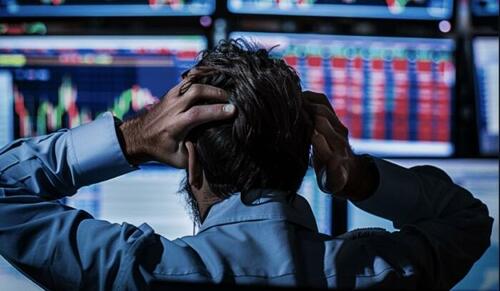
The Recurring Panic Trap: How Media-Amplified Fear and Behavioral Biases Cost Retail Investors During Volatility Spikes
Synthesizing the Iran market shock recovery with behavioral finance research, this piece exposes how media fear amplification and biases like loss aversion drive retail panic selling at cycle lows, creating persistent underperformance versus benchmarks as shown in DALBAR and institutional analyses.
The recent Iran geopolitical shock—triggering a surge in Brent crude above $114 per barrel, a rapid 18% valuation reset in equities, and widespread predictions of recession—offered a textbook demonstration of why panic remains one of the most expensive mistakes in investing. As Lance Roberts detailed, the S&P 500 not only recovered the losses within two weeks but pushed to new highs, leaving those who sold at peak fear (when AAII bearish sentiment hit 51.4%) facing the painful choice of buying back in 10% higher or sitting out the rebound entirely.
This pattern is neither new nor random. Decades of behavioral finance research reveal systematic psychological pitfalls that mainstream financial media often exacerbates rather than counters. Loss aversion, first formalized in Kahneman and Tversky's Prospect Theory, explains why the pain of a drawdown feels roughly twice as intense as the pleasure of equivalent gains, driving investors to liquidate at precisely the worst moments. Herd behavior and recency bias compound this during high-volatility periods fueled by alarming headlines about oil chokepoints like the Strait of Hormuz or cascading inflation risks.
Data from DALBAR's longstanding Quantitative Analysis of Investor Behavior (QAIB) reports consistently shows the average equity investor underperforms the S&P 500 by several percentage points annually over long periods—not due to poor securities selection, but timing errors: buying high on euphoria and selling low on fear. A Morgan Stanley analysis of common volatile-market mistakes highlights panic-selling as the most damaging, converting temporary paper losses into permanent ones while missing the strongest recovery days that typically cluster when sentiment is still negative. Similar patterns emerged in the 2020 COVID crash, where rapid rebounds rewarded those who adhered to disciplined rebalancing over emotional exits.
What others miss is the self-reinforcing feedback loop: financial media profits from fear-driven engagement, amplifying worst-case scenarios that spike put option volume and bearish surveys exactly when contrarian signals flash green. Retail investors, lacking institutional risk frameworks, repeatedly fall into the 'risk' misdefinition trap—equating short-term volatility with the true risk of permanent capital impairment. A well-constructed portfolio counters this through predefined rules: diversified asset allocation, systematic rebalancing thresholds, and cash buffers sized for drawdowns without forced selling.
The Iran episode, like prior oil shocks and geopolitical flares, ultimately repriced faster than narratives suggested because markets discounted transient supply disruptions against resilient earnings power in tech and manufacturing. Yet the behavior gap persists. As LSEG research on cognitive biases notes, emotional reactions during downturns lead to missed recoveries, transferring wealth from panicked retail hands to patient, rules-based capital. The lesson isn't to ignore risk but to build portfolios and mindsets resilient to the predictable psychology that repeats with each new catalyst.
LIMINAL: Retail investors will keep forfeiting 2-5% in annual returns during volatility events like geopolitical oil shocks by panic-selling at sentiment extremes, while disciplined portfolios capture the rapid mean-reversion that mainstream fear narratives obscure.
Sources (5)
- [1]Top 5 Mistakes Investors Make in Volatile Markets(https://www.morganstanley.com/articles/top-5-investor-mistakes)
- [2]How The Average Investor's Returns Compare To The Market(https://www.forbes.com/sites/wesmoss/2026/01/27/how-the-average-investors-returns-compare-to-the-market/)
- [3]Cognitive biases and learning from past market volatility(https://www.lseg.com/en/insights/ftse-russell/cognitive-biases-and-learning-from-past-market-volatility)
- [4]DALBAR's 2026 QAIB Report Shows Narrower Investor Gap(https://www.morningstar.com/news/pr-newswire/20260417ne37232/dalbars-2026-qaib-report-shows-narrower-investor-gap-amid-a-complex-and-volatile-market-year)
- [5]Behavioral Finance and Investor Psychology(https://acr-journal.com/article/behavioral-finance-and-investor-psychology-understanding-market-volatility-in-crisis-scenarios-1763/)