ADP's Weak August Jobs Report Highlights Slowing Labor Market Amid Wage Stagnation, Raising Stakes for 2026 Midterms
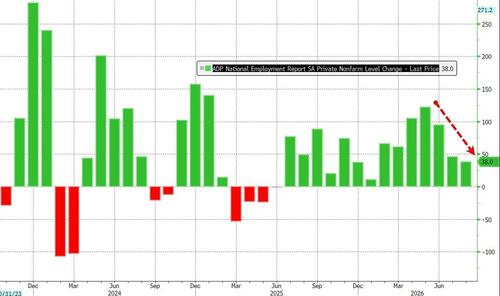
Corroborated ADP data shows August 2026 private jobs at +38k with stagnant wages; analysis links this to risks of voter shifts and unrest via economic discontent in key demographics.
Multiple independent reports confirm ADP's August 2026 private-sector employment data: just 38,000 jobs added, the weakest monthly gain since January, below consensus estimates of 47,000-48,000 and following a revised 46,000 in July.[1][2] Sectors driving gains included education and health services (+45,000), leisure and hospitality (+16,000), and construction (+12,000), while manufacturing (-17,000), professional and business services (-16,000), and other areas shed jobs. Base pay growth for job-stayers held at 3.0%, with gross pay at 4.4%; job-changers saw moderated gains. ADP Chief Economist Nela Richardson noted that "once-predictable wage growth has been overtaken by the complexities of demographic change, persistent inflation, and AI's effects on jobs."[3]
This aligns with broader cooling signals, including July's BLS nonfarm payroll decline of 23,000 (revised lower from prior months) and stable but low job openings.[4] Wage stagnation compounds the issue: real earnings have faced pressure from inflation, with hourly wages for production workers showing minimal or negative real growth in recent periods.[5]
Under the lens of potential social unrest and voting shifts, the data points to uneven labor market resilience—concentrated in large firms and select sectors—amid demographic headwinds and technological disruption. Historical patterns and recent polling link such stagnation to populist sentiment, with working-class and rural voters expressing discontent over flat real incomes and manufacturing losses (75,000 since early 2025).[6] Analysts note this could influence 2026 midterm dynamics, as economic dissatisfaction has already prompted voter realignments toward economic-populist messaging among independents and Trump-waverers.[7][8] Connections often overlooked include how AI-driven job shifts and immigration/demographic constraints may accelerate precarity in goods-producing sectors, potentially amplifying turnout volatility in swing states with higher union or blue-collar shares. While the labor market remains above recession thresholds, sustained weakness risks eroding confidence ahead of policy decisions like Fed rate moves.
[Political Economist]: Persistent weak job growth combined with wage pressures could accelerate populist voting shifts among working-class demographics in the 2026 midterms, amplifying calls for economic intervention.
Sources (6)
- [1]Private payrolls rose by 38,000 in August, fewer than expected, ADP reports(https://www.cnbc.com/2026/09/02/private-payrolls-rose-by-38000-in-august-fewer-than-expected-adp-reports.html)
- [2]ADP National Employment Report: Private-Sector Employment Increased by 38,000 Jobs in August(https://mediacenter.adp.com/2026-09-02-ADP-National-Employment-Report-Private-Sector-Employment-Increased-by-38,000-Jobs-in-August)
- [3]US private payrolls growth slows in August, ADP says(https://www.reuters.com/business/us-private-payrolls-growth-slows-august-adp-says-2026-09-02/)
- [4]Wages Are Falling. Wealth Is Surging. No Wonder Americans Are Unhappy.(https://www.nytimes.com/2026/06/13/business/economy-trillionaire-wealth-wages.html)
- [5]'Weaker than we thought': Jobs surprise deals setback for GOP in elections(https://www.politico.com/news/2026/08/07/jobs-trump-economy-midterms-fed-01028617)
- [6]Labor votes: Discontent will accompany blue‑collar voters to the polls in the midterms(https://theconversation.com/labor-votes-discontent-will-accompany-blue-collar-voters-to-the-polls-in-the-midterms-285564)