US Troop Withdrawal from Germany Signals Deeper NATO Fractures and Shifting Global Priorities
The U.S. decision to withdraw 5,000 troops from Germany, prompted by tensions over the Iran conflict, reflects deeper NATO fractures and a strategic pivot away from Europe. This move risks undermining deterrence against Russia and accelerating European defense autonomy, with potential global ripple effects.
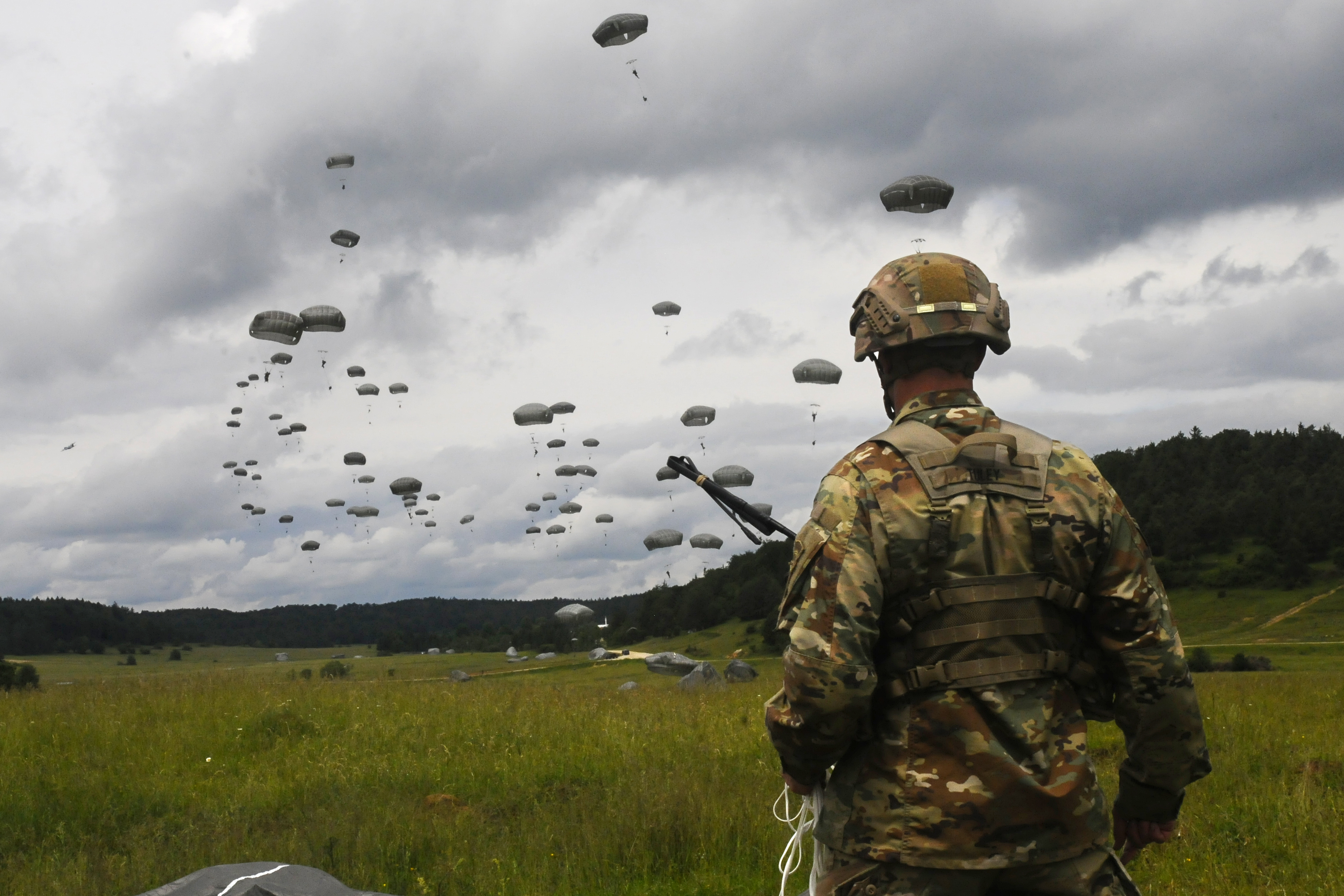
The Pentagon's announcement of a 5,000-troop withdrawal from Germany, as reported by Defense News, is not merely a reaction to recent diplomatic spats but a manifestation of a broader strategic pivot under the Trump administration. Ostensibly triggered by German Chancellor Friedrich Merz's criticism of U.S. policy in the Iran conflict, this decision reflects long-standing tensions over burden-sharing within NATO and a reorientation of U.S. military focus away from Europe toward Indo-Pacific challenges and domestic priorities. The drawdown, reducing U.S. forces in Germany from 35,000 to pre-2022 levels over the next 6-12 months, raises critical questions about NATO's cohesion at a time of heightened global instability, including Russia's ongoing aggression in Ukraine and escalating tensions in the Middle East.
Beyond the immediate context of U.S.-German relations, this move fits a pattern of Trump's transactional approach to alliances, evident in his first term when he pushed for troop reductions in Germany (reversed by Biden) and consistently criticized NATO allies for insufficient defense spending. The Defense News report highlights a Pentagon official's framing of the withdrawal as a push for Europe to take primary responsibility for continental security, yet it misses the deeper geopolitical ripple effects. For instance, pulling a brigade combat team and canceling a planned long-range fires battalion deployment signals a reduced U.S. commitment to deterrence against Russia on NATO's eastern flank—an omission in the original coverage that overlooks the timing amid Ukraine's ongoing struggle.
Moreover, the report underplays the connection to the Iran conflict as a catalyst. The Strait of Hormuz crisis, with its impact on global energy markets, has exposed divisions within NATO over military support for U.S. operations. Germany's reluctance to engage directly, despite facilitating U.S. basing and overflights, mirrors broader European skepticism about Washington's unilateral actions—evident since the February 28 strikes on Iran, as noted in the original piece. This skepticism is compounded by historical context: Germany's post-WWII pacifist leanings and its strategic focus on economic rather than military power often clash with U.S. expectations, a dynamic insufficiently explored in the source.
Synthesizing additional perspectives, a Reuters report from April 2026 on internal Pentagon discussions reveals a punitive streak in U.S. policy, including threats to suspend Spain from NATO and reconsider support for Britain over the Falklands—indicating that Germany is not an isolated target but part of a broader reckoning with allies. Similarly, a 2025 analysis by the Center for Strategic and International Studies (CSIS) warned that U.S. troop reductions in Europe could embolden adversaries like Russia and China, who may interpret such moves as a retreat from multilateral commitments. These sources underscore a critical oversight in the Defense News story: the withdrawal's potential to undermine NATO's deterrence posture at a time when European defense budgets, though rising, cannot yet fill the gap left by U.S. forces.
Analytically, this decision risks accelerating a fracturing of NATO unity, particularly as it coincides with domestic U.S. political polarization and Trump's 'America First' rhetoric, which prioritizes short-term wins over long-term alliance stability. The withdrawal may also incentivize European nations to seek autonomous defense capabilities—a trend already underway with initiatives like the EU's Permanent Structured Cooperation (PESCO)—but the transition period could expose vulnerabilities. Meanwhile, adversaries may exploit this moment: Russia could intensify hybrid warfare in Eastern Europe, while Iran might leverage NATO disarray to push back against U.S. pressure in the Middle East. The original coverage fails to connect these dots, focusing narrowly on bilateral U.S.-German friction rather than systemic risks.
In sum, the troop withdrawal from Germany is less about a single diplomatic row and more about a fundamental realignment of U.S. foreign policy—one that could reshape transatlantic security architecture for decades. As global conflicts multiply, from Ukraine to the Indo-Pacific, the U.S. gamble on pressuring allies to step up may either catalyze a stronger Europe or fracture the very alliances it claims to strengthen.
SENTINEL: Expect increased European defense spending and calls for strategic autonomy in the next 12-18 months, but short-term vulnerabilities could invite Russian hybrid operations in Eastern Europe as NATO cohesion wavers.
Sources (3)
- [1]US withdrawing 5,000 troops from Germany, US officials say(https://www.defensenews.com/news/pentagon-congress/2026/05/01/us-withdrawing-5000-troops-from-germany-us-officials-say/)
- [2]Exclusive: Pentagon email outlines options to punish NATO allies over Iran war support(https://www.reuters.com/world/us/pentagon-options-punish-nato-allies-iran-war-2026-04-25/)
- [3]The Future of U.S. Military Presence in Europe: Risks and Opportunities(https://www.csis.org/analysis/future-us-military-presence-europe-risks-and-opportunities-2025)