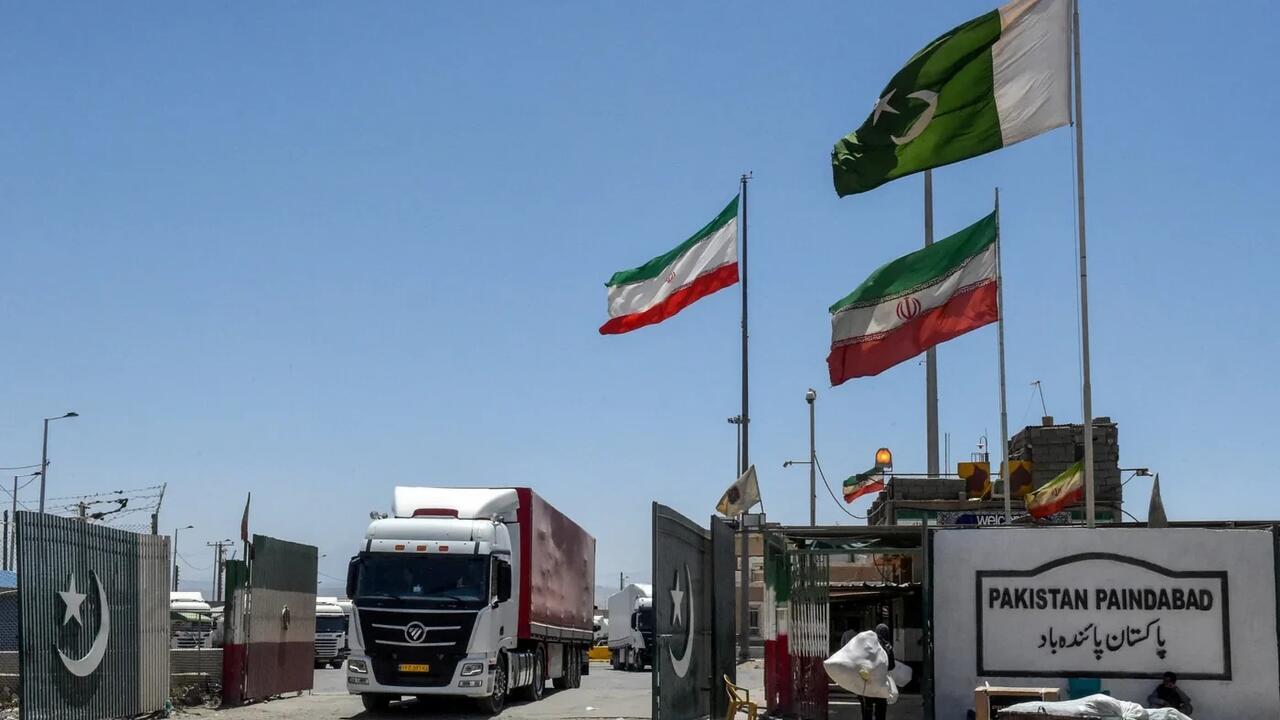
Iraq, Turkey and Pakistan resist U.S. push to close land borders with Iran, New York Times reports
CENTCOM’s Task Force Iron Gate is a documented Tampa-based coordination cell aimed at Iran’s land and Caspian routes. The New York Times, widely cited by other outlets, reports that Turkey, Iraq and Pakistan have not closed those borders as Washington asked, citing trade, gas and the risk of local unrest. That is neighbor resistance grounded in economic dependence, not a demonstrated collapse of U.S. hegemony.
Documented: On 7 November 2026, U.S. Central Command announced Task Force Iron Gate, an internal staff of about 20 military and civilian personnel based in Tampa. CENTCOM commander Adm. Brad Cooper said the unit would coordinate with other U.S. agencies to constrain the movement of advanced weapons, dual-use technologies, sanctioned materials and revenue Washington calls illicit across Iran’s land borders and the Caspian Sea. CENTCOM described the effort as reinforcing an existing naval blockade that, by the command’s account, had already blocked more than $25 billion in Iranian crude exports. The command did not announce a troop deployment to those borders. Stars and Stripes, Dawn and the CENTCOM release all report those points.
Documented via the New York Times, as relayed by Gulf News, Ynet and other outlets that cite the same reporting: three Iraqi officials and one U.S. official said Washington had spent weeks pressing Turkey, Iraq and Pakistan to close crossings with Iran, and that the push had not produced the closures the administration wanted. Turkey has largely kept its border policies unchanged. Iraq was asked, in talks that included regional envoy Thomas Barrack, to leave only two Iranian crossings open; Baghdad refused that demand and only briefly shut one or two posts, which officials said angered Iraqis who depend on the trade. Pakistan, with official trade with Iran of about $3 billion a year, has opened and closed some crossings, with Pakistani officials citing security and new import procedures rather than a U.S. order. A U.S. official told the Times that neighbors warned a full cut could risk “civil revolt” or “civil insurrection” among communities and smuggling networks that live off the routes, and that the pressure was stirring resentment among partners. Ellie Geranmayeh of the European Council on Foreign Relations, quoted in that reporting, noted Iraq’s dependence on Iranian gas for more than a third of the fuel that powers its grid, and Pakistan’s reliance on Iranian fuel, including LPG.
Claimed, not independently confirmed here: that Iran’s deputy foreign minister discussed countering the “Iron Gate” plan with the Russian ambassador, and that a 5 November Kremlin meeting between Vladimir Putin and Mohsen Rezaei produced a pipeline deal and a list of conditions for reopening the Strait of Hormuz. Those details appear in secondary accounts of the episode and are not established by the CENTCOM statement or by the border-resistance reporting summarized above.
Speculated: that the refusal amounts to a fracture in a unipolar order or a deliberate carve-out of spheres beyond Washington. What the record actually shows is narrower and more material. Iron Gate is a small coordination cell, not a force that can seal 5,900 kilometers of Iranian frontier by itself. A U.S. military official told reporters the team would not run military operations and would instead try to get neighbors to police illicit trade with their own forces. Those neighbors have gas, fuel and border-town economies tied to Iran. Iraq cannot fully control a roughly 994-mile frontier. Closing the roads would hit Baghdad and Islamabad as well as Tehran. The documented pattern is partial, temporary, and economically self-interested compliance — not a public repudiation of U.S. alliance structures, and not proof that sanctions enforcement has collapsed. It is evidence that a land blockade, unlike a naval one the United States can enforce itself, depends on governments that calculate their own shortages, unrest and trade first.
Iraqi power plants, Pakistani fuel buyers and border communities depend on trade with Iran that Washington wants squeezed. Documented reporting shows those governments have so far refused a full closure because the cost would fall on them, not only on Tehran.
Sources (5)
- [1]CENTCOM public release: Task Force Iron Gate(https://www.centcom.mil/MEDIA/PUBLIC-RELEASES/Article/4644250/)
- [2]Stars and Stripes: CENTCOM launches task force on Iran land and Caspian routes(https://www.stripes.com/theaters/middle_east/2026-11-08/iran-caspian-sea-centcom-23399154.html)
- [3]Gulf News: Iron Gate push meets resistance from Iraq, Turkey, Pakistan(https://gulfnews.com/world/mena/us-iron-gate-blockade-push-against-iran-meets-resistance-from-iraq-turkey-pakistan-report-1.500744430)
- [4]Ynet: U.S. push to tighten Iran blockade meets neighbor resistance(https://www.ynetnews.com/article/skesremcfg)
- [5]Dawn: Washington takes Tehran pressure campaign ashore(https://www.dawn.com/news/2042967)