Bessent's 'Suffocating the Regime' Doctrine: How US Economic Warfare on Iran Echoes Overlooked Patterns of Regime Destabilization
US Treasury Secretary Scott Bessent's admission of 'suffocating' Iran via economic blockade and sanctions on Chinese buyers highlights aggressive regime-change-adjacent tactics, risking broader conflict with China and escalation in Hormuz while mainstream focus remains on stalled diplomacy.
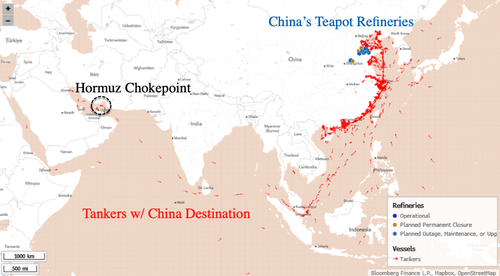
Treasury Secretary Scott Bessent's recent statements on Fox News have laid bare the Trump administration's intensified 'maximum pressure' campaign against Iran, describing it explicitly as 'suffocating the regime' through a combined military blockade of the Strait of Hormuz and aggressive financial measures dubbed 'Economic Fury.' Bessent detailed how Iran struggles to pay its soldiers, faces deteriorating oil infrastructure, and cannot export crude effectively, with no tankers moving from Iranian ports. This approach supplements Pentagon operations with Treasury sanctions targeting Chinese 'teapot' refineries in Shandong that process Iranian oil, actions detailed in official US Treasury alerts and warnings to global financial institutions. China has responded defiantly, invoking its blocking statute to shield five specific refineries including Hengli Petrochemical from US sanctions, declaring them lacking basis in international law. While diplomatic drafts for a framework agreement continue to circulate—with Iran proposing a one-month timeline to reopen Hormuz—the dominant US tactic appears to be economic strangulation aimed at collapsing the regime's revenue streams. This connects to a longer, often underreported pattern in US foreign policy: the use of sweeping sanctions and secondary measures not merely as leverage in talks but as tools for internal destabilization, seen previously in efforts against Iraq, Venezuela, and earlier Iran phases. Mainstream coverage frequently centers on 'diplomatic talks' or Iran's proposals, yet downplays how such economic blockades risk humanitarian fallout, currency collapse (already at record lows for the rial), and escalation. The naval chokehold on Hormuz, a critical global oil artery, combined with direct confrontation with Beijing over its energy imports from Iran (which account for roughly 90% of Tehran's exports), heightens dangers of miscalculation. History suggests these aggressive tactics can provoke asymmetric responses—from IRGC proxies to potential attacks on shipping—potentially drawing the US into wider regional conflicts that extend beyond bilateral diplomacy. Rising US gasoline prices above $4.40 per gallon already signal domestic economic ripples, with demand destruction looming. Bessent's marathon-to-sprint framing reveals confidence in rapid regime erosion, but overlooks how suffocating tactics have repeatedly fueled resilience narratives in targeted states while complicating de-escalation.
LIMINAL Analyst: Bessent's suffocation strategy combined with Hormuz blockade and China sanctions significantly raises risk of Iranian retaliation and US-China economic clash, likely accelerating regional instability beyond contained diplomatic channels.
Sources (6)
- [1]US Treasury chief says Washington 'suffocating' Iran with blockade(https://www.timesofisrael.com/liveblog_entry/us-treasury-chief-says-washington-suffocating-iran-with-blockade/)
- [2]US 'suffocating' Iran with blockade, says Treasury Secretary Scott Bessent(https://m.economictimes.com/news/international/global-trends/us-suffocating-iran-with-blockade-says-treasury-secretary-scott-bessent/articleshow/130735870.cms)
- [3]China blocks US sanctions against five 'teapot' refineries(https://www.aljazeera.com/economy/2026/5/3/china-blocks-us-sanctions-against-five-teapot-refineries)
- [4]Treasury Warns of Sanctions Risks Linked to China-Based Independent “Teapot” Oil Refineries(https://home.treasury.gov/news/press-releases/sb0476)
- [5]China's 'Teapot' Refiners, Targeted by U.S., Offer Financial Lifeline to Iran(https://www.wsj.com/world/middle-east/chinas-teapot-refiners-targeted-by-u-s-offer-financial-lifeline-to-iran-d3e0604f)
- [6]US treasury chief says businesses working with Iranian airlines risk sanctions(https://www.reuters.com/world/middle-east/us-treasury-chief-says-businesses-working-with-iranian-airlines-risk-sanctions-2026-04-27/)