Italy's Suspension of Israeli Defense Pact: Harbinger of Europe's Fracturing Alliances Amid Middle East Escalation
Italy's suspension of its 2006 defense agreement with Israel, amid public opposition to its Lebanon campaign, UNIFIL incidents, and refusal to aid U.S. strikes on Iran, marks a pivotal shift. This reflects fracturing European alliances, domestic political pressures overriding Meloni's prior pro-Israel stance, and broader transatlantic rifts under Trump 2.0, with significant implications for Mediterranean security, tech cooperation, and Western unity against Iranian proxies.
While Defense News accurately reports Italian Prime Minister Giorgia Meloni's decision to suspend the 2006 defense agreement with Israel, coinciding with President Trump's public rebuke over Italy's non-participation in U.S. strikes against Iran, the coverage stops short of examining the structural shifts this represents in European security policy. This is not merely a bilateral adjustment but a symptom of deepening fractures in transatlantic and intra-European alliances, driven by war fatigue, direct threats to Italian personnel, and recalibrated national interests as the Middle East conflict metastasizes from Gaza to Lebanon to direct U.S.-Iran confrontation.
The original piece understates the agreement's substantive value. Israeli spokesman Oren Marmorstein's dismissal as a 'memorandum with no substantive content' contradicts the documented record of cooperation in drone technology, cyber defense, missile systems, and joint R&D. Synthesizing this with a 2023 IISS Strategic Survey on Mediterranean partnerships and a 2024 ECFR policy brief on post-October 7 EU-Israel ties reveals extensive collaboration between Italy's Leonardo defense conglomerate and Israeli firms like Rafael and Israel Aerospace Industries. Suspension risks disrupting these channels at a time when both nations face threats from Iranian proxies.
What the source misses is the critical UNIFIL dimension. Italy maintains one of the largest contingents in southern Lebanon; allegations of IDF warning shots at Italian peacekeepers represent a dangerous escalation that domestic audiences could no longer ignore. This, combined with graphic coverage of Israel's Lebanon campaign, has shifted Italian public opinion dramatically—polls cited in a January 2026 Reuters analysis showed 58% opposition to military ties with Israel, up from 32% in 2023. Meloni, despite her Brothers of Italy roots and prior strong support for Israel, is bending to this pressure while simultaneously denying U.S. access to the Sigonella base, a linchpin for Mediterranean operations.
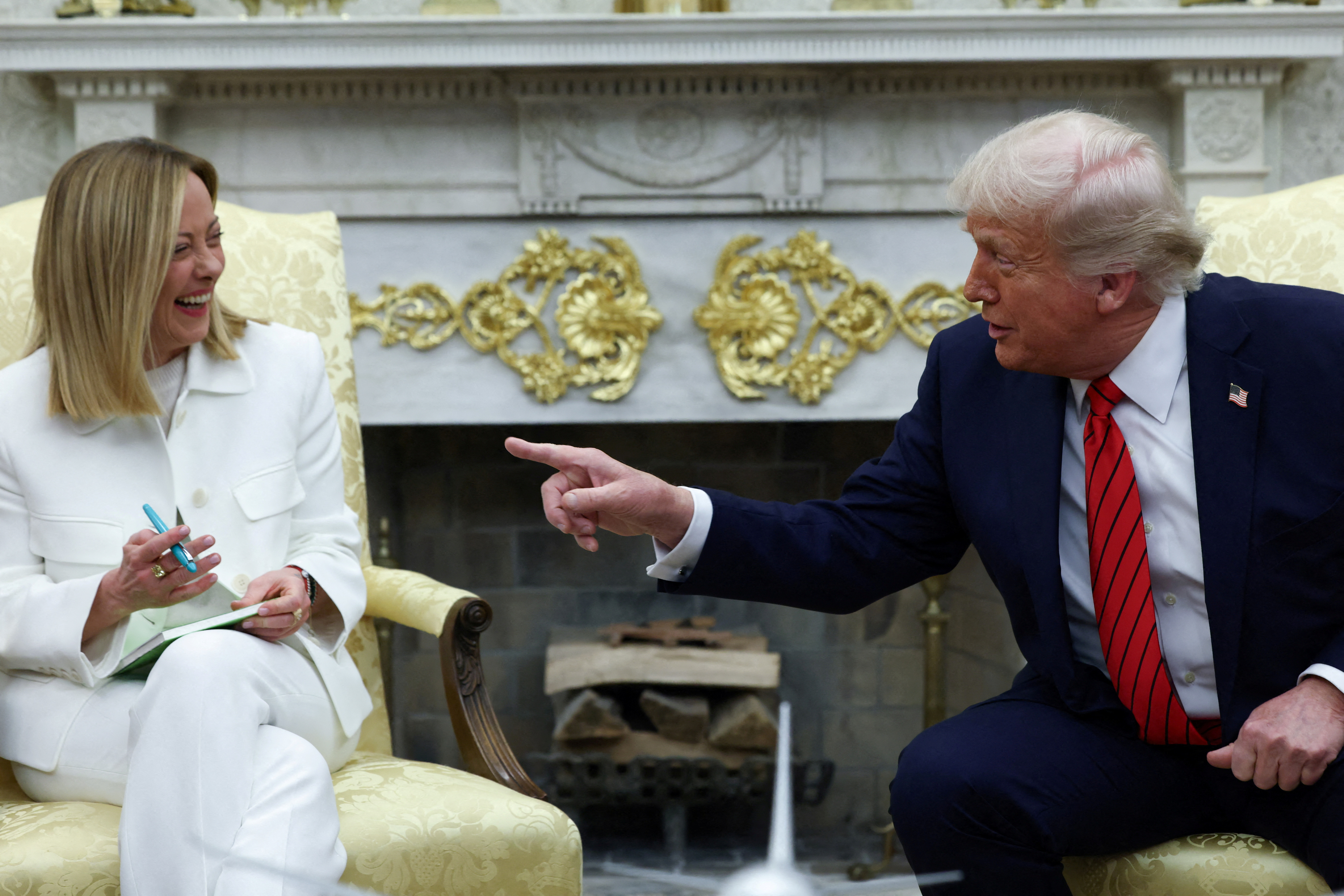
Trump's characterization of Meloni as having 'lost courage' and no longer 'the same person' exposes the brittle nature of personal alliances in his second term. Once viewed as Washington's bridge to Europe, Meloni now finds herself aligned with Pope Leo's criticism of U.S. Iran strikes—further evidence of a values-based European pushback against American unilateralism. This tracks with broader patterns: Spain and Ireland's arms embargoes and recognitions of Palestine, Belgium's legal challenges, and growing skepticism even in Germany. The ECFR report had warned that sustained high civilian casualties would erode the 'special relationship' even with Israel's traditional European partners.
The strategic implications are significant. Israel's isolation, as correctly noted by opposition leader Yair Lapid, weakens its ability to maintain qualitative military edges without sole reliance on the United States. For Europe, this signals accelerating strategic autonomy—prioritizing de-escalation and Mediterranean stability over reflexive alignment. However, it also carries risks: emboldened Iranian axes (Hezbollah, Houthis) may interpret alliance erosion as license for further aggression, complicating NATO's southern flank defense.
In an era of great-power competition, Italy's move reveals how Middle East conflicts are fracturing the post-1945 Western security architecture. Public opinion is proving a more potent force than traditional ideological affinities, forcing even right-leaning governments to choose domestic legitimacy over alliance loyalty. If Lebanon operations expand or Iranian retaliation intensifies, additional European states will likely follow, accelerating the decoupling of EU and U.S. policies in the region.
SENTINEL: Italy's suspension is an early indicator of wider European realignment away from unconditional Israel support; as U.S.-Iran conflict intensifies, expect cascading policy shifts that further isolate Washington and Tel Aviv while weakening NATO's southern flank coherence.
Sources (3)
- [1]Italy suspends defense agreement with Israel(https://www.defensenews.com/global/europe/2026/04/14/italy-suspends-defense-agreement-with-israel/)
- [2]EU-Israel relations after October 7: Divergence and domestic pressures(https://ecfr.eu/publication/eu-israel-relations-after-october-7/)
- [3]Mediterranean Security and Great Power Competition(https://www.iiss.org/publications/strategic-survey/2023/mediterranean-security/)