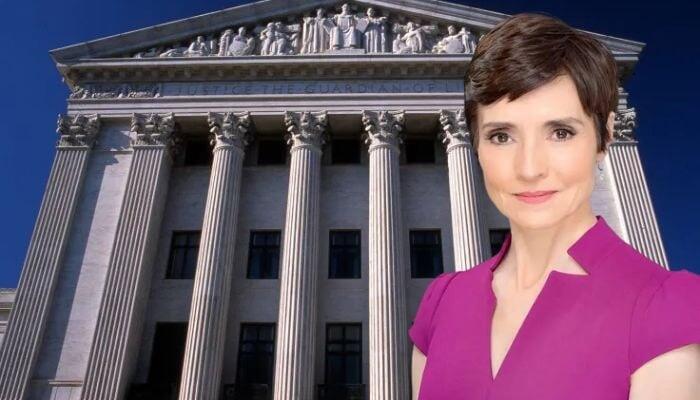
Press Freedom at the Brink: Catherine Herridge's Supreme Court Battle Tests Reporter's Privilege in Privacy Act Dispute
Corroborated reporting confirms the Herridge-Chen Privacy Act case is advancing through appeals, with SCOTUS denying an emergency stay on contempt fines in July 2026. It raises significant press freedom issues regarding source protection in civil discovery against alleged government leaks.
Veteran investigative journalist Catherine Herridge faces mounting pressure in a high-stakes legal fight that pits source confidentiality against a plaintiff's right to pursue Privacy Act claims against federal agencies. The case, now before the U.S. Supreme Court, stems from 2017 Fox News reporting by Herridge exposing alleged ties between the University of Management and Technology (UMT) founder Yanping Chen and China's People's Liberation Army. Chen, a naturalized U.S. citizen, was the subject of a lengthy FBI counterintelligence probe that ended without charges in 2014. She later sued the FBI, DOJ, DOD, and DHS under the Privacy Act, alleging unlawful leaks of her personal information to the media.
Herridge, subpoenaed as a third-party witness, refused to identify her confidential sources during deposition, invoking First Amendment protections. U.S. District Judge Christopher Cooper (D.D.C.) ordered disclosure, held her in civil contempt, and imposed an $800-per-day fine. The D.C. Circuit affirmed in 2025. In June 2026, Chief Justice John Roberts issued a temporary administrative stay on the fines pending full Court review; on July 2, 2026, the Supreme Court denied Herridge's emergency application to halt the sanctions, with Justice Brett Kavanaugh noting he would have granted relief.
The dispute highlights tensions in federal courts over the qualified reporter's privilege, especially absent a nationwide shield law. While much of the reporting drew from public records and prior whistleblower statements, Chen's suit targets non-public details, including photographs. Lower courts found Chen's need for the information outweighed Herridge's privilege claim. Press freedom advocates warn that compelling disclosure in civil Privacy Act cases could chill investigative journalism on national security matters. Herridge has petitioned for certiorari; as of mid-October 2026, the Court has not yet ruled on full review. The case underscores broader questions about government accountability for leaks versus protections for journalists exposing potential foreign influence operations.
[LIMINAL]: This case could force a rare reconsideration of Branzburg v. Hayes standards in the digital age, potentially narrowing or clarifying reporter protections in civil suits involving alleged official misconduct.
Sources (6)
- [1]Catherine Herridge: Supreme Court declines to halt daily $800 fine(https://www.cnn.com/2026/07/02/politics/catherine-herridge-source-dispute-supreme-court)
- [2]Supreme Court Denies Appeal From Reporter Catherine Herridge(https://www.theepochtimes.com/us/supreme-court-denies-appeal-from-former-fox-news-reporter-catherine-herridge-6056556)
- [3]If the Supreme Court wants to protect freedom of the press, here is its chance(https://thehill.com/opinion/judiciary/6155337-journalist-face-privacy-act-showdown/)
- [4]Docket for 25A1448(https://www.supremecourt.gov/docket/docketfiles/html/public/25a1448.html)
- [5]Supreme Court Lets $800/Day Fine Stand for Herridge(https://www.nytimes.com/2026/07/02/us/politics/supreme-court-herridge-first-amendment.html)
- [6]Supreme Court stays order forcing reporter to reveal source or pay fines(https://www.washingtonpost.com/business/2026/06/26/supreme-court-stays-order-forcing-reporter-reveal-source-or-pay-fines/)