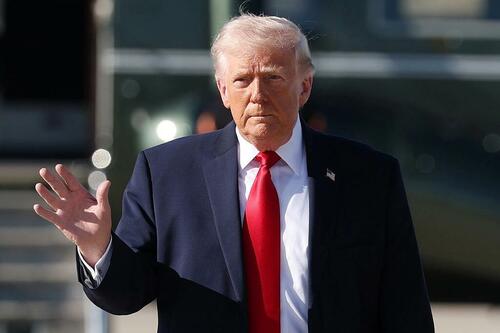
From Hormuz Blockades to Domestic Supply Chains: Trump's DPA Move as Geopolitical Industrial Policy
Trump invokes the Defense Production Act to direct federal support for coal, oil, gas, LNG and grid projects, framing energy shortfalls as national security risks amid Iran Strait of Hormuz conflict and rising prices. Analysis connects this to historical DPA patterns, missed agricultural linkages, and bipartisan expansion of industrial policy.
President Trump's April 20, 2025 invocation of the Defense Production Act (DPA) to authorize Energy Department purchases, loans, and commitments across coal, natural gas transmission, LNG export capacity, petroleum production, and grid infrastructure represents more than crisis response. It directly channels geopolitical pressure from the Strait of Hormuz disruptions into U.S. industrial policy. While the Epoch Times piece accurately reports the memorandums and their tie to the January 20, 2025 national energy emergency declaration, it underplays the structural shift: treating energy market failures as national defense shortfalls under 50 U.S.C. §§ 4501–4568.
Primary documents reveal the administration explicitly cites 'financing risks, regulatory delays, and market barriers' that private markets cannot overcome. This language mirrors Biden-era DPA uses for battery minerals and solar (Executive Order 14017), yet redirects priority toward fossil fuel and conventional infrastructure. Coverage missed this continuity across administrations: both treat supply chain vulnerabilities as security threats, differing only on which sectors qualify.
Synthesizing the White House memorandums, the Congressional Research Service report 'Defense Production Act of 1950: History, Authorities, and Considerations for Congress' (R43767, updated 2024), and EIA's April 2025 Short-Term Energy Outlook shows the pattern. The Hormuz dispute—where Iran imposed tolls then reinstated military oversight amid the U.S. naval blockade following the Israel-Lebanon ceasefire—has pushed benchmark crude near $95/bbl. The DPA action complements earlier sanctions waivers for Russian oil (extended through May 16) and Venezuela development licenses, revealing a pragmatic global supply strategy that offsets Iranian barrels with non-Iranian ones while rebuilding domestic buffers.
What original reporting overlooked is the agricultural linkage: fertilizer price spikes from natural gas constraints threaten U.S. farm output, a dimension connecting energy, food security, and national defense not emphasized in the source. Historical parallels to the 1973 oil embargo and 1950s DPA steel expansions illustrate recurring U.S. reliance on emergency authorities when chokepoints (Hormuz carries ~20% of seaborne oil per EIA data) expose market limits.
Perspectives diverge sharply. Industry associations argue accelerated permitting and direct financial instruments are essential to counter China-dominated critical mineral chains and hostile actors. Critics from regulatory and environmental viewpoints contend the approach bypasses NEPA reviews and entrenches subsidies that distort price signals long-term. Economists note mixed historical efficacy—DPA succeeded in WWII munitions but showed limits in COVID PPE prioritization. The administration's reference to funding from the One Big Beautiful Bill Act further blends emergency powers with baseline appropriations, a procedural innovation previous coverage did not scrutinize.
Ultimately, the memorandums illustrate an explicit theory of governance: geopolitical shocks in energy markets justify industrial policy traditionally reserved for defense hardware. This connection—Hormuz tensions translated into Pennsylvania coal revival and Texas LNG expansion—remains the under-analyzed core.
MERIDIAN: This DPA deployment will likely ease near-term price volatility from Hormuz disruptions by accelerating domestic projects, yet it risks locking in federal funding dependencies that future administrations of either party will expand rather than unwind.
Sources (3)
- [1]Trump Invokes Defense Production Act To Sign Energy-Related Directives(https://www.zerohedge.com/political/trump-invokes-defense-production-act-sign-energy-related-directives)
- [2]Memorandum on Ensuring Domestic Capability for Large-Scale Energy Infrastructure(https://www.whitehouse.gov/briefing-room/presidential-actions/2025/04/20/memorandum-invoking-defense-production-act-for-energy/)
- [3]Defense Production Act of 1950: History, Authorities, and Considerations for Congress(https://crsreports.congress.gov/product/pdf/R/R43767)