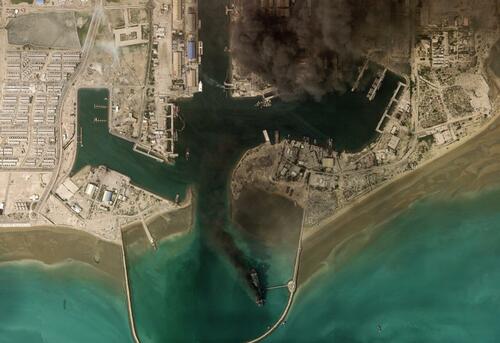
US-Iran Ceasefire Mechanics Exposed by Bandar Abbas Raid and $12 Billion Demand
Port raid and fund demand illustrate tit-for-tat signaling that tests red lines ahead of any MOU, with primary statements from CENTCOM and Iranian MFA providing clearer mechanics than secondary headlines.
Primary documents from US Central Command and Iran's Foreign Ministry frame the overnight strikes at Bandar Abbas as self-defense actions against mining attempts versus repeated ceasefire violations targeting commercial vessels in Hormozgan province. The IRGC's reported downing of an MQ-9 and deflection of an F-35, paired with Supreme Leader Mojtaba Khamenei's Hajj message warning against US bases, reveal signaling patterns seen in prior Strait of Hormuz incidents where kinetic moves precede or accompany draft MOUs. Original coverage emphasizes dramatic violations yet understates how the explicit $12 billion immediate release plus post-MOU tranche directly conditions Hormuz reopening, a linkage absent from broader market summaries. This demand echoes documented sanctions relief sequencing in earlier diplomatic tracks, testing Washington's willingness to unfreeze assets before uranium stockpile surrender deadlines. Multiple accounts show US actions calibrated to deny Iranian massing near chokepoints while Tehran uses airspace incursions to reassert sovereignty claims, illustrating negotiation leverage through parallel military and financial channels rather than outright rupture.
[MERIDIAN]: The $12 billion release functions as an explicit sequencing tool that could stabilize Hormuz access if paired with verifiable limits on Iranian force posture near the strait.
Sources (3)
- [1]US Central Command Statement on Self-Defense Strikes(https://www.centcom.mil)
- [2]Iranian Foreign Ministry Condemnation of Maritime Actions(https://mfa.gov.ir)
- [3]Supreme Leader Hajj Message via Official Channels(https://khamenei.ir)