Cuba's Drone Stockpile: Proxy Foothold for Russia-Iran Axis and China's Expanding Influence in the Americas
U.S. intelligence indicates Cuba has stockpiled 300+ Russian and Iranian drones for potential strikes on American targets, amplifying proxy threats from the Russia-Iran axis while aligning with China's SIGINT expansion and influence operations in the Americas, exposing homeland defense vulnerabilities.
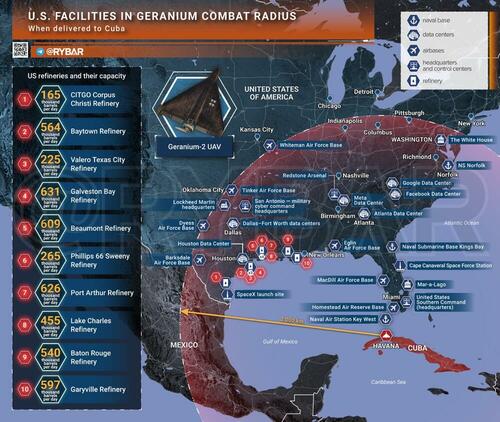
Recent U.S. intelligence reports reveal that Cuba has amassed over 300 military drones sourced primarily from Russia and Iran since 2023, with officials in Havana discussing potential strikes against Guantanamo Bay, U.S. naval assets, and even Key West, Florida—just 90 miles from Cuban shores. According to Axios, which first detailed the classified assessment, this buildup coincides with Iranian military advisers operating in Havana and Cuban personnel gaining drone warfare experience fighting alongside Russian forces in Ukraine. A senior U.S. official described it as a 'growing threat,' noting the proximity of low-cost, one-way attack systems in the hands of adversaries ranging from state actors to potential non-state proxies.[1][2]
This development fits into broader patterns of adversarial proxy warfare, where Russia and Iran leverage Cuba as a forward base to threaten the U.S. homeland asymmetrically. Cuba's soldiers have reportedly been deployed to support Russian operations, learning Iranian-style drone tactics that have proven effective at stressing air defenses in the Middle East and Eastern Europe. The 2026 U.S. Annual Threat Assessment from the DNI highlights how Russia, Iran, China, and North Korea are increasingly cooperating on advanced and novel delivery systems—including drones that can supplement higher-end missiles to overwhelm defenses—explicitly noting proliferation risks to the homeland.[3]
Going deeper, the drone concerns intersect with documented Chinese strategic inroads into Cuba. CSIS analysis has identified multiple Chinese signals intelligence (SIGINT) facilities on the island, upgraded in recent years to monitor U.S. communications and military activities. Axios itself notes that both Russia and China maintain such espionage sites in Cuba, turning the island into a multi-axis intelligence and potential staging ground just off America's coast. CNN reporting on surging U.S. intelligence-gathering flights near Cuban cities since early 2026 underscores Washington's alarm over this convergence of adversarial activities. These facilities, while focused on SIGINT, could readily support drone command-and-control or targeting in a crisis, exemplifying Beijing's 'civil-military fusion' approach extended into the Western Hemisphere.[4][5]
Cuba serves as a node in a wider encirclement strategy: similar dynamics play out in Venezuela and Nicaragua, where Chinese economic leverage, Russian military ties, and Iranian asymmetric tools create a web of proxy threats. This echoes historical precedents like the original Cuban Missile Crisis but substitutes vulnerable, mass-producible drones for nuclear missiles—technologies proliferated through the Russia-Iran partnership that has matured in Ukraine and the Middle East. The Trump administration's recent high-level diplomacy, including CIA Director John Ratcliffe's May 2026 visit to Havana and impending indictments tied to past Cuban actions, signals a harder line aimed at disrupting this axis before low-cost drone swarms expose critical gaps in U.S. counter-drone infrastructure for refineries, bases, and power grids.
The implications extend beyond immediate military risk. Private investment is already flowing into counter-drone technologies inspired by Ukrainian innovations, but the strategic effect may be to tie down U.S. resources in homeland defense while China deepens economic and intelligence footholds across Latin America. Without layered, affordable defenses against mass drone attacks, the U.S. risks strategic paralysis from a neighbor turned proxy platform.
LIMINAL: Cuba's transformation into a drone-armed proxy outpost will likely force accelerated U.S. investment in domestic counter-drone systems while enabling China to expand dual-use footholds throughout the Americas, complicating American focus on Pacific priorities without triggering direct great-power conflict.
Sources (4)
- [1]Exclusive: U.S. eyes attack-drone threat from Cuba(https://www.axios.com/2026/05/17/us-military-drones-cuba)
- [2]China's Intelligence Footprint in Cuba: New Evidence and Implications for U.S. Security(https://www.csis.org/analysis/chinas-intelligence-footprint-cuba-new-evidence-and-implications-us-security)
- [3]2026 Annual Threat Assessment – U.S. Intelligence Community(https://www.dni.gov/files/ODNI/documents/assessments/ATA-2026-Unclassified-Report.pdf)
- [4]US intelligence-gathering flights are surging off Cuba(https://edition.cnn.com/2026/05/10/americas/us-spy-flights-cuba-latam-intl)