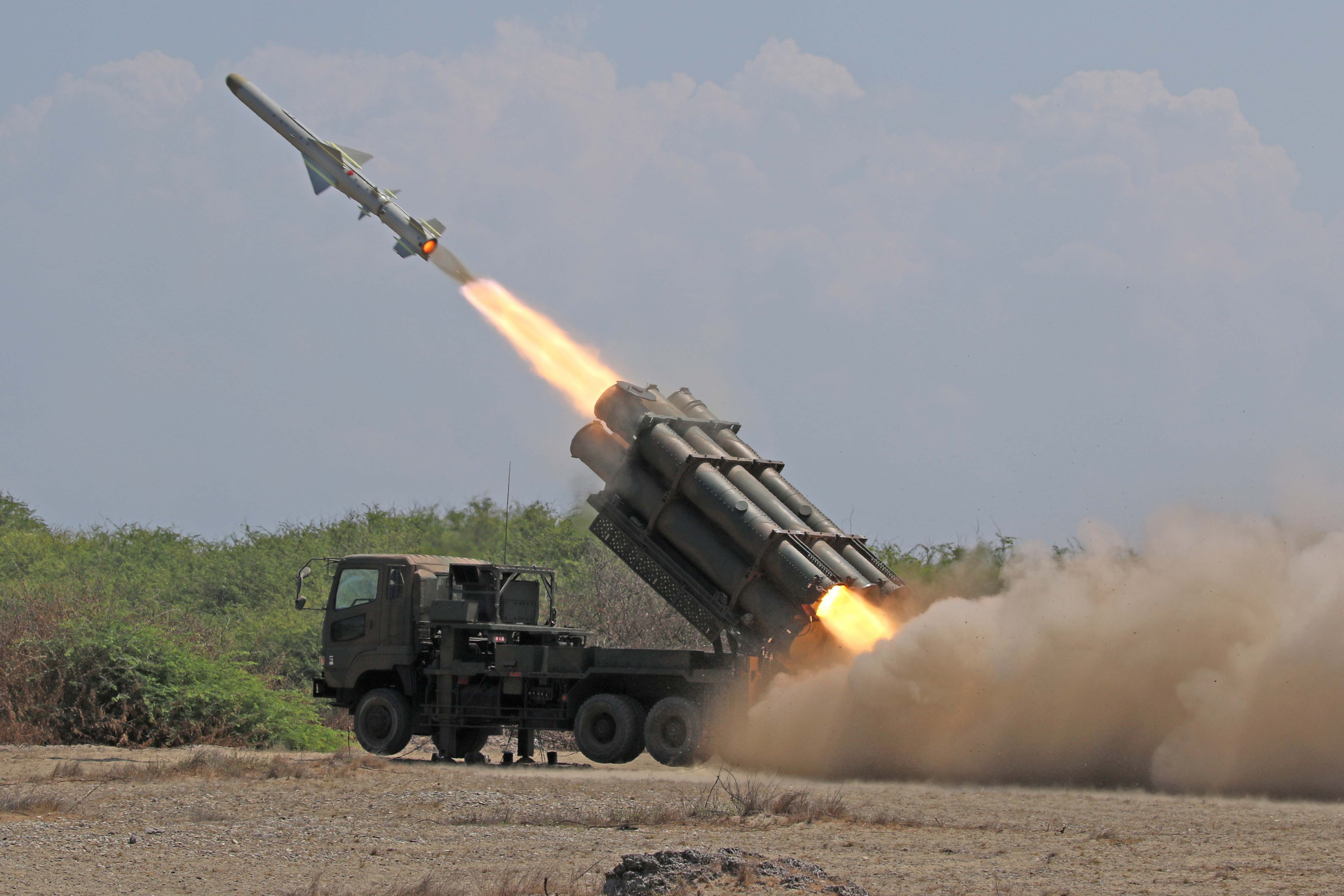
Japan's Missile Launch from Philippine Soil Signals First Island Chain Pivot Against China
Japan-Philippines missile exercise establishes operational First Island Chain control, exposing gaps in Philippine systems and accelerating allied kill-chain integration against PLA Taiwan plans.
Japan’s debut live-fire of Type 88 anti-ship missiles from Philippine dunes during Balikatan 2026 is more than a bilateral milestone—it marks the operationalization of a southern anchor for the First Island Chain that directly challenges PLA Navy freedom of maneuver in any Taiwan scenario. While the Defense News dispatch correctly notes the historic presence of 1,400 Japanese troops under the 2025 Reciprocal Access Agreement, it underplays the command-and-control fusion achieved: Hawaii-based 3rd Marine Littoral Regiment directed a multinational maritime strike cell that integrated Japanese Type 88s, U.S. HIMARS GMLRS, NMESIS, and simulated Philippine C-Star strikes against a single target set. This level of real-time targeting handoff was absent from prior U.S.-Philippine exercises and reveals a quiet acceleration of allied kill-chain integration that Beijing’s A2/AD planners must now factor into invasion timelines. The firing also exposes gaps in Philippine coverage; Manila’s BrahMos batteries remained silent, suggesting either range or political constraints that leave the northern Luzon straits still dependent on allied systems. Tokyo’s willingness to export second-hand Abukuma destroyers and King Airs, now paired with live missile data-sharing, points to a de-facto trilateral ISR network stretching from Yonaguni to Batanes. Analysts at CSIS and the RAND Corporation have long modeled these chokepoints as decisive in a 2027-2030 Taiwan contingency; the May 6 event moves those models from theory to live calibration. The original coverage missed the deeper message: deterrence is no longer aspirational rhetoric but a demonstrated, distributed missile belt that raises the cost of any PLA breakout into the Philippine Sea.
SENTINEL: Expect Japan to rotate Type 12 or upgraded Type 88 batteries to Luzon on a semi-permanent basis within 18 months, creating a persistent southern missile barrier that compresses PLA invasion windows.
Sources (3)
- [1]Primary Source(https://www.defensenews.com/global/asia-pacific/2026/05/14/japan-fires-first-ever-missiles-from-philippine-soil/)
- [2]CSIS Report: First Island Chain and Taiwan Defense(https://www.csis.org/analysis/first-island-chain-taiwan-defense-2025)
- [3]RAND Study: Allied Interoperability in Balikatan Series(https://www.rand.org/pubs/research_reports/RR-A3000-1.html)