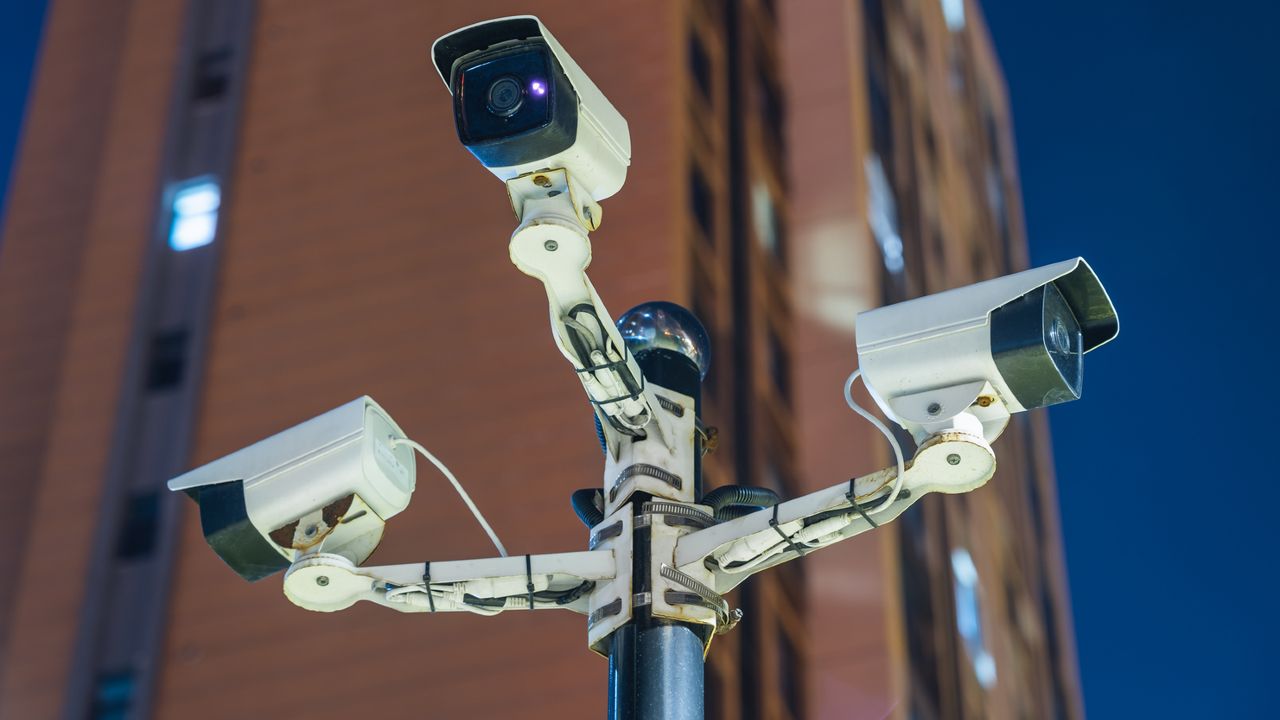
AI-Enabled Mass Surveillance: America's Camera Networks Erode Privacy Without National Safeguards
AI integration with widespread U.S. cameras is creating unregulated mass surveillance, missing connections to private partnerships and algorithmic bias while highlighting the urgent need for national privacy laws.
The quiet spread of AI-integrated surveillance cameras across thousands of U.S. cities marks a pivotal erosion of privacy and civil liberties, a trend advancing far ahead of any meaningful federal oversight. The Live Science opinion piece by a technology policy researcher effectively flags the ethical red flags of merging existing camera infrastructure with AI analytics for facial recognition, behavior prediction, and anomaly detection. However, it falls short in several key areas: it underemphasizes the hybrid public-private ecosystem driving this expansion, glosses over documented biases in deployed systems, and fails to link this to historical patterns of surveillance creep seen after 9/11 and during the Snowden revelations.
Synthesizing multiple sources reveals a clearer picture. The original article misses the scale of Amazon Ring's partnerships, which by 2023 provided law enforcement with access to footage from over 2,000 localities often without warrants, as documented in reports by the Electronic Frontier Foundation (EFF). A 2022 Brennan Center for Justice analysis of automated government surveillance further shows how local ordinances create a fragmented regulatory landscape—effective in a handful of cities like San Francisco but absent nationwide. These are investigative policy reports rather than peer-reviewed studies with formal sample sizes; their limitations include reliance on FOIA-obtained documents and self-reported police data, which often lack transparency on error rates or demographic impacts.
What much coverage gets wrong is framing these systems as neutral crime-fighting tools. In practice, AI layers enable 'pre-crime' predictive analytics trained on datasets skewed toward urban minority neighborhoods, amplifying biases noted in multiple audits. This connects to broader patterns in surveillance capitalism, where data from public cameras merges with private sources for commercial and governmental profiling. Without national laws—unlike the EU's AI Act—U.S. deployment risks chilling free speech, as seen in monitoring of 2020 protest movements, and creates a de facto national database through data sharing.
The critical gap is clear: technology is outpacing policy at an accelerating rate, turning routine public spaces into zones of constant, algorithmically mediated observation. Genuine analysis suggests this will normalize mass tracking, reducing accountability as errors compound in opaque systems. Addressing it requires federal legislation that mandates transparency, bias audits, and consent frameworks before the infrastructure becomes too entrenched to dismantle.
HELIX: Without national laws, AI camera networks will quietly scale into pervasive tracking systems that prioritize security over liberty, making privacy an illusion in public spaces.
Sources (3)
- [1]Primary Source(https://www.livescience.com/technology/artificial-intelligence/cameras-have-quietly-appeared-in-thousands-of-us-cities-now-their-integration-with-ai-is-sounding-alarms-opinion)
- [2]EFF on Facial Recognition and Police Surveillance(https://www.eff.org/issues/facial-recognition)
- [3]Brennan Center: Automated Government Surveillance(https://www.brennancenter.org/our-work/research-reports/new-age-surveillance)