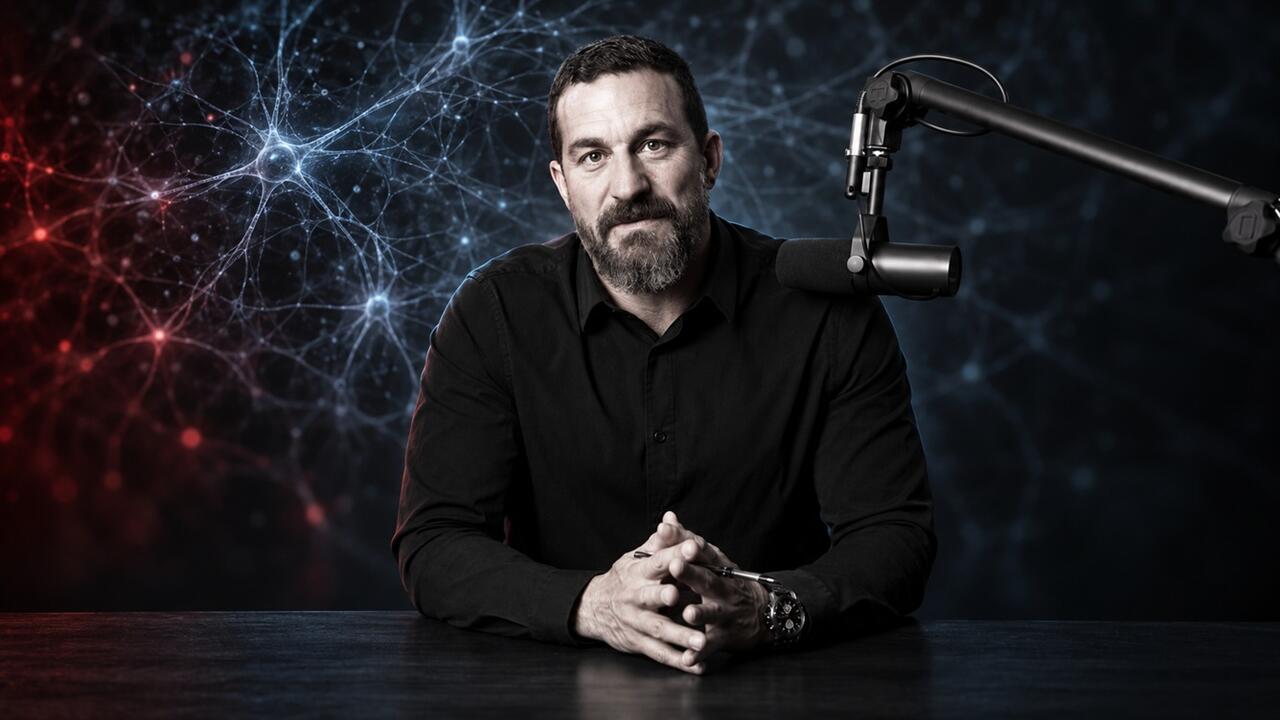
Huberman on the Inevitable Frontier: Viral Vectors, Wearable Brain Stimulators, and AI-Driven Motivation Enhancement
Huberman's podcast remarks detail a plausible near-future neurotech scenario of gene delivery plus wearable stimulation for motivation control, corroborated across primary podcast sources and secondary coverage, raising questions about voluntary enhancement and AI oversight.
Stanford neuroscientist Andrew Huberman, in an October 6, 2026 episode of the Invest Like the Best podcast (Episode 494: 'Reading and Writing the Brain'), outlined a speculative yet technically grounded pathway for precise, non-invasive control over specific brain circuits. He described a process beginning with a viral vector—such as an adeno-associated virus—delivering genetic material to make targeted neurons responsive to external stimuli like light or ultrasound. A wearable device resembling a baseball cap or wool hat could then deliver the stimulation, activating only the engineered neurons while leaving others unaffected. Huberman noted that parameters like flicker rate and intensity could dial neural activity from inactive to hyperactive and back. AI could automate titration, potentially boosting motivation circuits (e.g., nucleus accumbens pathways) for those with deficits or even healthy individuals seeking enhancement. He acknowledged the scenario 'sounds scary' but asserted it 'is absolutely going to happen for the people that want to do it,' drawing parallels to widespread caffeine use for excitability. The discussion framed this within broader trends: AI labs like Meta, OpenAI, and Anthropic evolving into biotech entities focused on non-invasive brain read/write capabilities, with ultrasound as a likely modality. Related topics included genetic engineering gradients from embryo screening to potential enhancements, implantables like vagus nerve stimulators, and ethical considerations around voluntary adoption. Secondary reporting from outlets such as PJFP.com and GLA News echoed these points, confirming the podcast's content and Huberman's framing of the technology as an arms race in neurotechnology. While the methods build on established optogenetics and gene therapy research, the consumer-scale, AI-controlled wearable application remains prospective.
Huberman: Voluntary neuro-enhancement via gene vectors and AI wearables will normalize faster than expected, akin to caffeine or wearables, shifting societal norms around cognitive performance and prompting regulatory frameworks for 'and-gate' safety mechanisms.
Sources (5)
- [1]Reading and Writing the Brain - Colossus(https://colossus.com/episode/reading-and-writing-the-brain/)
- [2]Why Every AI Lab Will Become a Biotech Company | Andrew Huberman - YouTube(https://www.youtube.com/watch?v=_QSX3BF9UX0)
- [3]Andrew Huberman | Invest like the best Summary - teahose.com(https://www.teahose.com/podcast/Invest%20like%20the%20best/Andrew%20Huberman%20-%20The%20Frontier%20of%20Neurotechnology%20-%20%5BInvest%20Like%20the%20Best%2C%20EP.494%5D)
- [4]Andrew Huberman Predicts A 'Scary' New Way Humans Will Radically Alter Their Brains - GLA NEWS(https://gla.news/andrew-huberman-predicts-a-scary-new-way-humans-will-radically-alter-their-brains/)
- [5]Andrew Huberman: Why Every AI Lab Will Become a Brain Biotech Company - PJFP.com(https://pjfp.com/huberman-ai-labs-brain-biotech-focus-sleep/)