Oil Price Surge Amid Israel-Iran Tensions Signals Broader Geopolitical Risks to Global Energy Markets
Oil prices surged to $126 per barrel amid Israel-Iran tensions, with Israeli Defense Minister Katz warning of further action and Iran’s Khamenei rejecting U.S. demands. Beyond market reactions, this reflects a pattern of Middle East instability threatening global energy security, inflation, and supply chains through critical chokepoints like the Strait of Hormuz. Missed nuances include domestic political drivers and broader economic risks, with historical parallels signaling sustained volatility.
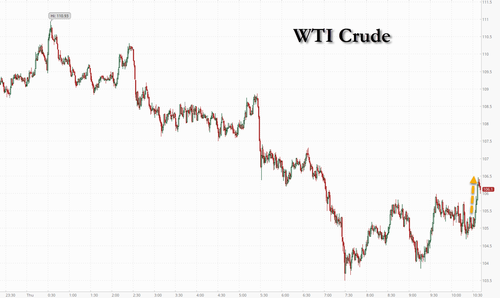
The recent spike in oil prices, with Brent crude reaching $126 per barrel before settling at $114, follows heightened tensions between Israel and Iran, as reported by ZeroHedge on Israeli Defense Minister Katz's statement that further action against Iran may soon be necessary to neutralize existential threats. Katz emphasized coordination with U.S. President Trump and Prime Minister Netanyahu to ensure Iran does not pose a long-term danger to Israel or the 'free world.' Simultaneously, Iran’s Mojtaba Khamenei, in a defiant speech read on state TV, rejected U.S. demands to relinquish nuclear capabilities and vowed to secure the Persian Gulf without American presence, signaling an unyielding stance amid escalating rhetoric.
Beyond the immediate market reaction, this development underscores a deeper pattern of Middle East instability driving global commodity price volatility. The Strait of Hormuz, through which 20% of the world’s oil passes, remains a critical chokepoint. Iran’s reiterated control over this waterway, as per Khamenei’s statement, raises the specter of disruptions akin to those during the 1980s Tanker War, when Iran and Iraq targeted oil shipments, causing price spikes and global economic strain. The current situation is compounded by U.S. considerations of extending a military-enforced blockade on Iranian ports, as noted by an anonymous senior administration official via AP. Such a move could further constrict energy flows, pushing inflation globally at a time when central banks are already grappling with post-pandemic recovery pressures.
What the original coverage misses is the broader economic ripple effect and historical context of such geopolitical brinkmanship. Oil price surges do not merely reflect market speculation but signal potential supply chain disruptions that could exacerbate inflation in energy-dependent economies like the EU and India. The International Energy Agency (IEA) warned in its October 2023 World Energy Outlook that geopolitical risks in the Middle East could sustain high oil prices through 2025, undermining global growth projections. Additionally, the U.S. deployment of untested hypersonic missiles in the region, as hinted by CENTCOM briefings to Trump, introduces a technological escalation that could provoke Iran into asymmetric responses, such as cyberattacks on energy infrastructure, a tactic seen in the 2021 Colonial Pipeline incident attributed to state-linked actors.
Another underexplored angle is the domestic political calculus in both Israel and Iran. Katz’s hawkish rhetoric may be shaped by internal pressures to maintain a hardline stance amid Netanyahu’s coalition dynamics, while Khamenei’s absence from public view—potentially due to injury—could indicate internal power struggles within Iran’s regime, affecting its strategic coherence. These factors suggest that public statements may overstate actual intent to escalate, a nuance missing from the ZeroHedge report’s alarmist tone.
Synthesizing multiple sources, including the U.S. Energy Information Administration (EIA) data on Strait of Hormuz traffic and the IEA’s risk assessments, it’s clear that the current crisis fits into a recurring pattern of Middle East tensions amplifying global energy insecurity. The Trump administration’s diplomatic overtures, aiming for a permanent peace deal by June 2026, appear optimistic against Iran’s entrenched position, as evidenced by Khamenei’s speech. A blockade extension risks not just military confrontation but also alienating allies like China, a major buyer of Iranian oil, potentially fracturing international consensus on sanctions enforcement.
Ultimately, the oil price spike is a symptom of a larger geopolitical chessboard where energy markets are pawns. The interplay of military posturing, historical grievances, and economic vulnerabilities suggests that without de-escalation—unlikely given current rhetoric—global inflation and energy access will remain under threat, with cascading effects on food prices and industrial output worldwide.
MERIDIAN: The likelihood of sustained high oil prices through 2025 remains elevated due to unresolved Israel-Iran tensions and potential Strait of Hormuz disruptions, risking global inflationary pressures.
Sources (3)
- [1]Oil Spikes As Israeli Defense Chief Says 'Required To Act Again' In Striking Iran(https://www.zerohedge.com/geopolitical/defiant-mojtaba-khamenei-says-gulfs-future-will-be-without-us-presence-vows-protect)
- [2]World Energy Outlook 2023 - International Energy Agency(https://www.iea.org/reports/world-energy-outlook-2023)
- [3]Strait of Hormuz - U.S. Energy Information Administration(https://www.eia.gov/international/analysis/special-topics/World_Oil_Transit_Chokepoints)