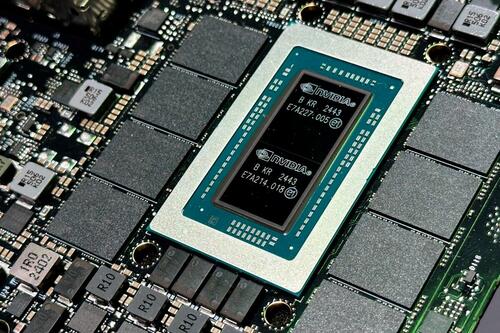
US Closes Subsidiary Loophole in AI Chip Controls, Accelerating Tech Decoupling and Reshaping Global Semiconductor Supply Chains
BIS guidance closes a loophole permitting China-headquartered firms to buy advanced AI chips like Nvidia Blackwell via overseas subsidiaries, part of accelerating US-China tech decoupling. This tightens supply chain due diligence for foundries and distributors while fitting into 2025-2026 policy revisions allowing limited, tariffed sales of select chips under strict conditions. The moves aim to shape AI power balances long-term but highlight tensions in global semiconductor production.
The U.S. Department of Commerce's Bureau of Industry and Security (BIS) issued guidance on May 31, 2026, clarifying that export licenses are required for advanced AI chips destined for any entity headquartered in China or Macau, regardless of the location of their overseas subsidiaries. This move directly addresses a loophole that emerged after the Trump administration's May 2025 decision not to enforce parts of the prior Biden-era AI Diffusion rule, which analysts say allowed Chinese firms to acquire Nvidia Blackwell and similar high-end processors through affiliates in countries like Malaysia.[1][2]
While the guidance reaffirms licensing requirements in place since November 2023, it highlights the persistent challenge of supply chain circumvention in the semiconductor industry. Former officials have warned that hundreds of thousands of advanced chips may have already reached Chinese entities via third-country subsidiaries, underscoring how daily operations at foundries and distributors are now inextricably linked to national security reviews. BIS emphasized that existing data center operators may continue using, maintaining, or replacing previously acquired equipment, avoiding immediate disruption but drawing a hard line on new acquisitions.[1]
This clarification fits into a broader pattern of U.S.-China tech decoupling under the second Trump administration. In January 2026, BIS revised its license review policy, shifting certain chips like the Nvidia H200 and AMD MI325X from a presumption of denial to case-by-case review. These approvals are conditioned on strict requirements including third-party U.S.-based testing, volume caps limiting China-bound shipments to no more than 50% of U.S. domestic availability, customer vetting, and a 25% tariff benefiting the U.S. government—echoing President Trump's December 2025 statements framing such sales as transactional. However, more advanced systems like full Blackwell variants remain under tighter controls.[3][4]
Few analyses connect these high-level policy shifts to the granular realities of global supply chains. Semiconductor foundries such as TSMC must now perform enhanced due diligence to determine whether an order ultimately benefits a China-headquartered parent, even for customers in allied nations. This adds friction to production allocation, increases compliance costs, and risks slowing delivery timelines across the industry. The policy explicitly retains presumption of denial for entities whose ultimate parent is in China or other D:5 countries, closing routes through Singapore, Malaysia, or elsewhere.[5]
Over the longer term, these concrete restrictions on frontier AI hardware are positioned to influence the global balance of AI capabilities for years. By limiting China's access to the most powerful training chips while selectively allowing controlled sales of slightly less advanced ones, the U.S. aims to maintain its edge in AI model development and military applications. Yet the back-and-forth—tightening on some fronts while creating licensed pathways on others—reflects the tension between national security, commercial interests for firms like Nvidia, and the reality that prolonged controls may accelerate Beijing's investments in domestic semiconductor alternatives. Analysts note this dynamic risks fragmenting the once-integrated global chip supply chain into rival blocs, with downstream effects on everything from consumer electronics to cloud computing infrastructure worldwide.[6]
Strategic Analyst: Plugging these subsidiary routes for cutting-edge chips will slow China's frontier AI progress and military integration for years while forcing global supply chains to embed stricter end-user checks, ultimately pushing Beijing toward faster self-reliance in semiconductors.
Sources (5)
- [1]US takes step to halt Nvidia AI chip shipments to Chinese firms outside China(https://www.reuters.com/world/china/us-takes-step-halt-nvidia-ai-chip-shipments-chinese-firms-outside-china-2026-05-31/)
- [2]U.S. takes step to halt Nvidia AI chip shipments to Chinese firms outside China(https://www.cnbc.com/2026/05/31/us-takes-step-to-halt-nvidia-ai-chip-shipments-to-chinese-firms-outside-china.html)
- [3]Department of Commerce Revises License Review Policy for Semiconductors Exported to China(https://www.bis.gov/press-release/department-commerce-revises-license-review-policy-semiconductors-exported-china)
- [4]Administration Policies on Advanced AI Chips Codified(https://www.mayerbrown.com/en/insights/publications/2026/01/administration-policies-on-advanced-ai-chips-codified)
- [5]BIS Revises Export Review Policy for Advanced AI Chips Destined for China and Macau(https://www.morganlewis.com/pubs/2026/01/bis-revises-export-review-policy-for-advanced-ai-chips-destined-for-china-and-macau)