US Nuclear Posture Shift: Expanding Deployments in Eastern Europe Reverses Drawdown Signals, Heightening Long-Term Escalation Risks
Internal US-NATO discussions signal potential expansion of nuclear sharing to Poland and Baltic states, countering troop reduction narratives and violating the spirit of 1997 agreements with Russia, with serious escalation and long-term arms control risks.
Recent high-level discussions within NATO reveal a significant reversal in US nuclear policy toward Europe. While public narratives have focused on potential drawdowns of American conventional forces—such as relocating troops from Germany amid burden-sharing disputes—the US is actively considering expanding its forward-deployed nuclear capabilities to additional allies, particularly on NATO's eastern flank. According to multiple reports, US officials have signaled openness to allowing more nations to host dual-capable aircraft (DCA) and associated nuclear infrastructure, expanding beyond the current six hosts: Belgium, Germany, Italy, the Netherlands, Turkey, and the UK. Poland and the Baltic states have been most vocal in their interest, viewing it as essential reassurance against Russian aggression following the invasion of Ukraine.
This development directly contravenes the spirit of the 1997 NATO-Russia Founding Act, in which the Alliance stated it had "no intention, no plan and no reason" to deploy nuclear weapons on the territory of new members. Far from a reduction in footprint, this represents a qualitative escalation: scattering more nuclear "tripwires" closer to Russia's borders. Credible reporting indicates these talks are part of a broader strategic bargain—Washington's 'carrot' of enhanced nuclear commitment paired with demands for greater European spending on conventional defense, sometimes dubbed 'NATO 3.0'. This aligns with French President Macron's parallel overtures regarding a potential French nuclear umbrella for Europe, suggesting a hybrid future where the US nuclear umbrella is physically broadened even as conventional responsibilities shift eastward.
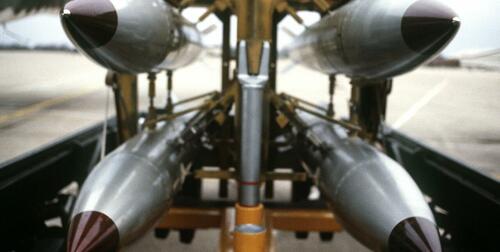
Connections often missed in routine coverage include the direct escalation ladder this creates. Russia has repeatedly framed NATO nuclear expansion as a core threat, already stationing weapons in Belarus and updating doctrine to lower the nuclear threshold. Forward deployment of B61-12 gravity bombs and DCA in Poland or the Baltics could prompt symmetric Russian moves, accelerate arms racing in the European theater, and increase miscalculation risks during crises. What appears as standard alliance management in Pentagon and NATO statements buries profound long-term security implications: locking in a more volatile nuclear standoff for decades, complicating future arms control, and raising the probability that any conventional European conflict escalates rapidly due to perceived existential threats on both sides. Earlier expert analysis had advocated precisely this adaptation to counter Moscow's nuclear saber-rattling, but the timing—amid US political transitions and Ukraine fatigue—amplifies the shift from post-Cold War restraint to hardened confrontation.
[Nuclear Escalation Forecaster]: This embeds higher nuclear risks into Europe's security architecture for the foreseeable future, making de-escalation with Russia far more difficult and increasing odds of nuclear signaling in any major crisis.
Sources (5)
- [1]US in talks to expand nuclear capable deployments in Europe(https://www.ft.com/content/1a32ad0f-c8b3-4b91-a931-5dc053c6c214)
- [2]US in talks to expand nuclear weapons deployments in Europe, FT says(https://www.reuters.com/business/aerospace-defense/us-talks-expand-nuclear-weapons-deployments-europe-ft-says-2026-06-02/)
- [3]US may consider placing nukes in Poland, Baltic States, report says(https://www.defensenews.com/global/europe/2026/06/02/us-may-consider-placing-nukes-in-poland-baltic-states-report-says/)
- [4]To deter Russia, NATO must adapt its nuclear sharing program(https://www.atlanticcouncil.org/blogs/new-atlanticist/to-deter-russia-nato-must-adapt-its-nuclear-sharing-program/)
- [5]NATO's nuclear deterrence policy and forces(https://www.nato.int/en/what-we-do/deterrence-and-defence/natos-nuclear-deterrence-policy-and-forces)