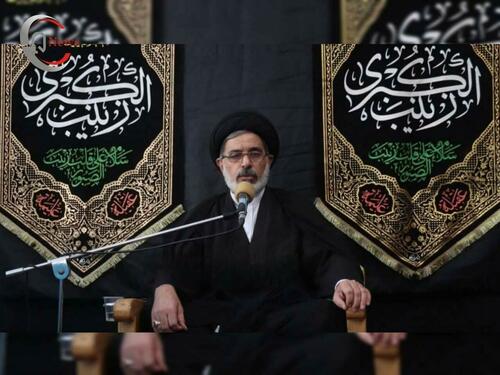
Assassination of Shia Shrine Imam in Damascus Signals Sectarian Fractures and Proxy Escalations in Post-Assad Syria
The May 2026 grenade assassination of Shia Imam Sayyid Farhan al-Mansour at Damascus's Sayyida Zaynab Shrine has triggered Iranian outrage and Syrian vows of accountability, highlighting post-2024 regime change sectarian risks and serving as a lens into Iran's proxy network defenses against perceived US-Israeli destabilization efforts.
On May 1, 2026, Sayyid Farhan al-Mansour (also referred to as Farhan Hassan al-Mansour), the imam and Friday prayer leader at the revered Sayyida Zaynab Shrine south of Damascus, was assassinated when unknown assailants threw a hand grenade into his vehicle shortly after he led prayers in the al-Fatimiyya area. The attack has been widely described as a targeted terrorist act, prompting swift condemnations from both Syrian authorities and Iran. Syria's Interior Ministry described it as a "dangerous escalation" and part of systematic efforts to spread chaos and undermine civil peace, vowing an investigation and accountability for those responsible. Iran's Foreign Ministry spokesman Esmail Baghaei condemned the killing as a "heinous crime," framing it as part of a broader Israeli and US-backed plot to sow sectarian divisions across West Asia and target religious scholars and sites. This incident occurs against the backdrop of Syria's turbulent transition following the fall of Bashar al-Assad's government in December 2024. The new authorities, led by President Ahmad al-Sharaa (formerly known as Abu Mohammad al-Jolani of Hayat Tahrir al-Sham), have roots in opposition factions with Islamist ideologies. Reports indicate the new order has prioritized a religious framework drawing from medieval Sunni scholar Ibn Taymiyya's teachings, which have historically been invoked to justify hostility toward Shia, Alawite, and Druze communities. In the months since the regime change, multiple massacres targeting minority groups have been documented, including large-scale killings of Alawites in coastal regions and Druze in Suwayda, often involving documented atrocities filmed by perpetrators. The Sayyida Zaynab Shrine, a major Shia pilgrimage site, has long served as a nexus of Iranian influence in Syria. Tehran has invested heavily in protecting and promoting such sites, integrating them into its "Axis of Resistance" strategy that links Hezbollah, Shia militias, and forward defenses against Israel. Mainstream coverage often treats this assassination as an isolated security incident amid Syria's instability. However, connecting the dots reveals it as a potential flashpoint in layered proxy conflicts: Iran's strategic depth in Syria directly challenges Israeli security interests and US efforts to reshape the region. With Syria's transitional government struggling to assert control over diverse factions and amid ongoing violence against minorities, the killing of a cleric seen as bridging government ties with the Shia community risks galvanizing Iranian responses, whether through diplomatic pressure, militia activation, or intelligence operations. This could draw in wider regional actors, escalating beyond Syria's borders into Lebanon, Iraq, or direct Iran-Israel exchanges. The event underscores how local sectarian targeting serves larger geopolitical aims—disrupting Iranian supply lines, weakening Hezbollah's rear base, and testing the new Syrian order's ability to prevent chaos that invites foreign intervention. Vigilance against extremism, as urged by Iranian and Syrian statements, now carries stakes that extend to the stability of the entire Middle East proxy architecture.
LIMINAL: This assassination exposes Iran's commitment to its Syrian Shia infrastructure as a core proxy asset; expect calibrated retaliation that tightens the resistance axis and raises chances of multi-front spillover involving Israel and Sunni hardliners, far beyond isolated terror reporting.
Sources (5)
- [1]Syrian ministry condemns killing of Shia imam near Damascus(https://www.newarab.com/news/syrian-ministry-condemns-killing-shia-imam-near-damascus)
- [2]Shiite cleric killed in grenade attack near Syrian capital of Damascus(https://www.washingtonpost.com/world/2026/05/01/syria-damascus-shiites-sayyida-zeinab-cleric-killed-grenade/b3f159ec-4586-11f1-b19d-32431046b5b4_story.html)
- [3]Iran slams terrorist attack, assassination of Shia cleric near Damascus shrine(https://www.presstv.ir/Detail/2026/05/02/767905/Iran-slams-terrorist-attack-assassination-of-Shia-cleric-near-Damascus-shrine)
- [4]Killing of Shiite Cleric Near Sayyidah Zaynab Shrine Revives Fears of Sectarian Strife(https://syrianobserver.com/uncategorized/killing-of-shiite-cleric-near-sayyidah-zaynab-shrine-revives-fears-of-sectarian-strife.html)
- [5]Syria interior ministry vows probe, accountability after cleric killing(https://english.almayadeen.net/news/politics/syria-interior-ministry-vows-probe--accountability-after-cle)