Phelan's Purge: Hegseth's Loyalty Drive Exposes Pentagon Instability at the Peak of Naval Modernization Crisis
Phelan's sudden removal reflects Hegseth's pattern of loyalty-driven purges, exposing policy clashes over fleet modernization and risking U.S. naval readiness against China and Iran. Analysis reveals deeper continuity failures missed by initial reporting.
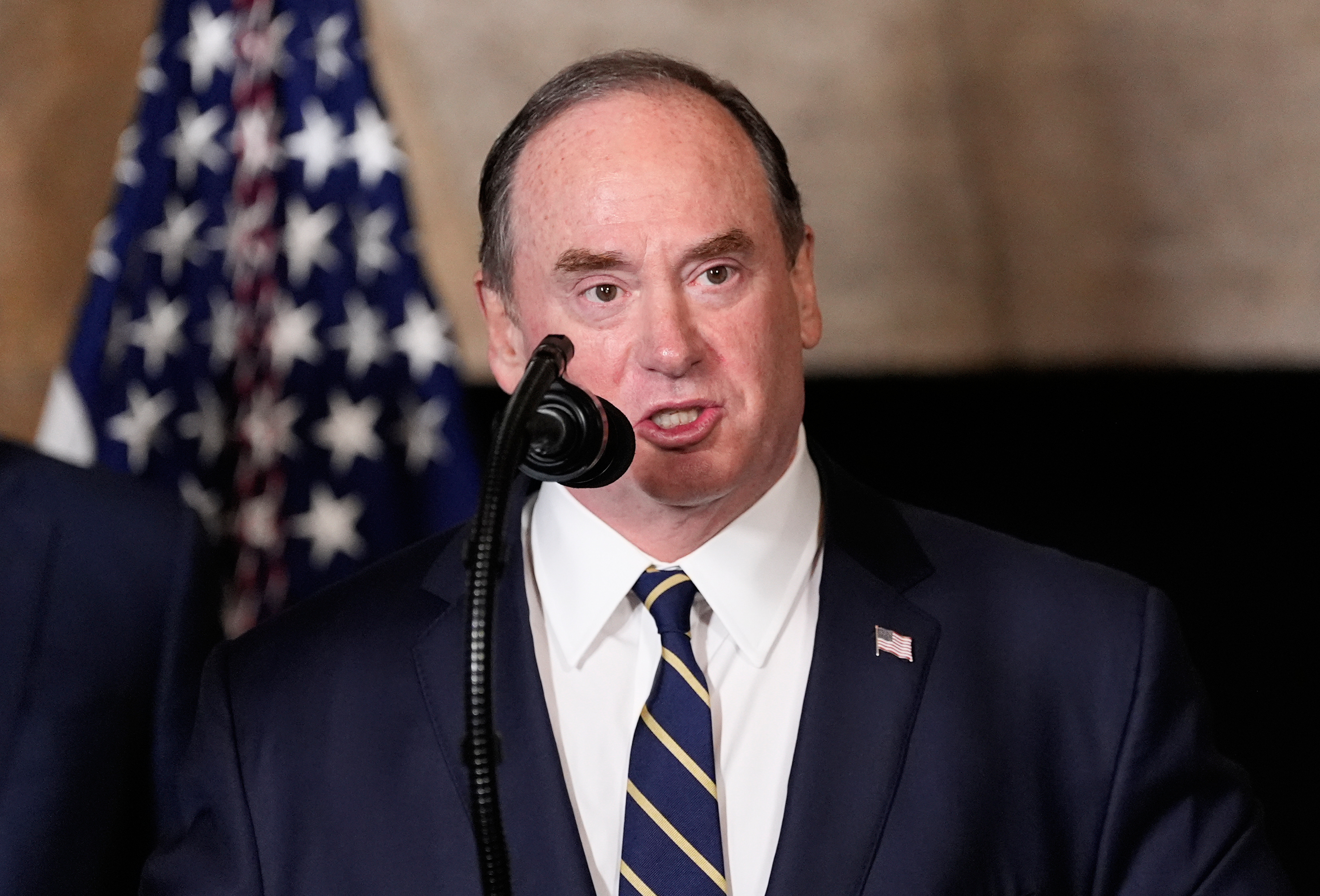
The Pentagon's abrupt removal of Navy Secretary John Phelan on April 22, 2026, is far more than a routine personnel shift. Framed officially as a search for "new leadership" by President Trump and Defense Secretary Pete Hegseth, this move fits a clear and disturbing pattern of ideological housecleaning that now threatens core U.S. maritime strategy at the worst possible moment. While the Defense News report dutifully chronicles the announcement, Phelan's keynote at the Sea-Air-Space symposium, and Undersecretary Hung Cao's elevation to acting secretary, it misses the deeper structural implications: a Pentagon increasingly consumed by loyalty tests precisely as it confronts simultaneous demands for fleet expansion, great-power deterrence against China, and active blockade operations in the Strait of Hormuz.
Phelan's background as a non-veteran financier who founded Rugger Management LLC made him an outlier among recent service secretaries. His emphasis on scaling shipbuilding capacity to meet the FY2027 budget's doubled vessel requests aligned with long-standing bipartisan goals. Yet senior administration sources indicate policy clashes over execution speed, procurement priorities, and the balance between traditional surface combatants and unmanned systems. Hegseth, who has already dismissed Joint Chiefs Chairman Gen. C.Q. Brown, former CNO Adm. Lisa Franchetti, Army Chief of Staff Gen. Randy George, and over a dozen other flag officers, appears to be installing a cohort defined more by personal alignment than institutional expertise.
This is not isolated. Synthesizing the primary Defense News reporting with a March 2026 CSIS analysis on naval leadership continuity and a 2025 RAND study on industrial base resilience reveals a critical gap the original coverage ignored. CSIS warned that leadership churn above the four-year mark severely disrupts multi-year shipbuilding programs already strained by workforce shortages and supply chain vulnerabilities. RAND's modeling showed that even minor delays in secretary-level decision-making cascade into 18-36 month setbacks for Virginia-class submarines and DD(X) programs. The original story also underplayed connections to the April 2 Army purge and the active naval confrontation with Iran, where a U.S. destroyer just days earlier used its Mk-45 gun to enforce the blockade. Such operations require stable strategic direction, not another acting leader learning the role.
Hung Cao, a Naval Academy graduate and special operations veteran with deployments to Iraq, Afghanistan, and Somalia, brings combat credibility that Phelan lacked. However, his brief tenure as Undersecretary and prior political foray as a Virginia Senate candidate suggest the appointment prioritizes warrior ethos and political reliability over the complex acquisition and congressional negotiation skills the role demands. This mirrors a broader Trump-era pattern of treating the Pentagon as an extension of campaign politics rather than the nerve center of great-power competition.
The strategic risk is clear. China's navy has already eclipsed the U.S. in hull count, with production rates that American shipyards cannot currently match. A Heritage Foundation assessment from late 2025 noted that achieving even a 381-ship fleet requires unbroken leadership focus through 2030. Instead, the Pentagon is experiencing rolling instability. Adversaries notice. Iranian IRGC commanders and PLA Navy planners both benefit when U.S. flag-level transitions create windows of strategic hesitation. What the coverage missed is how these purges erode deterrence by signaling domestic disarray.
Phelan's dismissal ultimately reveals a tension at the heart of the current administration's defense policy: the desire for rapid transformation colliding with the reality that sustained naval superiority demands continuity, deep institutional knowledge, and predictable budgeting. Without course correction, Hegseth's overhaul may deliver ideological purity at the expense of maritime dominance.
SENTINEL: Phelan's ouster and Cao's elevation signal dangerous Pentagon instability and policy realignment under Hegseth, likely slowing critical shipbuilding momentum and weakening deterrence against China exactly when consistent leadership is most needed.
Sources (3)
- [1]Primary Source(https://www.defensenews.com/news/your-military/2026/04/22/pentagon-removes-john-phelan-as-navy-secretary/)
- [2]CSIS: Naval Leadership Continuity in Crisis(https://www.csis.org/analysis/naval-leadership-continuity-2026)
- [3]RAND: Industrial Base Resilience and Defense Leadership(https://www.rand.org/pubs/research_reports/RRA1897-1.html)