Russia’s Drone Spoofing Creates Self-Reinforcing Loop: Ukrainian Western-Supplied Assets Become NATO Threats
Russia’s spoofing of Ukrainian drones creates a strategic feedback loop that repurposes Western-supplied assets against NATO, forcing defensive responses while degrading Ukrainian capabilities.
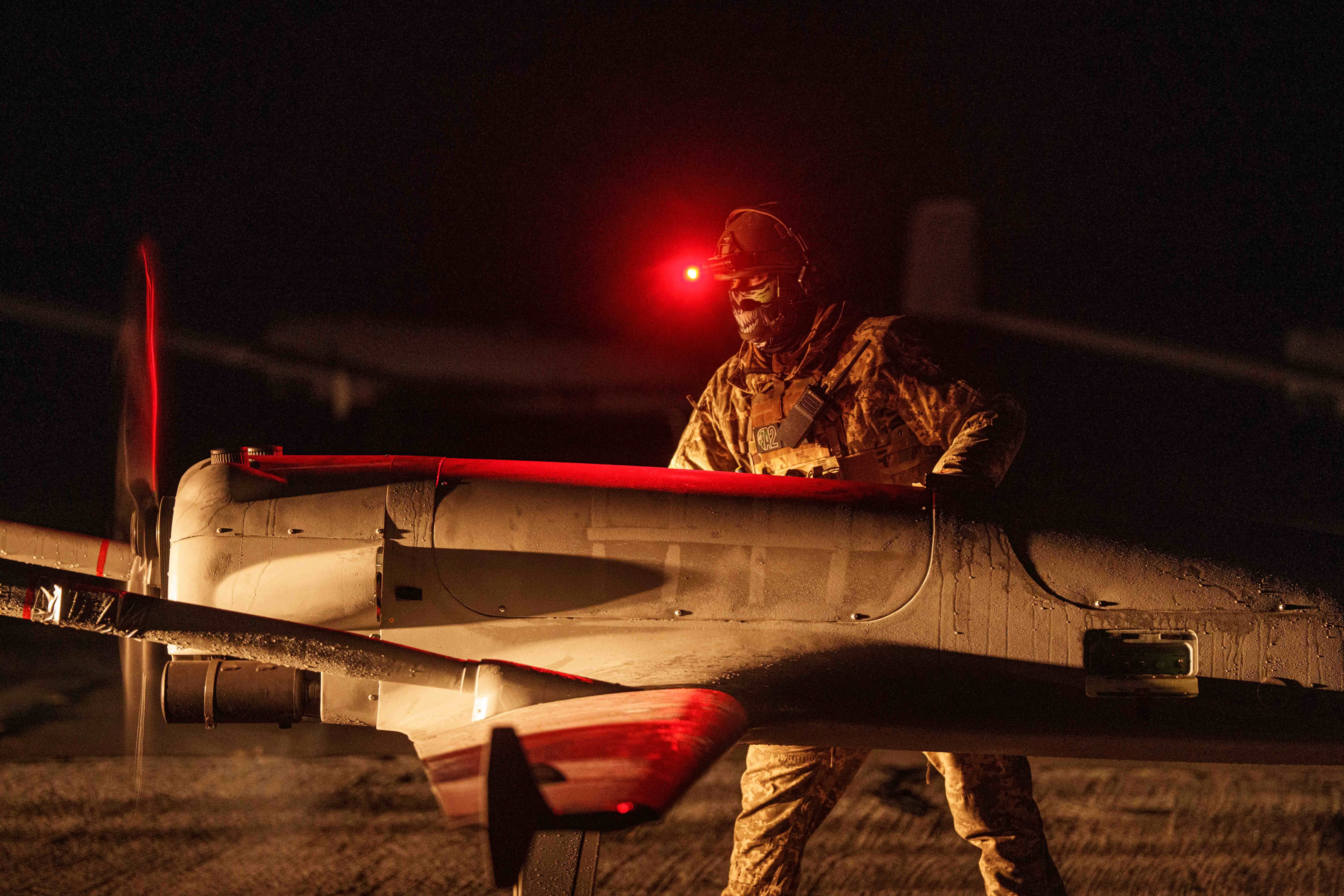
Russia’s GPS spoofing of Ukrainian long-range strike drones represents more than tactical electronic warfare—it forms a deliberate feedback loop that converts Western-supplied Ukrainian capabilities into direct pressure on NATO territory. By broadcasting counterfeit signals from Kaliningrad transmitters, Moscow diverts drones originally aimed at Russian oil infrastructure toward Baltic and Black Sea NATO states, forcing allied jets to scramble, triggering Article 4 consultations, and eroding public confidence in alliance security guarantees. This dynamic was visible in the May 2026 incidents: Lithuanian shelters activated over a diverted strike drone, a Latvian oil depot struck on May 7, and Romania’s first NATO-soil casualties when an F-16 failed to intercept another. The loop is self-sustaining because each successful diversion degrades Ukrainian strike effectiveness, prompting Kyiv to request more Western drones and components, which in turn become new targets for Russian spoofing arrays that have grown from three to 36 sites since early 2025. Unlike generic reporting that frames these events as accidental spillover, the pattern reveals intent: Russia exploits the same GPS-dependent navigation on Ukrainian platforms (often built with Western engines and autopilots) to generate low-cost incidents that strain NATO’s eastern flank without triggering Article 5. Prior coverage, including the Defense News account, understates how this mirrors earlier Russian EW campaigns around the 2023 Vilnius summit and ignores secondary effects such as diverted Ukrainian interceptor drones weakening homeland air defense. Synthesizing Baltic interference data from Gdynia Maritime University, Atlantic Council tracking of Gulf of Finland routes, and RUSI analysis of spoofing deception shows Russia is achieving asymmetric attrition—neutralizing Ukrainian deep-strike potential while compelling NATO to expend fighter hours and political capital on defensive posturing. The result is a closed circuit: Western aid fuels Ukrainian attacks, Russian EW turns those attacks against the alliance, and each incident justifies further Russian transmitter deployments.
SENTINEL: Continued Kaliningrad spoofing will likely produce one or two additional NATO-territory strikes by late 2026, pushing at least one Baltic state to invoke Article 4 and accelerating NATO EW hardening on the Suwalki corridor.
Sources (3)
- [1]Primary Source(https://www.defensenews.com/global/europe/2026/05/29/how-russia-is-turning-ukraines-drones-against-nato/)
- [2]Related Source(https://www.atlanticcouncil.org/blogs/ukrainealert/russias-electronic-warfare-in-the-baltic/)
- [3]Related Source(https://rusi.org/explore-our-research/publications/reports/electronic-warfare-ukraine-lessons-2022-2025)