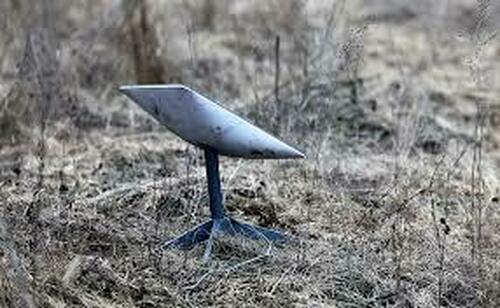
Black-Market Starlink Dependency Exposed: How a February Deactivation Shifted Ukraine's Battlefield Momentum
Declassified DIA/Pentagon findings confirm Ukraine's 400 sq km territorial gains in 2026 stemmed directly from deactivating illicit Russian Starlink terminals via SpaceX geofencing, exposing Moscow's dangerous reliance on black-market commercial satcom in jammed environments and highlighting an underreported private-sector dimension to tech-driven warfare.
A declassified U.S. Defense Intelligence Agency assessment reveals that Ukraine regained approximately 400 square kilometers of territory in an early 2026 offensive after thousands of Starlink terminals illicitly operated by Russian forces were remotely deactivated. According to the Pentagon-linked report first detailed by Bloomberg, Russian command-and-control structures experienced a 'temporary yet significant' degradation in capabilities, particularly in areas plagued by unreliable communications or heavy electronic jamming. Ukrainian officials collaborated with SpaceX to enforce geographic restrictions and whitelist only authorized terminals, producing near-instantaneous effects on Russian coordination of troop movements and drone strikes.[1][1]
This incident underscores an underreported dimension of tech-warfare: the pervasive reliance by Russian units on black-market Starlink hardware to bypass their own degraded military communication networks and international sanctions. For years, shadow supply chains funneled commercial terminals into occupied territories despite SpaceX's official prohibitions on Russian use. The sudden cutoff, combined with Kremlin restrictions on encrypted apps like Telegram, left frontline commanders isolated, demonstrating how commercial satellite constellations have become decisive force multipliers in contested environments. Unlike traditional electronic warfare that can be countered with redundancy, the authentication and geofencing controls built into Starlink allowed for a precise, software-based 'digital strike' that proved more disruptive than kinetic alternatives.[2]
Deeper analysis reveals connections often missed by mainstream coverage. Russia's dependence on smuggled Western technology highlights the vulnerabilities of hybrid warfare tactics in an era of private infrastructure dominance. SpaceX effectively functioned as a non-state actor capable of reshaping tactical outcomes, raising questions about the privatization of warfare and the future role of companies like Elon Musk's in geopolitical conflicts. Previous reports documented Russian adaptation of Starlink for extended-range drone operations that evaded Ukrainian jamming, making the February 2026 whitelist enforcement a critical countermeasure. This dynamic is likely to repeat in other theaters: black-market proliferation of dual-use satellite tech creates exploitable chokepoints, where control over firmware updates, geolocation enforcement, and terminal authentication can swing momentum without direct military engagement. While Russia retains advantages in manpower and artillery, the episode reaffirms that reliable, unjammable communications remain the backbone of modern combined-arms operations. Official U.S. assessments continue to monitor these developments as part of broader support to Ukraine.[3][4]
LIMINAL: Black-market access to Starlink created a fragile Russian lifeline for battlefield comms that Ukraine and SpaceX severed with surgical precision, proving commercial satellite control is now a decisive non-kinetic weapon that will redefine escalation ladders and supply-chain warfare in all future conflicts.
Sources (4)
- [1]Ukraine Retook Territory After Hobbling Starlink, Pentagon Says(https://www.bloomberg.com/news/articles/2026-05-21/ukraine-retook-territory-after-hobbling-starlink-pentagon-says)
- [2]US Intelligence Says Ukraine Regained Territory After Russia Lost Starlink Access(https://www.kyivpost.com/post/76614)
- [3]Ukraine regains 400 km² after Russian forces lose Starlink access – Bloomberg(https://www.ukrinform.net/rubric-ato/4126038-ukraine-regains-400-km-after-russian-forces-lose-starlink-access-bloomberg.html)
- [4]OAR_Q2_MAR2026_FINAL_508 (DIA Assessment)(https://media.defense.gov/2026/May/18/2003933281/-1/-1/1/OAR_Q2_MAR2026_FINAL_508.PDF)