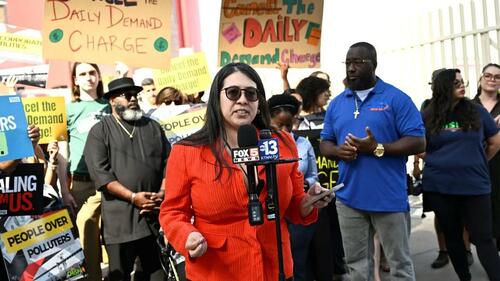
Protesters Confront NV Energy Over Unaffordable Power: Rising Bills Turn Survival Into Luxury in Extreme Heat
Protests at the 2026 EEI conference spotlight how NV Energy's daily demand charge exacerbates affordability crises in extreme heat, linking household anger to broader cost shifts from data center-driven grid investments and regulatory battles over rates, solar policy, and energy justice.
In a dramatic one-sentence snapshot of growing public fury, protesters interrupted NV Energy's CEO mid-speech at the Edison Electric Institute 2026 conference in Las Vegas, directly accusing the utility of rationing air conditioning through new charges that hit household budgets hardest. The June 3 confrontation outside the Fontainebleau, organized by the United Ratepayers coalition and climate equity advocates including Leslie Vega of the Progressive Leadership Alliance of Nevada, underscores how electricity costs are no longer abstract policy debates but immediate threats to survival in one of America's fastest-warming cities.[1][1]
Vega, who has lost loved ones to heatstroke, described the approved daily demand charge—set to begin January 1, 2027—as "air conditioning rationing" for low-income residents unable to shift usage away from peak afternoon hours when Las Vegas temperatures routinely exceed 100 degrees. The charge, based on a customer's highest 15-minute usage window each day, is projected by the utility to add roughly 49 cents daily for typical customers but is offset by reductions elsewhere in the rate structure. NV Energy maintains it will lower bills for most southern Nevada customers by curbing cost-shifting subsidies, particularly from solar users, and has repeatedly cited "misinformation" in activist claims.[2]
Yet this local dispute reveals deeper, often overlooked connections: exploding electricity demand from large-load data centers and AI infrastructure is driving utilities nationwide to plan over $1 trillion in grid investments through the decade. In Nevada, regulators at the Public Utilities Commission of Nevada approved the rate redesign in September despite internal staff economists reportedly advising against key elements. The changes also altered net metering in ways solar advocates warn will undermine clean energy progress. Legal pushback has been fierce, including an unsuccessful petition by the state Attorney General to block the charge, with a judge ruling in May 2026 that it could benefit the majority of non-solar customers. Implementation has already been delayed multiple times from an original April 2026 target.[3][2]
Previous rallies, town halls hosted by groups like the Nevada Environmental Justice Coalition, and ongoing advocacy reveal a pattern of residents viewing these charges not as fair pricing signals but as penalties for simply staying cool in a desert metropolis undergoing rapid urbanization and technological industrialization. Broader context includes national frustration over rate hikes amid extreme weather, electrification mandates, and utilities' need to recover massive capital expenditures that increasingly serve hyperscale tech loads rather than solely residential needs. Advocates demand more solar, reduced fossil fuel reliance, and targeted relief for lower-income households—priorities that clash with utilities' messaging around affordability through pricing reform.
The protest at a gathering of 1,000 utility executives highlights an emerging national fault line: as power demand surges, the costs are landing squarely on household budgets already strained by inflation and heat, potentially eroding public support for the very infrastructure buildout required for both AI growth and clean energy goals. Utilities like NV Energy insist behavioral shifts and smarter rate design can balance the equation, but for families in 103-degree heat, the math feels existential.
LIMINAL: Household protests against rate designs like NV Energy's signal widening backlash as AI and data center demand drives trillion-dollar utility spending, likely forcing regulators and companies to offer more targeted residential protections or face sustained political and legal resistance that could slow both grid modernization and decarbonization.
Sources (4)
- [1]Protesters target NV Energy at electric utility conference as anger over affordability rises(https://www.utilitydive.com/news/protesters-target-nv-energy-electric-utility-conference-anger-over-affordability-electric-rates/821995/)
- [2]Judge denies attorney general's petition to stop NV Energy's daily demand charge(https://thenevadaindependent.com/article/judge-denies-attorney-generals-petition-to-stop-nv-energys-daily-demand-charge)
- [3]Las Vegas advocates oppose NV Energy demand charge at town hall(https://www.fox5vegas.com/2026/04/29/las-vegas-advocates-oppose-nv-energy-demand-charge-town-hall/)
- [4]NV Energy demand charge delayed again; now pushed to January 2027(https://www.fox5vegas.com/2026/03/31/nv-energy-demand-charge-delayed-again-now-pushed-january-2027/)