Allied Lifelines or Strategic Dependency: Report Exposes Hollowed US Maritime Industrial Base Amid Iran Overstretch
A Center for Maritime Strategy report exposes the US Navy's critically atrophied shipbuilding base amid Hormuz operations, urging deep reliance on allies for construction, labor, and ports. This reflects decades of deindustrialization and risks strategic dependency, as synthesized with CSIS and RAND analyses on China's dominance and alliance integration challenges.
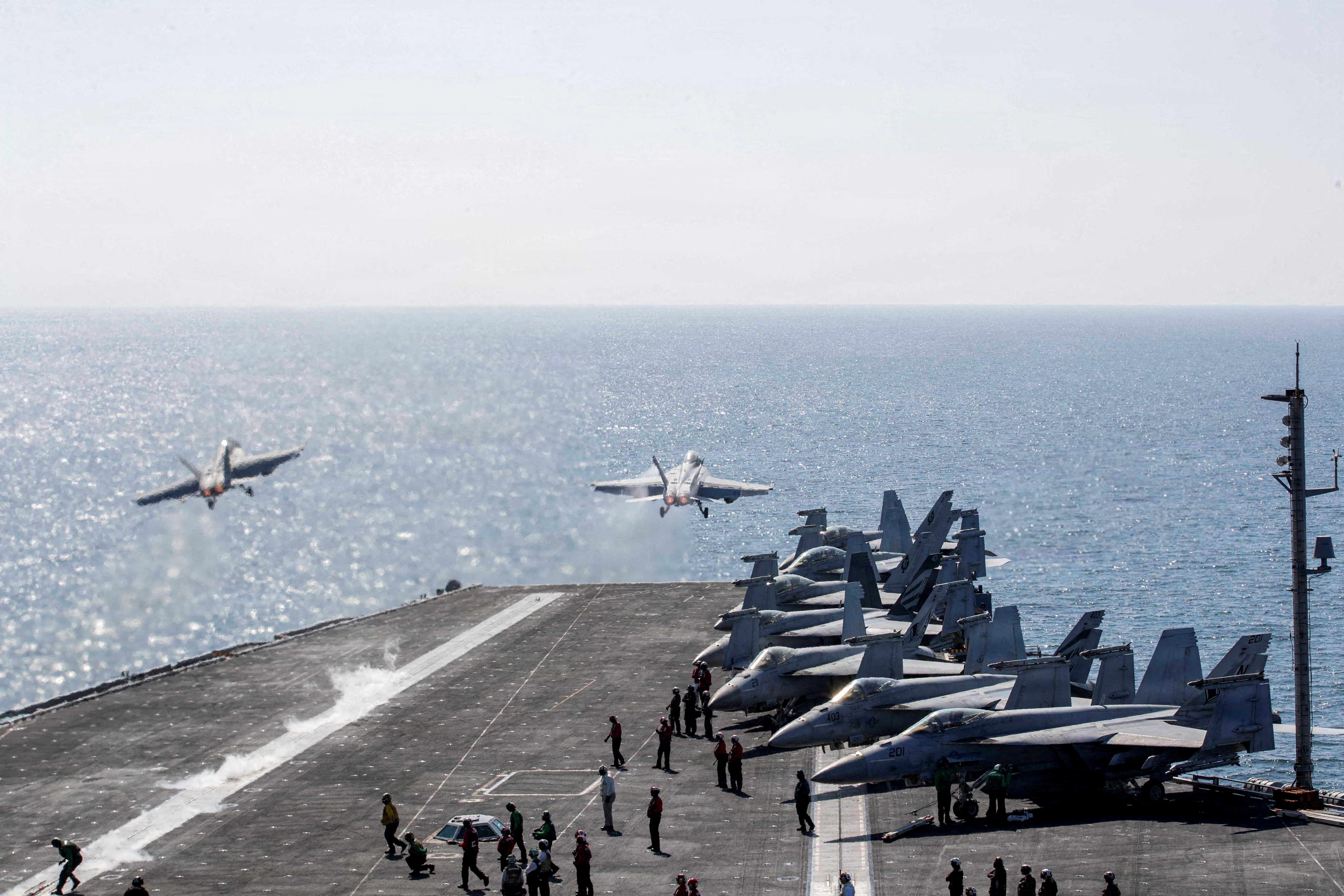
The Center for Maritime Strategy’s latest assessment arrives at a moment of acute strain: U.S. Navy surface combatants and amphibious groups are actively blocking Iranian passage in the Strait of Hormuz while the fleet remains numerically insufficient for simultaneous deterrence in the Indo-Pacific. The report’s core recommendation—that Washington must systematically leverage allies (ROK, UK, Italy, Canada, Sweden) for ship design, construction, forward basing, and even skilled labor migration—reveals far more than mere capacity shortfalls. It signals a structural admission that America’s post-Cold War deindustrialization has progressed beyond the point where domestic revival alone can match pacing threats within the required decade.
Original coverage in Defense News correctly notes the Navy’s current ~295 hulls, the 381-ship goal, and the FY2027 budget’s emphasis on simpler non-nuclear platforms. Yet it misses the deeper pattern: this is not a temporary dip but the predictable outcome of 30 years of consolidated shipyards, vanishing skilled trades, and regulatory overhead that drove commercial shipbuilding offshore. The piece also underplays the security and sovereignty risks of importing foreign welders and engineers while simultaneously recommending allied ports as de facto extensions of U.S. logistics—effectively creating distributed vulnerability to allied domestic politics and Chinese economic coercion.
Synthesizing the CMS report with two additional analyses clarifies the stakes. A 2024 CSIS study on the U.S. shipbuilding industrial base documented that Chinese commercial output exceeds America’s by a factor of 200+, with Beijing’s dual-use shipyards enabling rapid naval expansion. Similarly, a 2023 RAND Corporation assessment of allied naval cooperation highlighted successful precedents—AUKUS submarine technology sharing and Japanese FFM frigate programs—but warned that scaling to actual allied hull construction for the U.S. fleet would require unprecedented standardization of combat systems and data rights, issues the CMS report glosses over. What the original coverage further omitted is the labor dimension’s classified subtext: the U.S. Navy’s classified wargames against China consistently show that attrition rates in a Western Pacific conflict would exhaust munitions and hulls faster than current yards can replace them. Gen. Eric Smith’s WEST 2026 comments on workforce incentives are accurate but incomplete; the real constraint is not merely pay but the absence of a national shipbuilding apprenticeship pipeline comparable to South Korea’s or the UK’s nuclear-certified workforce.
The strategic necessity of burden-sharing is therefore clear, yet it masks a profound power shift. By outsourcing portions of its maritime industrial base, Washington is tacitly accepting a future where naval primacy is exercised through a networked coalition rather than sovereign American yards. This mirrors the European munitions dependency exposed during Ukraine aid but carries higher stakes: control of sea lanes and deterrence credibility. Failure to pair allied integration with ruthless domestic regulatory reform and selective protection of critical technologies risks permanent erosion of the U.S. ability to surge production independently. The report’s seven objectives are sound on paper; their implementation will test whether the United States retains the political will to rebuild at home while sharing the load abroad—or whether this marks the beginning of managed decline in maritime primacy.
SENTINEL: Decades of neglected domestic shipyards have left the US unable to independently sustain high-intensity conflict against peer competitors. Outsourcing construction and labor to allies may buy time against China but accelerates a permanent shift toward coalition-dependent naval power, with sovereignty trade-offs that future adversaries will exploit.
Sources (3)
- [1]US Navy should rely on allies to boost maritime industrial base, report says(https://www.defensenews.com/naval/2026/04/13/us-navy-should-rely-on-allies-to-boost-maritime-industrial-base-report-says/)
- [2]CSIS: The Health of the U.S. Shipbuilding Industrial Base(https://www.csis.org/analysis/health-us-shipbuilding-industrial-base)
- [3]RAND: Leveraging Allies in Naval Shipbuilding and Sustainment(https://www.rand.org/pubs/research_reports/RRA2087-1.html)