US Slows Aircraft Parts Exports to China to Gain Leverage in Rare Earths Trade Talks
US export slowdowns on jet parts to COMAC serve as leverage in rare earths and trade talks, corroborated by Reuters and echoed across major outlets, amid persistent China-dominated critical minerals tensions.
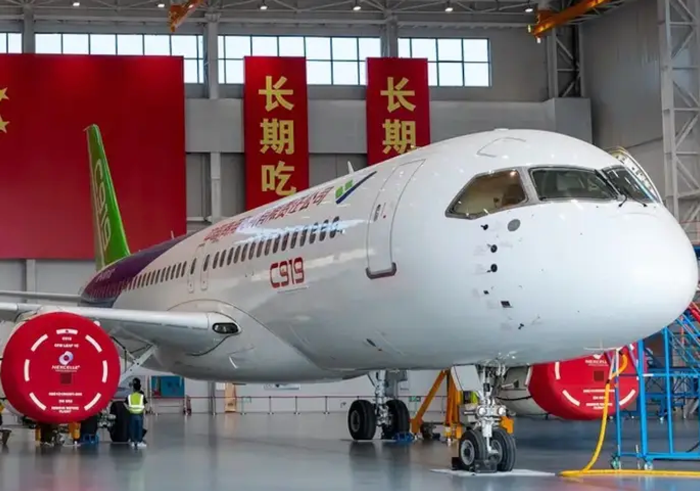
The Trump administration has implemented measures to slow U.S. exports of commercial aircraft parts to China, using Beijing's dependence on American aviation suppliers as a bargaining chip amid ongoing disputes over rare earth minerals and broader trade negotiations. According to multiple sources citing the U.S. Commerce Department, export licensing for airplane parts bound for China has been deliberately slowed in recent weeks, with limits placed on quantities approved for China's state-owned Commercial Aircraft Corp. of China (COMAC) to prevent stockpiling. Officials have also explored new regulations that could facilitate restrictions on components such as landing gear and aviation hydraulic fluid supplied by firms like ExxonMobil.[1][2]
This move builds on prior actions, including 2025 suspensions of licenses for jet engines and navigation systems to COMAC, and reflects a pattern of reciprocal supply-chain pressures between the two nations. China dominates global rare earth processing (around 90% for many elements) and has imposed export controls on materials like samarium, gadolinium, and magnets since April 2025, disrupting U.S. industries including defense and manufacturing. A September 2026 Trump-Xi summit extended a truce on these restrictions until January 2027, but unresolved shortages and access issues persist.[3][4]
Analysts note potential delays for COMAC's C919 jet program, which relies heavily on Western components with few immediate alternatives. The strategy aims to counter China's leverage on critical materials essential for U.S. rearmament, EVs, semiconductors, and aerospace, while highlighting mutual vulnerabilities in global supply chains. Boeing has stated its commitment to supporting Chinese customers but operates amid these geopolitical constraints.[2]
Broader implications include accelerated efforts by both countries to diversify supply chains—U.S. investments in domestic rare earth mining and processing versus China's push for self-reliance in aviation. The January 2027 deadline for resolving outstanding disputes adds urgency, with risks of further escalation affecting everything from jet fuel demand to defense procurement.
Geopolitical Analyst: Expect further tit-for-tat export restrictions through early 2027, accelerating Western rare earth diversification but raising short-term costs and delays for global aviation and defense sectors.
Sources (5)
- [1]US slows aircraft-part exports to China as Trump seeks leverage in trade negotiations, sources say(https://www.reuters.com/business/autos-transportation/us-slows-aircraft-part-exports-china-trump-seeks-leverage-trade-negotiations-2026-10-01/)
- [2]China’s C919 jet faces further delivery delays amid US export chill: analysts(https://www.scmp.com/economy/china-economy/article/3369588/chinas-c919-jet-faces-further-delivery-delays-amid-us-export-chill-analysts)
- [3]China’s Continued Control of Rare Earths Looms Over Trump-Xi Meeting(https://www.nytimes.com/2026/09/21/business/china-rare-earth-summit.html)
- [4]China Tightens Rare-Earth Grip on U.S. Firms, Threatening Trade Clash(https://www.nytimes.com/2026/06/22/business/china-rare-earths.html)
- [5]US Weighs Tighter Aircraft-Part Controls For China as Trump Administration Turns Up Trade Pressure: Report(https://www.benzinga.com/news/politics/26/10/62131712/us-weighs-tighter-aircraft-part-controls-for-china-as-trump-administration-turns-up-trade-pressure-report)